Mini Split Installation in Roanoke, VA
A new system here will heat from October through April and cool from June through September every year. Tell us about the house, and a licensed contractor who covers Roanoke will get in touch.
Tell us about the job
It takes about a minute.
Roanoke asks for both heat and cooling, most of the year
Your mini-split will run heat from October through April and cooling from June through September. Eleven months of the year the compressor is doing something. Winter nights average 29°F here, cold enough that the heat pump side has to work for real, not just take the edge off a cool evening. Summer afternoons average 86°F, so the cooling side earns its keep too.
Any new unit has to meet the federal minimum for a split-system heat pump. That is 14.3 SEER2 for cooling and 7.5 HSPF2 for heating. Roanoke asks for both sides of that rating almost all year, so the heating number matters here as much as the cooling one does.
- 7 months
- October through April, your system heats
- 4 months
- June through September, it cools
- 29°F
- the average winter night it heats against
- 86°F
- the average summer afternoon it cools against
NOAA nClimDiv, 1991–2020 normals
Virginia requires HVAC contractors to hold a state license.
Virginia licenses HVAC contractors through the Board for Contractors. That license belongs to the contractor, not to this specific job. It means the state tested this contractor and keeps a record of them. Work under $1,000 does not need a licensed contractor at all, but a mini-split installation runs well past that figure, so this job falls under the license requirement.
Most cities and counties require a permit before a mini-split goes in, and an inspection once the work is done. That inspection is what checks the installation itself, including the connections that need to be done right. The license tells you who is doing the work. The permit and inspection are what checks this particular job.
Sources: Virginia General Assembly · Virginia Department of Professional and Occupational Regulation
- Is a mini split worth it?
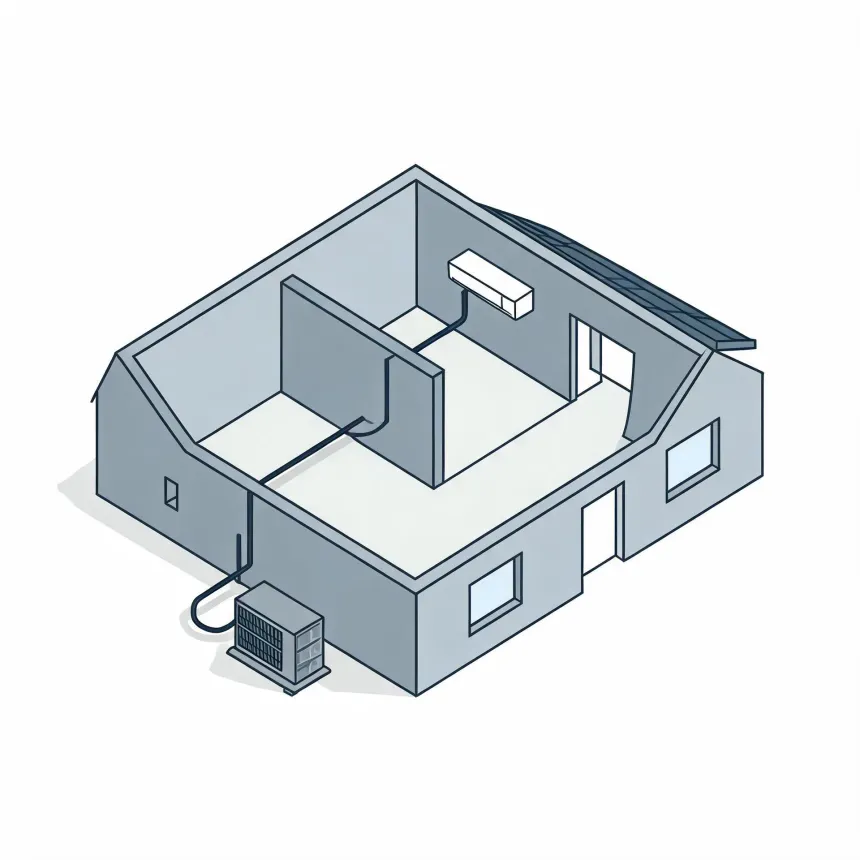
- For the right room or house, yes. A mini split heats and cools without ducts, so it works well for an addition, a garage, or a home that has never had central air. Roanoke needs heat seven months of the year and cooling four, so a heat pump mini split that does both jobs is on duty most of the year here. Whether it makes sense for your house depends on the layout and what you already have for heating, and a contractor can walk through that with you.
- How many rooms can a mini split cover?
- A single-zone system heats and cools one room. A multi-zone system can run several indoor units, often four or more, off one outdoor unit, so it can cover a handful of rooms at once. Each indoor unit is sized for the room it serves, so more rooms means either more indoor units or a bigger ducted air handler paired with the outdoor unit. A contractor sizes the system room by room rather than guessing at total square footage.
- Can a mini split heat a whole house?
- It can, if enough indoor units are installed to reach every room and the outdoor unit is sized for the whole load. Winter nights in Roanoke average 29 degrees, so the heat pump has to be sized to keep up on the coldest nights, not just an average day. Some homes use a multi-zone mini split alone, others pair it with existing ductwork or a backup heat source. A contractor can look at the house room by room and size it properly.