Mini Split Installation in Scottsville, VA
A new system here will heat from October through April and cool from June through September every year. Tell us about the house, and a licensed contractor who covers Albemarle County will get in touch.
Tell us about the job
It takes about a minute.
What Scottsville asks of a mini-split
Your mini-split will run most of the year here. It needs to heat from October through April and cool from June through September. That's 11 months out of the year with the compressor doing something.
Winter nights average 28°F. Summer afternoons average 85°F. A new mini-split has to handle both ends of that. Since January 2023, federal rules require split-system heat pumps to meet 14.3 SEER2 for cooling and 7.5 HSPF2 for heating, so any unit installed now will meet at least that. Most homes here heat with electricity already, and the area sees its share of winter storms and damaging wind. When the power goes out, a mini-split comes back on by itself once it's restored.
- 7 months
- October through April, your system heats
- 4 months
- June through September, it cools
- 28°F
- the average winter night it heats against
- 85°F
- the average summer afternoon it cools against
NOAA nClimDiv, 1991–2020 normals
Virginia requires HVAC contractors to hold a state license.
Virginia issues this license through the Board for Contractors, and it belongs to the contractor, not to any one job. It means the state tested this contractor and keeps a record of them. The one exception is small work. Anything under $1,000 does not need a licensed contractor at all. A mini-split installation runs well past that line, so it falls under the license.
Beyond the license, a mini-split installation in most cities and counties needs a permit from the local building office, along with an inspection once the work is finished. That inspection is what checks the unit went in the way it should have.
Sources: Virginia General Assembly · Virginia Department of Professional and Occupational Regulation
- Is a mini split worth it?
- For most homes, yes. A mini split heats and cools without ductwork, so it works well in a room addition, a garage, or a house that never had central air to begin with. Around here that means covering both the winter nights that drop to 28°F and the summer afternoons near 85°F with one system instead of two. Whether it makes sense for your house depends on how it's built and what you're heating now, which is something a contractor needs to look at in person.
- How many rooms can a mini split cover?
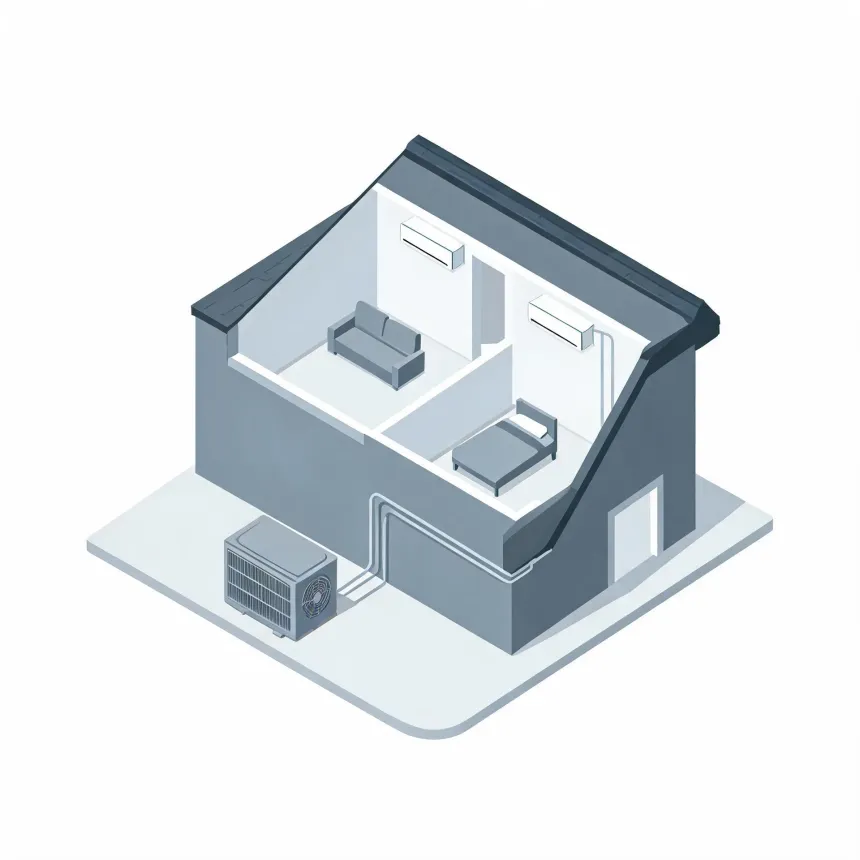
- That depends on how many indoor heads the system has. A single outdoor unit can run more than one indoor head, and each head heats and cools one room or one open area. A multi-zone setup can cover several rooms or a whole floor, but the right number of heads for your home is something a contractor works out from the size and layout of the rooms.
- Can a mini split heat a whole house?
- Yes, if it's sized and placed to do it. A multi-zone mini split with a head in each main room can carry a house through winter, including nights here that average 28°F from December through February. The system has to be matched to the house first, room sizes, ceiling height, how well the place holds heat, so a contractor needs to work that out before you know how many heads and how much capacity the job needs.