Mini Split Installation in Stephens City, VA
A new system here will heat from October through May and cool from June through August every year. Tell us about the house, and a licensed contractor who covers Frederick County will get in touch.
Tell us about the job
It takes about a minute.
What a mini-split here has to handle
Stephens City needs heat or cooling 11 months out of the year. Winter nights average 25°F from December through February. Summer afternoons run around 84°F. That's a long stretch of work for one system, most of it heating, so the unit going in needs to hold up on both ends.
Any mini-split manufactured now has to clear a federal minimum. That's 14.3 SEER2 for cooling and 7.5 HSPF2 for heating. Half the homes here already heat with electricity, and about a fifth of Virginia households lost power for a day or more last year. The region has seen 16 winter storms and 134 damaging wind events over the past ten years. Worth asking your installer how the system handles a cold start after an outage, since that's when it matters most.
- 8 months
- October through May, your system heats
- 3 months
- June through August, it cools
- 25°F
- the average winter night it heats against
- 84°F
- the average summer afternoon it cools against
NOAA nClimDiv, 1991–2020 normals
Virginia requires HVAC contractors to hold a state license.
The license belongs to the contractor, not to any single job. It covers the business doing the work, not a document tied to this installation. Virginia carves out an exception for small jobs. Work under $1,000 does not need a licensed contractor. A mini-split installation runs well past that line, so the contractor putting one in should hold the state license.
Most cities and counties in Virginia require a permit for an installation like this and an inspection once the work is done. That inspection is what catches a bad connection or a unit that was never checked over before the contractor left. It comes from the local building office, not the Board for Contractors, and it stands apart from the state license.
Sources: Virginia General Assembly · Virginia Department of Professional and Occupational Regulation
- Is a mini split worth it?
- For a lot of homes here, yes. Stephens City needs heat eight months a year and cooling three, so a system that does both from one unit is working most of the year. Half the homes here already heat with electricity, and a mini split heat pump does that job at a much lower running cost than baseboard or resistance heat. It also puts heat or cooling right in the room that needs it, which matters if you're adding a space that the ducted system doesn't reach well.
- How many rooms can a mini split cover?
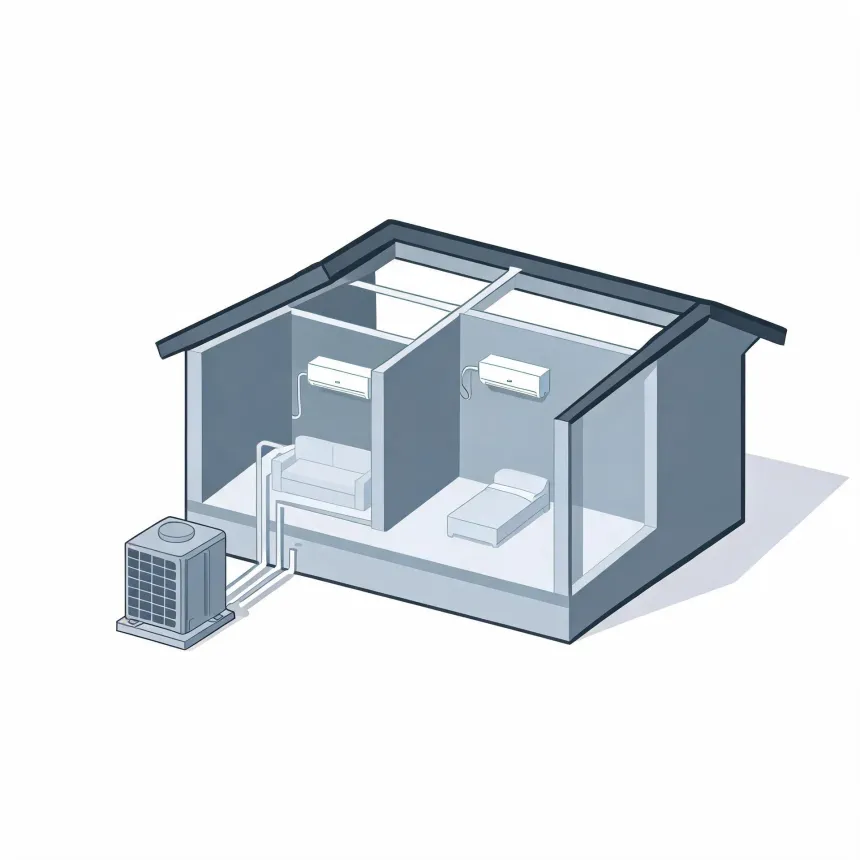
- A single outdoor unit can run one indoor head or several, up to eight on some multi-zone systems. Each indoor head is sized and placed for the room it's in, so a contractor will look at the square footage, the windows, and how the rooms connect before saying how many zones your house needs. A house with a few small additions or a converted garage often does well with two or three heads on one outdoor unit.
- Can a mini split heat a whole house?
- It can, if it's sized and laid out for that. A mini split heat pump has to run at 7.5 HSPF2 or better under the current federal standard, and modern ductless systems keep working in real cold, which matters here with winter nights averaging 25 degrees from December through February. Whether one system covers the whole house or you need multiple zones comes down to the layout, so a contractor will walk the house room by room before pricing it out.