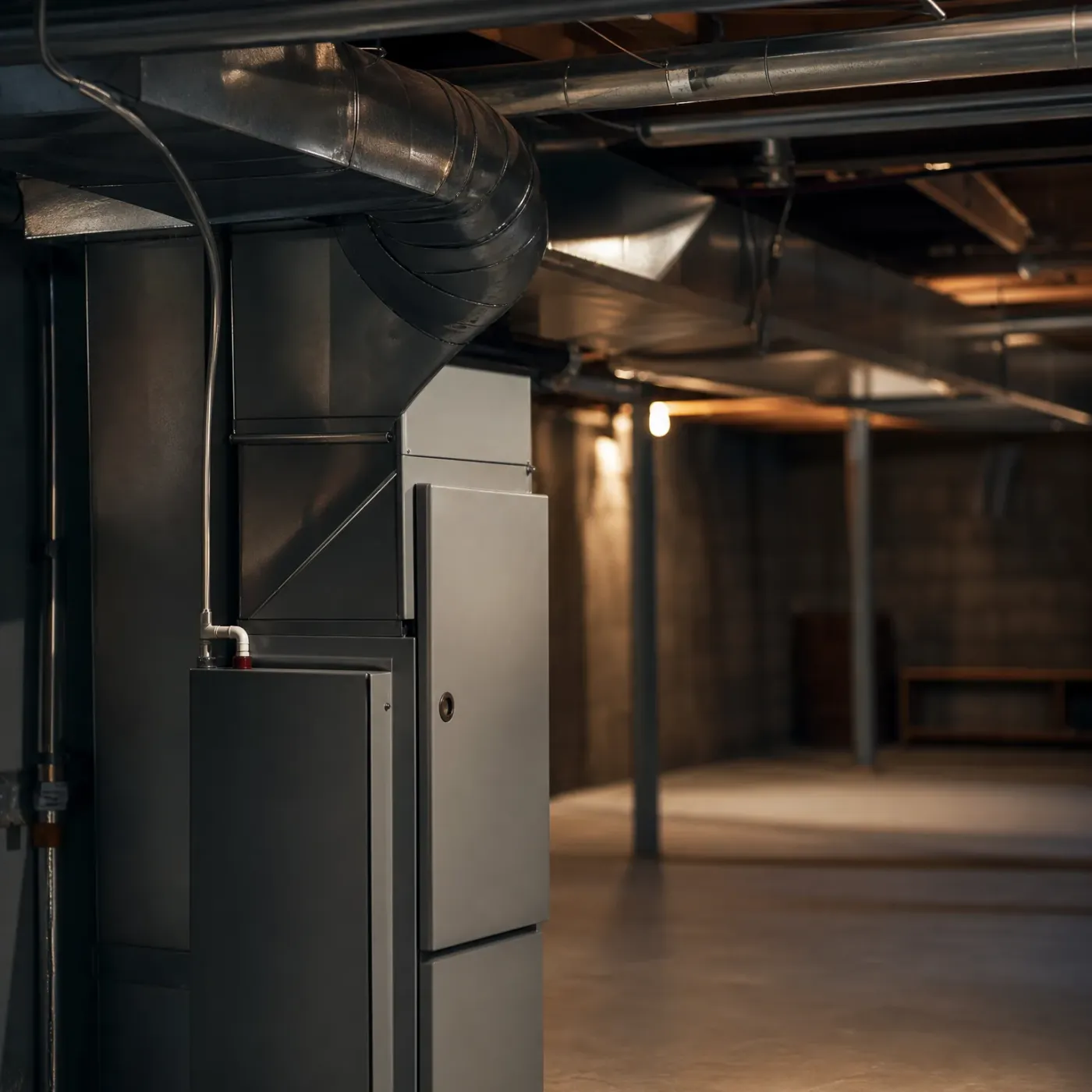






A basement interior with a gray furnace or air handler unit connected to large sheet-metal ductwork running along the exposed joist ceiling, with support posts and a concrete block wall in the dim background.

It's off your list after this

Does duct cleaning help allergies in Virginia

Dust and pollen build up in ductwork over time, and with summers here as sticky as they are, your system is moving a lot of air through those ducts all year. Whether cleaning them actually eases allergy symptoms depends on what's really in there and how your home is set up. This page gets into what duct cleaning can and can't do, and what to check in your own home before you decide. If you want a straight answer for your house, submitting the form puts the question in front of a local contractor who deals with duct systems like yours regularly, and you can step back from there.

Hand it off

Duct cleaning helps allergies when there's actually dust, pet dander, or mold sitting in the ducts and getting blown into the rooms you breathe in. In most homes that dust builds up slowly, mixed with whatever gets past the filter, and a thorough cleaning removes it instead of letting your system recirculate it. It won't help if your symptoms come from pollen coming in through open windows or from something growing in a bathroom or basement that has nothing to do with the ductwork. Since your system here runs most of the year moving air through those same ducts, whatever's built up gets distributed every time it cycles on. If you've noticed more sneezing or stuffiness indoors than outdoors, especially right after the heat or air conditioning kicks on, that's a sign the ducts are part of the problem and cleaning them is worth doing.

Empty concrete-walled basement room with galvanized rectangular and round HVAC ducts and pipes running along the exposed wood-joist ceiling.
Before you get your ductwork cleaning
Unfinished basement with galvanized sheet-metal ductwork and pipes beneath wood joists, a gray furnace unit at left, insulated plastic-covered walls over a concrete foundation, and a bare concrete floor.
After you get your ductwork cleaning

What actually sits in a duct

A duct system is sheet metal or flex line hidden behind walls and floors, so nothing sweeps it out on its own. Dust settles in the slow-moving corners, especially near the supply boots where air slows down before it leaves the register. Pet hair and skin flakes ride the airstream and catch on the inside seams. If your home ever had a musty smell after a humid stretch, mold spores can be part of what settled too. None of that leaves on its own. It sits until the duct is physically cleaned or until enough air finally pushes it loose into the room, which is the part that reaches your sinuses.

Why the filter does not catch it

The filter cleans air passing through the return side, not air already moving through the supply ducts to your rooms. Once dust is sitting in the ductwork itself, a filter change does nothing for it. That is true whether you run a cheap filter or a high-end one. The ducts carry air, and whatever has already settled on their walls rides along with every cycle your system runs, which in Virginia is most of the year given the sticky summers and the electric heat strips working through winter. A cleaning reaches the parts of the system a filter was never built to touch.

A smiling man in a dark green sweater sits at a wooden table with a light gray mug in a kitchen with white tile backsplash, pendant lights, and an adjoining living room visible.
A smiling man in a dark gray sweater stands indoors looking to the side, with a kitchen counter holding a ceramic mug and open wooden shelves behind him and a living area in the background.
A smiling man in a dark blue button-up shirt stands at a white kitchen island, with open shelving, a gas range, a potted plant and a window in the background.
A smiling man with dark wavy hair and a beard, wearing a dark green knit sweater, sits in an open-plan living room and kitchen with a brown sofa, large windows, and a counter holding a mug and a wooden bowl.

What you'd notice if it's in your ducts

If dust in the ducts is feeding your allergies, you've probably noticed it already. Dust on the supply vents a few days after you wipe them. A musty smell when the system first kicks on. More sneezing in the room right under the vent than anywhere else in the house. Virginia summers push your system hard for months, moving the same air through those ducts over and over, so whatever is sitting in there gets circulated plenty. If you can point to a specific vent or a specific room, that's a sign the ducts are part of the problem, not just the pollen outside.


What stays the same if it isn't

If your allergies flare up whether the system is running or not, cleaning the ducts probably won't change much. Plenty of allergy trouble comes from what's tracked in on shoes, from pets, or from windows left open on a nice day, and duct cleaning doesn't touch any of that. You'd be paying for the work and still waking up congested. A dirty filter can also cause the same symptoms you'd blame on the ducts, and swapping it costs a lot less than a full cleaning. Worth ruling that out first.

A bearded man in a dark t-shirt sits on a light sofa, smiling and looking down toward a laptop screen visible at the bottom edge of the frame, with a blurred living space behind him.
A bearded man in a plaid flannel shirt looks out a window at snow-covered conifer trees, with a steaming ceramic mug on the sill and wooden shelves holding dishes and a plant behind him.

Stop chasing a duct system pro

If you've noticed dust on the vents or a musty smell when the system kicks on, that's worth having someone look at before another muggy Virginia summer pushes more of it through the house. A local contractor who works on duct systems all season knows the difference between normal buildup and something that actually needs attention, and can tell you straight whether cleaning will do anything for what you're dealing with. Send the request and it goes to one contractor, licensed and local, not a handful of companies competing for your callback. From there, finding someone to look at it stops being something you have to chase down yourself.

Empty unfinished basement with bare concrete walls and floor, showing galvanized sheet metal ductwork, insulated flexible duct, and pipes running along the wood-framed ceiling, with a small window at left.
Air moves through clean metal with nothing to pick up on the way to the room.
Empty basement room with bare concrete walls and floor, with exposed wooden joists, sheet-metal HVAC ducts, an insulated flexible duct, and pipes running across the ceiling.
Joists and pipes collect dust where the air slows down, and the flex line holds onto what settles.
A dimly lit living room corner with a dark wood side table holding a pale ceramic vase of leafy branches, a beige sofa with a dark gray cushion, and a sheer-curtained window showing trees and a roofline outside.

It's a Saturday afternoon in April, and the windows are open for the first time in months. Sun comes in low across the living room, catching the ceiling vent grille over the couch. There's a gray line of dust along its slats, thicker than you'd expect, and a thin film of it on the end table underneath. You wipe the table down before you sit. An hour later, running your finger along the same spot, the dust is already back. The system hasn't even kicked on, just the ceiling fan turning overhead, stirring whatever's settled into the room since winter.

Power costs 15.28 cents per kilowatt-hour statewide

Most homes in Virginia heat with electric systems, and at 15.28 cents per kilowatt-hour, that system is running air through your ducts most days of the year. If dust and dander have built up in there, that's more air pulling allergens into your rooms, not less.

EIA-861 2025 statewide residential average

Where This Leaves You

  • Duct cleaning eases allergies only when dust, dander, or mold has actually built up inside the ducts and is getting blown into the rooms.
  • A musty smell at startup or dust that returns fast on a wiped vent are the signs worth acting on, not guessing about.
  • A local contractor who services ducts all season recognizes which buildup is normal and which is actually feeding symptoms in the house.
  • Working with one licensed local contractor means a single visit and a single assessment, not a round of competing bids and calls.
  • Virginia's muggy summers keep electric systems pulling air through the ducts most days of the year, so whatever is in there keeps moving.

Duct cleaning helps allergies when there's something real in the ducts causing them, dust, dander, or mold, and not otherwise. That's the whole answer. What you've read above gives you a way to check your own system against it rather than guess: the musty smell at startup, the vent that collects dust again a day after you wipe it, the room that acts worse than the rest of the house. If none of that sounds like your place, cleaning the ducts probably won't move the needle on your allergies. If some of it does, it's worth having someone look before summer sets in and your system is pulling air through those ducts every day again.

That look doesn't need to turn into a production. A contractor who works on duct systems in homes around Virginia all season has seen what normal buildup looks like and what's actually thick enough to be a problem, and can usually tell the difference walking through your house rather than guessing from a list of symptoms. Sending the form connects you with one licensed local contractor, not a handful of companies competing for the job, so you're dealing with a single visit and a single opinion on what your ducts actually need. No chasing quotes, no explaining your situation five times over. Just someone who knows this equipment telling you what they find in yours.

A shingled two-story house with lit windows and stone accents at dusk, with a stone paver walkway and landscape lighting leading past ornamental grasses toward a calm bay under an orange and blue sky.

Ductwork Cleaning

Send one request and you're done looking

Duct and vent cleaningDucts or ventsVirginia
Step 1 of 2

What ZIP code is the job in?

  • Interior corner with a white-framed window, a wooden bench holding a pale ceramic vase with olive branches and a wooden bowl, a woven basket with a cream fringed throw, and a striped rug on a wood floor.
    • A local pro who cleans ducts gets in touch with you.
    • Your duct cleaning request goes to a local pro who does this work.
  • A wooden dresser in a corner holds a shallow ceramic bowl and a tall pale vase with leafy green branches, beside a window with green foliage outside and a dark-framed picture on the wall.
    • One request and the duct cleaning stops waiting on you.
    • Once you send the form, finding a pro is off your list.
  • A wood-framed armchair with a beige linen cushion, textured pillow and chunky knit throw sits beside a window, with a ceramic mug and closed book on a small round wooden side table and green foliage overhead.
    • Answer a few questions instead of calling shop after shop.
    • Fill out one short form instead of calling around.
  • Sunlit interior corner with a white-framed window overlooking green trees, a woven throw on a wooden bench, a potted trailing green plant on a wooden cabinet, and a framed landscape picture on the wall.
    • Your request goes to one pro, not a list of companies.
    • The pro who reaches out is licensed in Virginia.