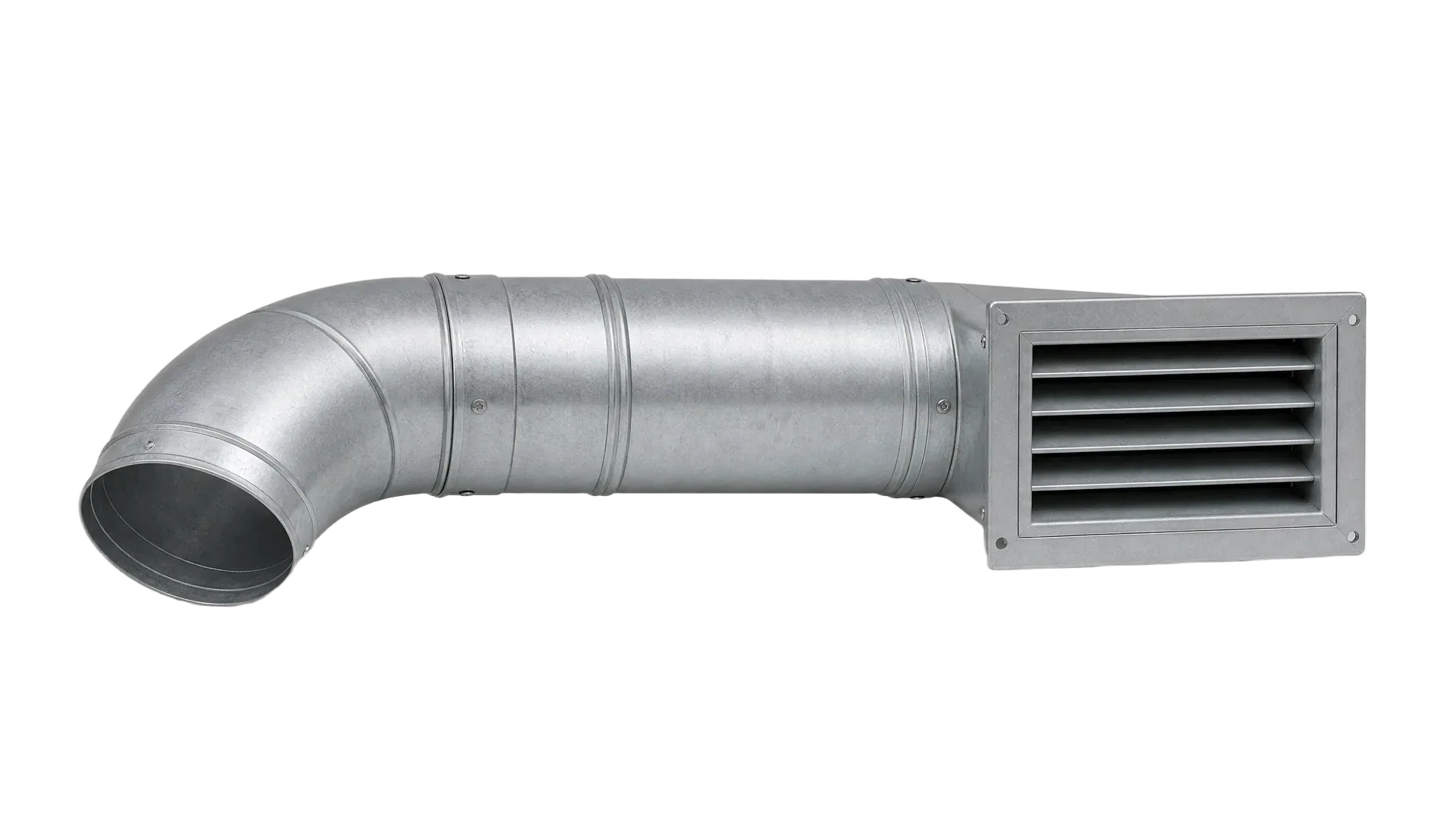
For most homes in Virginia Beach, duct cleaning is not something you need on a schedule. It matters when there's a reason for it: visible dust coming out of the vents, a musty smell when the AC kicks on, or work done on the ductwork that left debris behind. The long muggy summers here push a lot of moisture through the system, and if a duct run has a leak or has taken on condensation, that's where mold and buildup settle in rather than in a system that's been dry and sealed. If you've had rodents or a recent renovation, or you can't remember the last time anyone looked inside the ducts, cleaning is worth doing. If none of that applies and the air coming through the vents looks and smells fine, you're likely paying for something that won't change much. A contractor can look at the actual ducts and tell you which case you're in.
How old are Virginia Beach homes, and does that affect your ducts?
Half the homes here were built by 1984
Half the houses in Virginia Beach went up in 1984 or earlier, so a lot of duct systems have had decades to collect dust, pollen, and whatever else got pulled in.
Heat runs November through April
Heat runs November through April here, six months of pushing air through the same ducts before you get a break from the system.
Cooling runs May through September
Cooling runs May through September, so for the other five months those same ducts are working just as hard in reverse.
ACS 2020-2024 · NOAA nClimDiv 1991-2020
If your ducts are doing fine, cleaning them on a schedule doesn't buy you much. Dust that settles in the duct walls mostly stays there. It's the dust in your living space, kicked up and circulated, that affects what you breathe.
If something's actually wrong, a musty smell, visible debris blowing out of the vents, or work that left drywall dust in the system, cleaning is what fixes it. At that point it's not optional upkeep, it's the thing that solves the problem you noticed.




A duct cleaning starts with a vacuum unit connected to the trunk line, strong enough to pull debris the length of the system. From there a technician works each supply and return separately, running a brush or an air whip through the duct to knock loose what's built up on the walls. Nothing travels on its own, so every run gets its own pass before it counts as clean. While that's happening, each register gets sealed off so the dust being knocked loose doesn't just blow back into the room instead of reaching the vacuum. The coil and blower wheel on the furnace or air handler get attention too, since that's where airflow slows down and dust has the easiest time sticking. If the system has a UV light or an electronic air cleaner built into the ductwork, those get checked as part of the same job, because they sit right in the airflow and collect buildup like everything else. The last step is a new filter, so the system isn't pulling air back through one that was already loaded before the cleaning started.
How a duct cleaning actually works
- Duct cleaning uses a vacuum collection unit hooked to the trunk line while a technician agitates each run with a brush or air whip to knock debris loose.
- Every supply and return in the house needs its own pass, since the vacuum only pulls what's loose enough to reach the collection point.
- The furnace or air handler coil and blower wheel get cleaned too, because that's where airflow is weakest and dust clings hardest.
- A contractor seals each register during the process so loosened dust doesn't blow back into the room before it's captured.
- If the system has a UV light or an electronic air cleaner, those get checked since they sit inside the duct run and collect the same buildup.
- Once the ducts are clear, a new filter goes in so the system isn't pulling dirty air back through a filter that's already loaded.
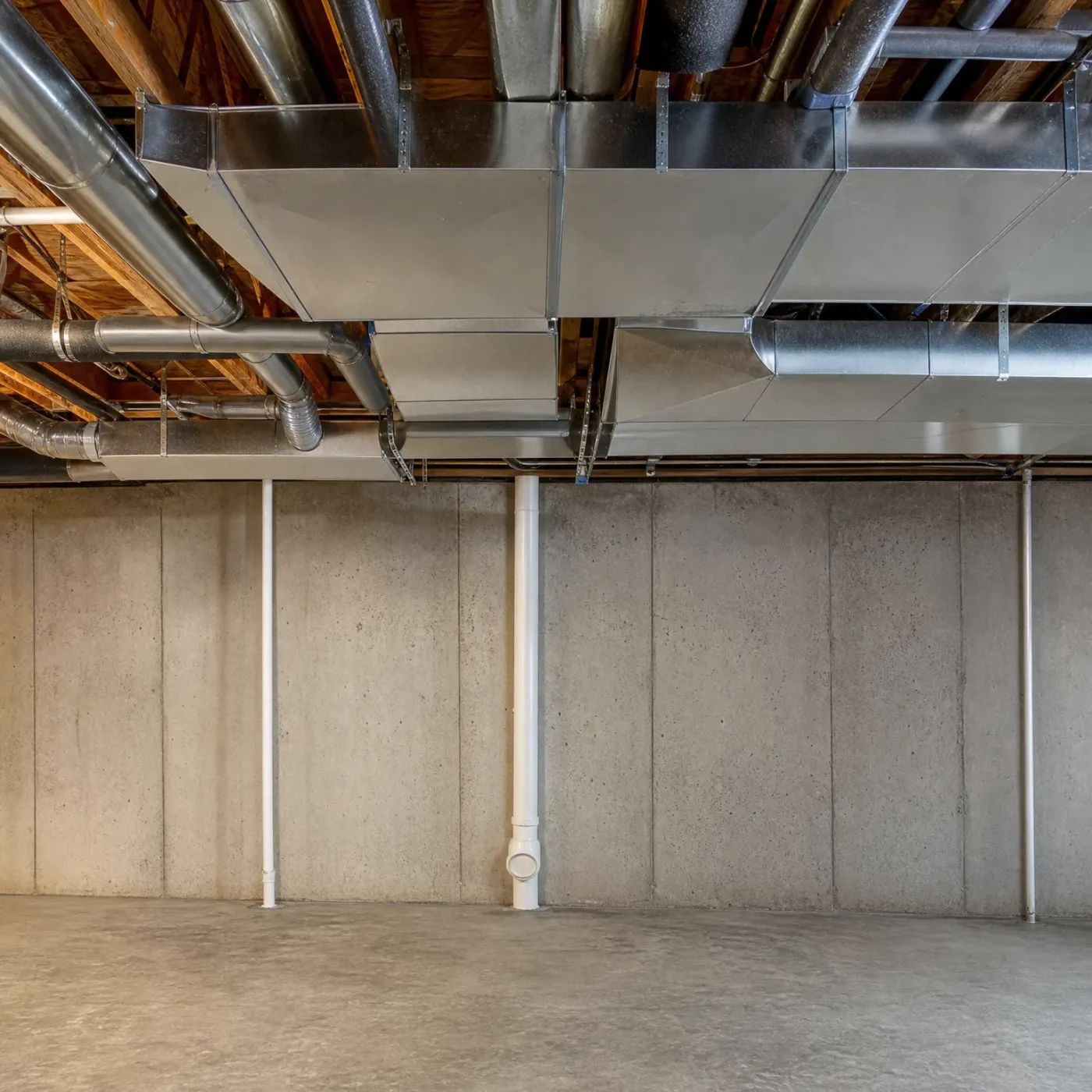
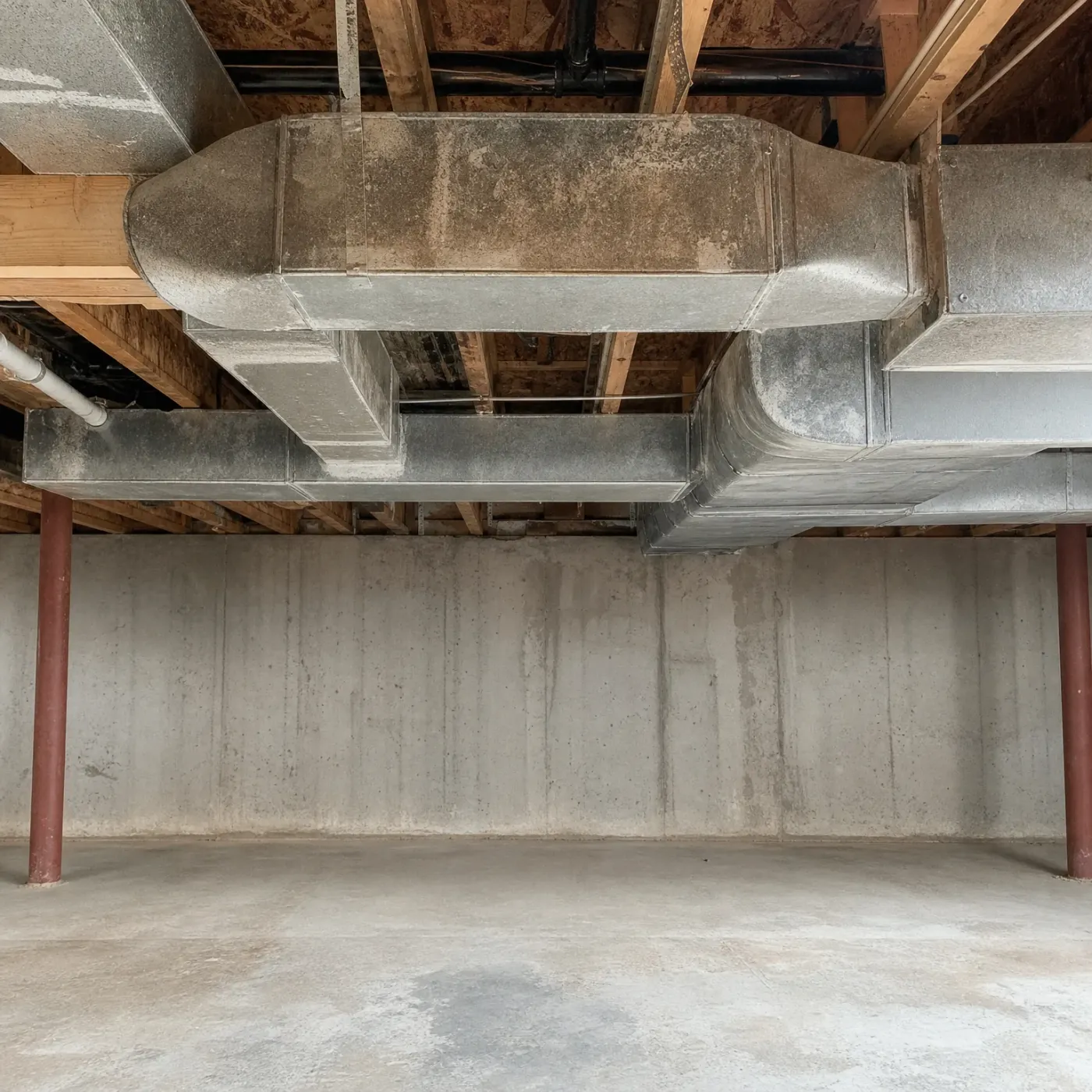

Technician inspects each duct run with a camera first
Vacuum collection unit connects to the main trunk line
Brush or air whip agitates debris loose in every run
Supply and return vents get sealed off one by one
What would you actually notice if your ducts needed cleaning
You'd see it before you'd think to look for it. Dust settling back on furniture a day or two after you clean. A vent cover with a gray film on it. A musty smell the first few minutes the AC runs, especially after it's been off for a while. If anyone in the house has allergies or asthma, you might notice symptoms are worse indoors than out, or worse right after the system kicks on. None of this means the ducts are the cause on their own. But if you're seeing dust return fast, smelling something off at startup, or someone's breathing is worse at home than it should be, those are the signs worth paying attention to, not ignoring for another season.
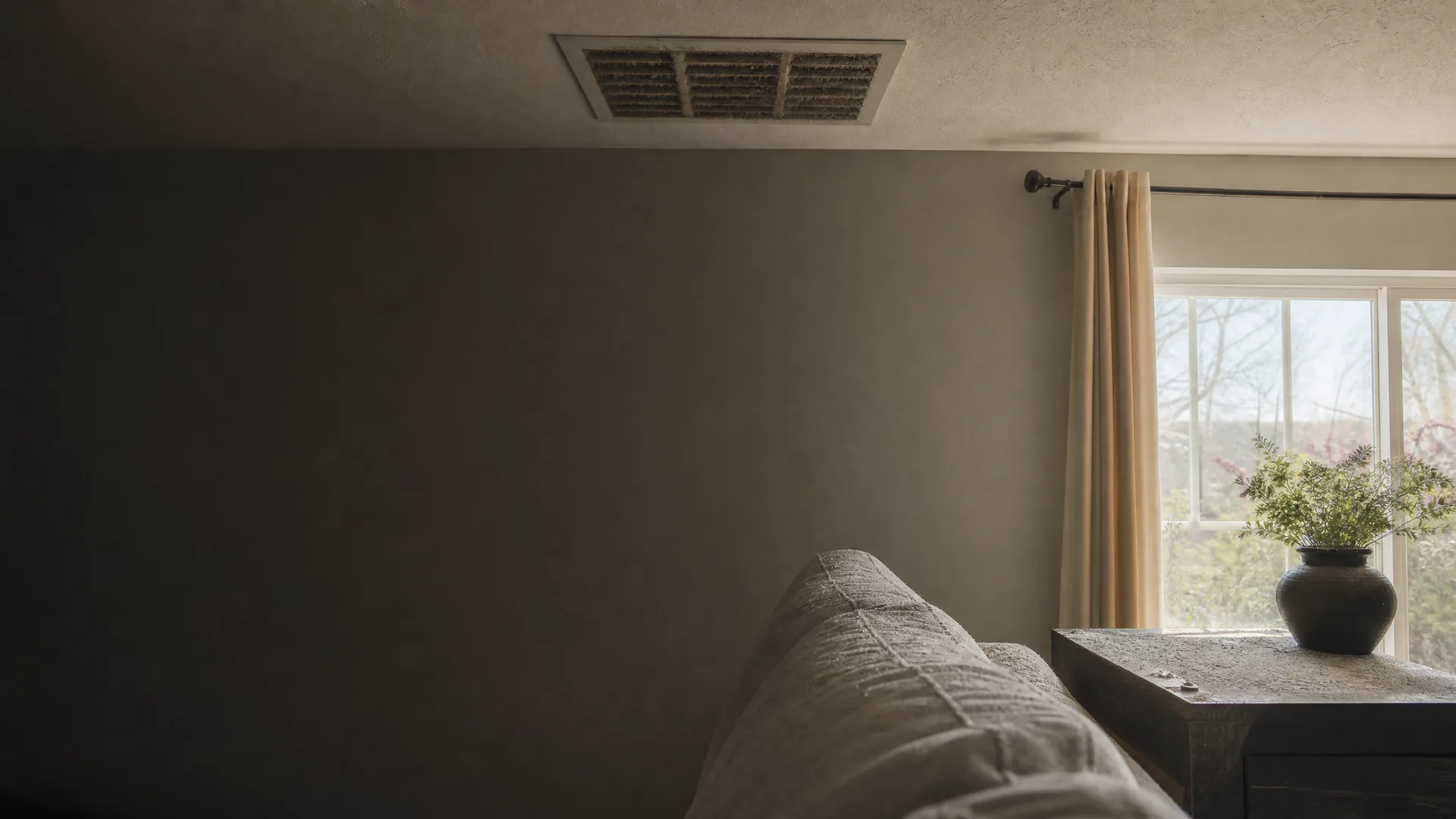
The AC has been running most of the afternoon, keeping the house bearable against a warm spring day outside. Light comes in low across the living room. You catch it hitting the ceiling vent grille, the kind of angle that shows what's usually hidden, and there's a gray film across the slats. Below it, the side table has a thin layer of dust too, the kind that wasn't there when you dusted it a couple of days ago. You run a finger along the grille and it comes back dark. Nobody else in the room would notice. You do, because now you're looking, and you already know you'll be checking the vent in every other room before you sit back down.
Get matched with a duct system pro in Virginia Beach
If you've read this far, you've probably already seen the sign that matters for your house, whether that's the gray film on a vent cover, the musty smell when the AC first kicks on, or ductwork you know hasn't been touched since it went in. That's the difference between cleaning that does something and cleaning on a schedule for its own sake. A camera inspection settles it either way. If a technician looks and the runs are dry and clean, you've spent a little time finding that out and you're done. If they're not, you know exactly what you're dealing with before anyone touches a brush to your ductwork. Either answer is worth having before summer puts your system to work again for months straight. Getting matched with someone who can look is the part you can hand off now.
What a real cleaning job involves
- A technician runs a camera through each duct run before touching anything, so the cleaning targets what's actually there.
- The vacuum unit connects to the main trunk line and holds negative pressure while the rest of the system gets worked.
- A brush or air whip knocks loose debris off the duct walls run by run, since the vacuum alone won't pull dust that's stuck.
- Every supply and return vent gets sealed off one at a time so loosened dust goes into the vacuum instead of back into the house.
- The furnace or air handler itself usually gets a pass too, since dust collects on the blower wheel and coil as much as in the ducts.
- A finished job means every run in the house has been agitated and vacuumed, not just the ones near the main trunk.
The camera pass at the start is what separates an actual cleaning from someone running a shop vac over the registers. It shows the technician where the buildup is heavy and where a run is clean enough to skip real agitation. Negative pressure on the trunk line matters because without it, knocking dust loose just moves it a few feet down the duct instead of out of the house. That's the whole reason for the brush or air whip step. Dust that's been sitting on a duct wall for years doesn't lift on its own with airflow alone; it has to be physically knocked loose, run by run, before the vacuum can do anything with it. Sealing off vents one at a time keeps that loosened debris from drifting into a room while the next run is being worked. It's a slower way to do it, but skipping that step means some of what gets knocked loose ends up back in the house instead of in the vacuum. The blower wheel and coil inside the furnace or air handler collect their own layer of dust, separate from what's in the ductwork, so a thorough job covers that equipment too. What tells you the job was done right isn't how clean the first few feet near the trunk look. It's whether the far end of every run, the ones near a bedroom or a corner of the house, got the same treatment as the runs that were easy to reach.
Power here costs 15.20 cents per kilowatt-hour
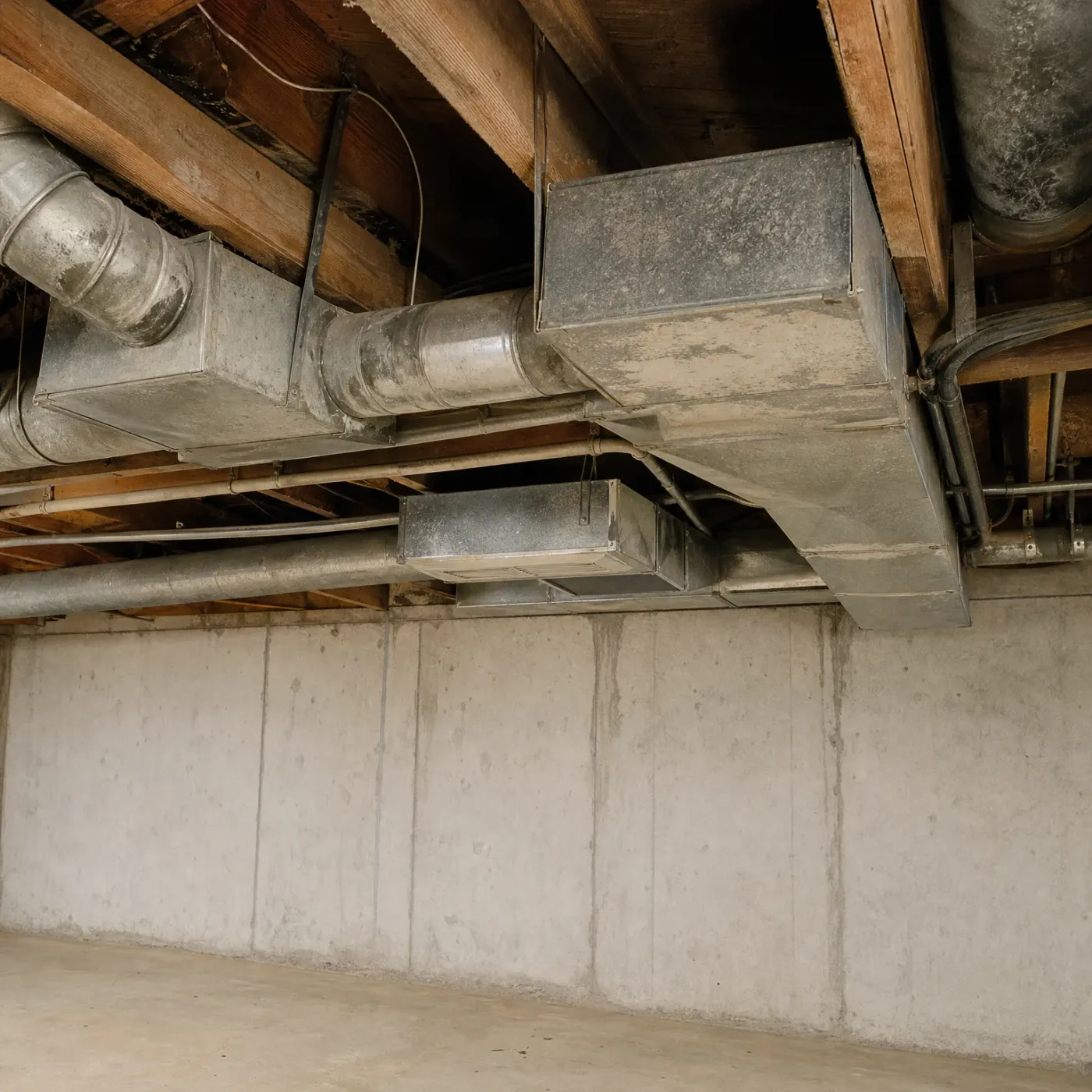
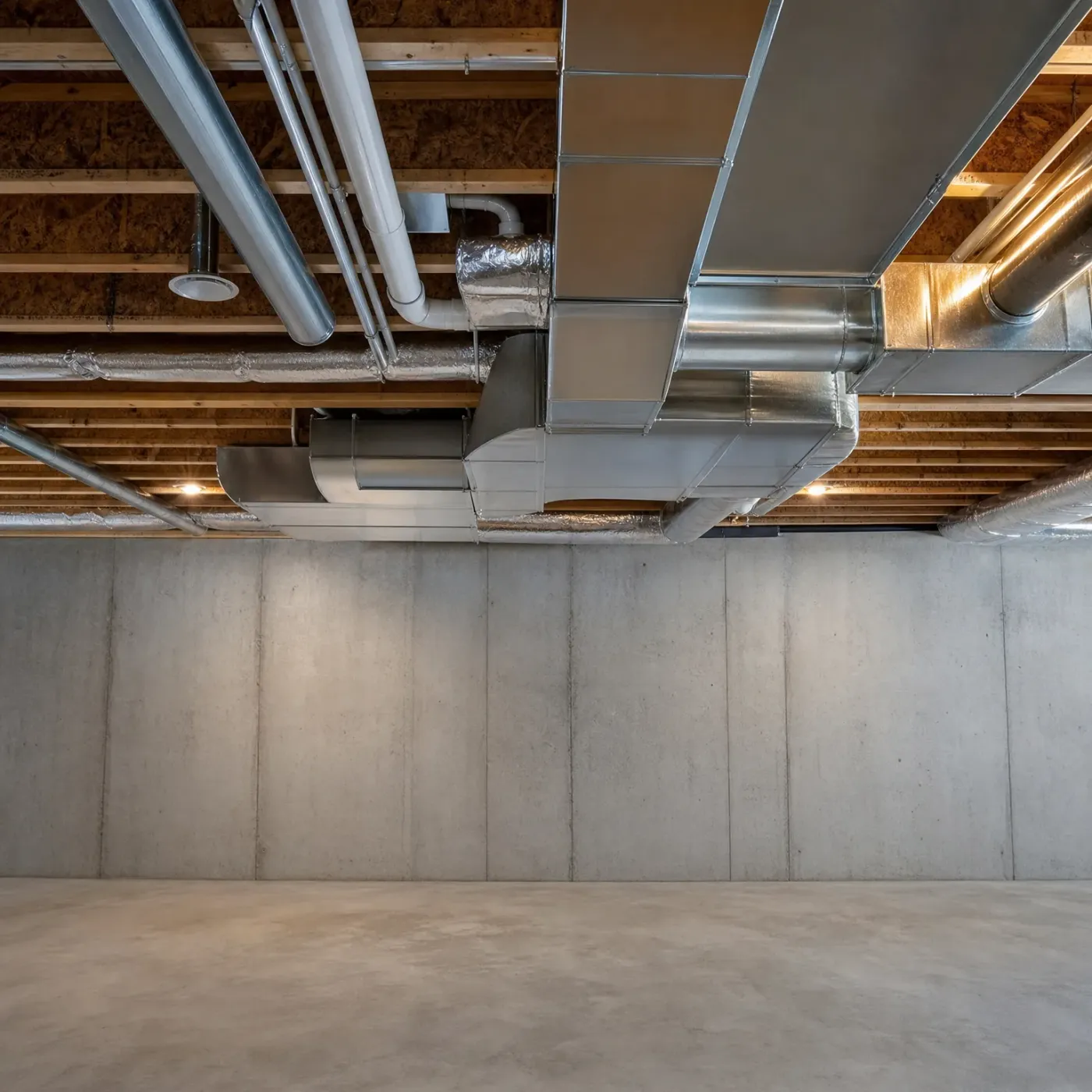
At 15.20 cents per kilowatt-hour, running your AC hard against humped-up, dirty ducts just to hold the house at temperature adds up over a long Virginia Beach summer. Clean, unobstructed ducts let the system move air without fighting for it.
EIA-861 2025

When cleaning actually pays off
If a technician's camera finds matted dust blocking airflow in several runs, or a return line that's been open to a crawlspace, cleaning fixes something real. The house will breathe easier, and the musty smell or gray film on the vents should go away once the work's done. That's a case where the job solves the problem you called about.

When it's money spent on nothing
If the camera shows ducts that are dry, sealed, and only lightly dusty, cleaning them won't change much about your air or your bill. You'll pay for the visit and the vacuum truck, and a week later the house will feel the same as it did before. Nothing was wrong enough to fix, so nothing improves.

So is duct cleaning worth it for your house
It comes down to what's actually in your ducts, not the calendar. If there's no sign, no smell, no film on the vents, no recent work that left debris behind, cleaning won't do much for a house like that. If one of those signs is there, it's worth having someone look.
A camera inspection answers the question before any money gets spent on the cleaning itself. That's a different thing to ask for than a cleaning, and not every outfit in Virginia Beach offers it the same way. If you want a straight answer on your own ductwork, getting matched with a contractor who can run that camera and tell you what they see is the next step, and once that's sent off, it's theirs to follow up on, not yours to chase down.



Ductwork Cleaning
Find a duct system cleaning pro in Virginia Beach
Send the form and the duct cleaning stops sitting on your list.
