
Furnace Installation in Bedford, VA
A new furnace here will run from October through April every year. Tell us about the house, and a licensed contractor who covers Bedford County will get in touch.
Tell us about the job
It takes about a minute.
Bedford asks a lot of a furnace
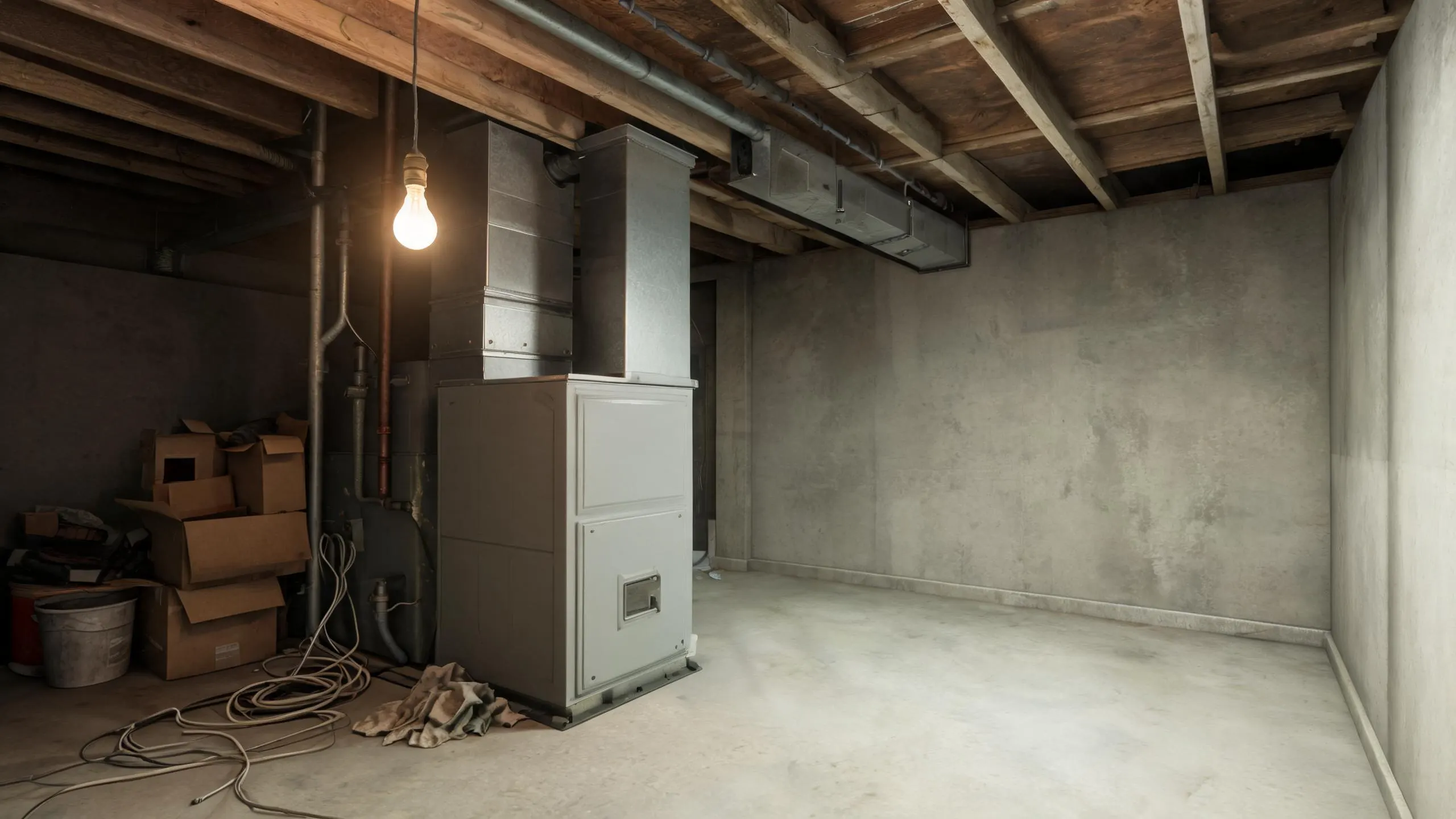
Seven months a year, October through April, your furnace is what keeps the house livable. Winter nights average 28°F here, and it has to answer that night after night for most of the year.
Most homes in Bedford heat with electricity, and the power does not always hold. Virginia saw 22% of households lose power for 24 hours or more in 2024, and the county has logged 16 winter storms and 131 damaging wind events over the past ten years. A new furnace installed here also has to meet the federal minimum of 80.0 percent AFUE, the baseline for how much of the fuel it burns turns into heat in your house.
- 7 months
- October through April, your furnace is on duty
- 28°F
- the average winter night it heats against
- 80% AFUE
- the federal minimum any new unit must meet
NOAA nClimDiv, 1991–2020 normals
Virginia requires HVAC contractors to hold a state license.
The license is issued to the contractor, not to this particular job. It follows the business across every furnace they install, not just yours. Virginia does carve out an exception for small jobs. Work under $1,000 does not need a licensed contractor at all. A furnace installation runs well past that line, so this is the kind of job the license is meant to cover.
That license is what stands behind the contractor in your house. In most cities and counties, replacing a furnace also needs a permit from the local building office, with an inspection once the work is done. That permit and inspection are separate from the license itself, a second check on top of it rather than part of it.
Sources: Virginia General Assembly · Virginia Department of Professional and Occupational Regulation
- What size furnace does my house need?
- There is no way to answer that from square footage alone. A contractor sizes a furnace by running a load calculation that accounts for your insulation, your windows, your ceiling height, and how the house is laid out. A furnace that is too big cycles on and off too often and never runs long enough to heat evenly. One that is too small runs constantly and still cannot keep up on a 28°F night. Ask the contractor to walk through the load calculation with you before they quote a size.
- How do I know it's time to replace my furnace?
- Age is the first thing to check, along with how often it needs a repair call. A furnace here works hard, since homes need heat from October through April, and that wear adds up over the years. If the same part keeps failing, or a repair is priced close to what a new furnace would cost, most contractors will tell you replacement is the better move. Also listen for the burner cycling on and off more than it used to, or rooms that used to heat evenly and now do not.
- Is a high-efficiency furnace worth it?
- Every furnace sold new today has to reach at least 80 percent AFUE, so the question is really whether it makes sense to go higher than that. A more efficient furnace turns more of the fuel it burns into heat for your house instead of losing it out the flue. With heat needed here from October through April and winter lows averaging 28°F, a furnace runs a lot of hours over a year, and every point of AFUE matters more the more it runs. A contractor can tell you which efficiency level fits your house, since higher-efficiency furnaces vent differently than older models.