How to lower your heating bill in a Virginia winter
A local pro who services furnaces gets in touch about the tune-up.
Most homes in Virginia heat with electricity, and that bill climbs fast once the cold settles in for the winter. A furnace working harder than it needs to shows up directly in what you pay every month from December through February.
A furnace that gets looked at before winter runs the way it was built to run. The igniter fires clean, the blower moves air the way it should, the airflow isn't fighting a dirty filter or a clogged coil. None of that happens on its own. It takes someone who knows your system checking it before the cold months, not after something quits on you in January.
Finding that someone is the part that eats your evening. You search, you find a few names, you call, you explain the furnace, the house, what it's doing or not doing, you wait on a callback, you do it again with the next name on the list, you try to compare what one contractor quoted against what another one meant by a different set of words. That's real time, and most people don't have it to spare in the middle of a cold snap.
This page skips that part. Tell it what your furnace is doing and where you live, and it matches you with a contractor who handles maintenance for homes like yours in Virginia. That contractor reaches out to you. You're not the one chasing down names and sitting on hold.
What that contractor finds in your furnace and what they recommend is between you and them. What you get from this page is the match itself, and the ten phone calls you didn't have to make to get there.
Your winter bill is shaped by how your furnace runs. Below is what to check and what a contractor looks at when they go through it.
Why is my heating bill so high in the winter?
You keep seeing the same jump every winter. The thermostat hasn't changed, but the bill has. You're not imagining it, and it's not just the cold outside doing it. Something in how the furnace is running is making it work harder than it should, and that extra work goes straight onto the electric bill.
A furnace losing efficiency runs longer to make the same heat
A furnace that's dirty inside or low on airflow has to run longer to reach the temperature on the thermostat. Longer runtime means more electricity, even though the house feels the same. A clogged filter, a dirty blower wheel, or a buildup inside the furnace itself can all cause this, and none of them announce themselves the way a broken part does. The furnace just quietly works harder every day from December through February. Since most homes in Virginia heat with electricity, that extra runtime shows up fast and directly on the bill, more so than it would somewhere heating with gas. A furnace that's been checked and cleaned before winter doesn't have to make up for that lost efficiency all season.
What a dirty filter costs you
A clogged filter forces the blower to work harder to push the same amount of air through the ducts. The furnace runs longer to reach the temperature on your thermostat, and that longer runtime is what shows up on the bill. A filter checked and changed on schedule keeps the blower moving air the way it was built to, without the extra strain.
Why the flame matters too
Gas furnaces burn fuel to make heat, and a burner that isn't firing clean wastes some of that fuel instead of turning it into warm air. Dirt or wear on the burner or the igniter can throw the flame off without tripping any warning sign you'd notice on your own. A technician checking the burner and the flame during a tune-up catches that drift before it adds up across December, January, and February.
What this winter is costing you
Walk through your house in January and you can probably point to the room that never gets quite warm enough, the vent that barely puts out air, the thermostat you've bumped up two degrees without thinking about it. Each of those is the furnace compensating for something, and compensating costs money. A furnace that short-cycles or runs long to hit its setpoint is pulling more electricity every single day of the winter, not just on the cold snaps.
Left alone, a furnace under strain doesn't fix itself. It wears faster, and a part that's already stressed is more likely to fail on the night it's ten degrees outside. Instead of calling around Virginia for someone who can look at it this week, explaining the same problem three times to three different companies, you can be matched with a contractor who takes on jobs like yours and have them reach out to you directly.
A furnace that's kept up
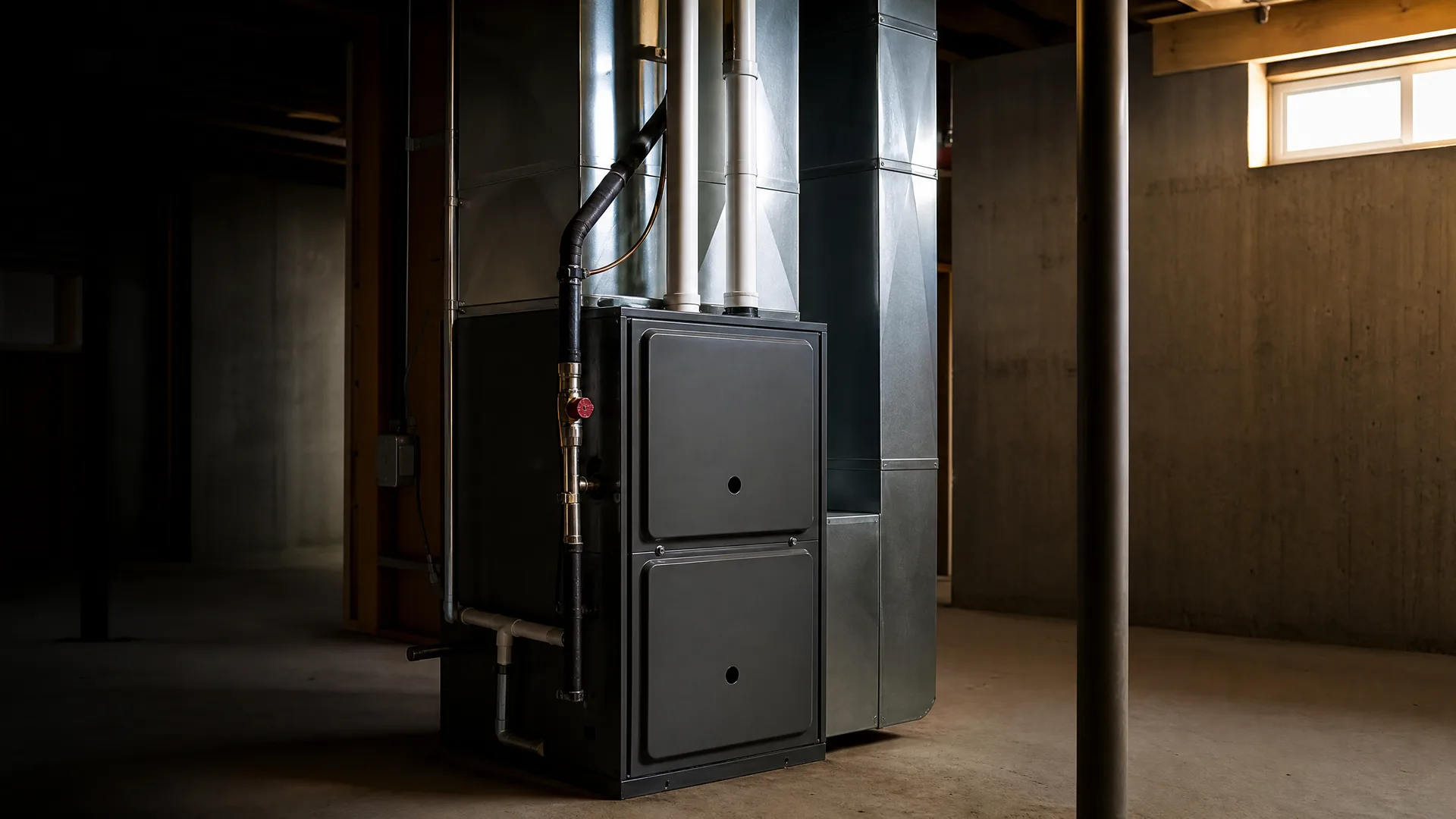
The burners fire clean and the blower moves air through the ducts without strain. The condensate line drains the way it should instead of backing up. A furnace running this way holds its temperature without long cycles, and that's what keeps the bill from creeping up in January.
A furnace that's been left alone
Grime on the cabinet usually means grime where you can't see it, on the burners and the flue. An older unit like this one that hasn't had a technician look at the gas line, the flue, or the pressure switch is working with whatever buildup has settled in since the last time anyone checked.
Get the right pro for your furnace
Fill out one form instead of calling around for a furnace tune-up.
Describe your furnace job, and a local pro who handles it gets in touch.
Asking costs nothing, and the choice to hire stays yours.
Does your house feel colder than the thermostat says
Check the thermostat, then stand in the room farthest from it. If that room feels noticeably cooler, the furnace is sending heat unevenly, and running the thermostat higher to compensate pushes the bill up without fixing the room. Listen for a furnace that starts and stops more than it used to, or one that stays on for long stretches without the house catching up. A burner flame that looks yellow instead of blue, or a burning smell when the furnace first kicks on, both point to something that needs attention rather than something to wait out. Left alone through a Virginia winter, these signs usually mean paying more for less heat, and in some cases they point to a furnace working hard enough to shorten its own life.
You're down in the basement on a Saturday afternoon in October, getting things ready before the cold sets in. The furnace sits there quiet, not running yet, and you've pulled the filter halfway out to check it before the first cold snap hits. It's grey, matted with a season's worth of dust, the kind you can't see through anymore. You stand there holding it, wondering how long it's actually been since this was changed, thinking back over the summer you don't quite remember. Outside the small basement window the light is already going flat and low. You know what this winter runs on, and you know what a filter like this does to that bill.
Skipped Maintenance vs. Maintained Furnace
Skipped
The burners fire unevenly, which means some of the heat you're paying for never makes it into the house.
Dust and debris build up on the heat exchanger and slow down how well it transfers heat into the air moving through the ducts.
The blower motor strains against a dirty filter, drawing more power to push the same amount of air.
A cracked or loose belt connection, worn bearing, or drifting thermostat sensor goes unnoticed until the furnace is running far longer than it should.
Small problems compound over the winter, so a furnace that was running fine in November can be costing you real money by February.
Nobody checks the flame sensor or ignition system until the furnace fails outright, usually on the coldest night of the year.
Maintained
A contractor checks the burners and ignition system so the furnace fires clean every cycle instead of running long to compensate.
The heat exchanger gets cleaned so it transfers heat the way it was built to, instead of losing it to buildup.
The blower and filter get checked together, so air moves through the ducts without the motor working harder than it has to.
Electrical connections and the thermostat sensor get tested, which catches a drift before it turns into weeks of overrunning.
You get a written sense of where the furnace stands before the coldest months hit, instead of finding out when it stops working.
Instead of searching for a contractor and explaining the same thing over the phone to three different companies, you get matched with one who handles it.
Winter nights across Virginia average 29°F, cold enough that your furnace is cycling on through most of the night, not just running a quick burst in the early morning. Source: National Weather Service. That's several hours of runtime most nights from December through February, all pulling off the same electric service as everything else in the house. If the burners aren't firing evenly or the blower is straining against a dirty filter, those long overnight cycles are where it shows up most. You'd notice it as a furnace that seems to run the whole night without the house ever feeling fully warm by morning.
NOAA nClimDiv 1991-2020 county normals weighted by homes
Burners fire clean, the blower moves air without strain, and the condensate line drains clear instead of backing up into the pan.
Dust has built up on the heat exchanger, the panels have come loose, and the furnace is pulling harder to push the same heat through the ducts.
1
The thermostat calls for heat and the igniter glows hot.
2
Gas flows to the burners and they ignite off the igniter.
3
The blower pulls air across the heated heat exchanger.
4
The blower pushes that warmed air out through your ducts.
Winter nights average 29°F statewide
A 29°F overnight low means your furnace is holding a roughly 40 to 50 degree gap between outside and your thermostat setting for most of the night, not just taking the edge off. That's steady, hours-long runtime, and any strain on the furnace shows up fast in what it costs to keep that gap closed.
NOAA nClimDiv 1991-2020 county normals weighted by homes
Running the way it should
The burners fire clean and the heat exchanger passes that heat into the air without blockage. Flue pipes vent exhaust the way they're supposed to. A furnace set up like this holds the house at temperature without running longer than it needs to.
Working against itself
Galvanized ductwork carries air the blower is straining to push, and an older furnace like this one has had more years to collect dust on the heat exchanger. The gas lines and venting still do their job, but the furnace behind them is working harder to hold the same temperature.
A furnace that's running clean costs less to run than one that isn't, and that's the whole answer. Clean burners, a clear heat exchanger, a filter that isn't choked with dust, a blower that isn't straining. Each of those keeps your furnace from working longer than it has to, and shorter runtimes are what bring the bill down. None of that happens by itself over a Virginia winter. Left alone, a furnace drifts the other way, a little dirtier and a little less even each month until February's bill looks like December's and worse. You don't have to spend a weekend finding someone to look at it, calling a few places, explaining the same thing about the cold room and the high bill to each one, then sitting with quotes trying to work out who's worth calling back. That part ends here. What's left is simpler: a furnace that's been checked over and kept up, and a bill that reflects it.