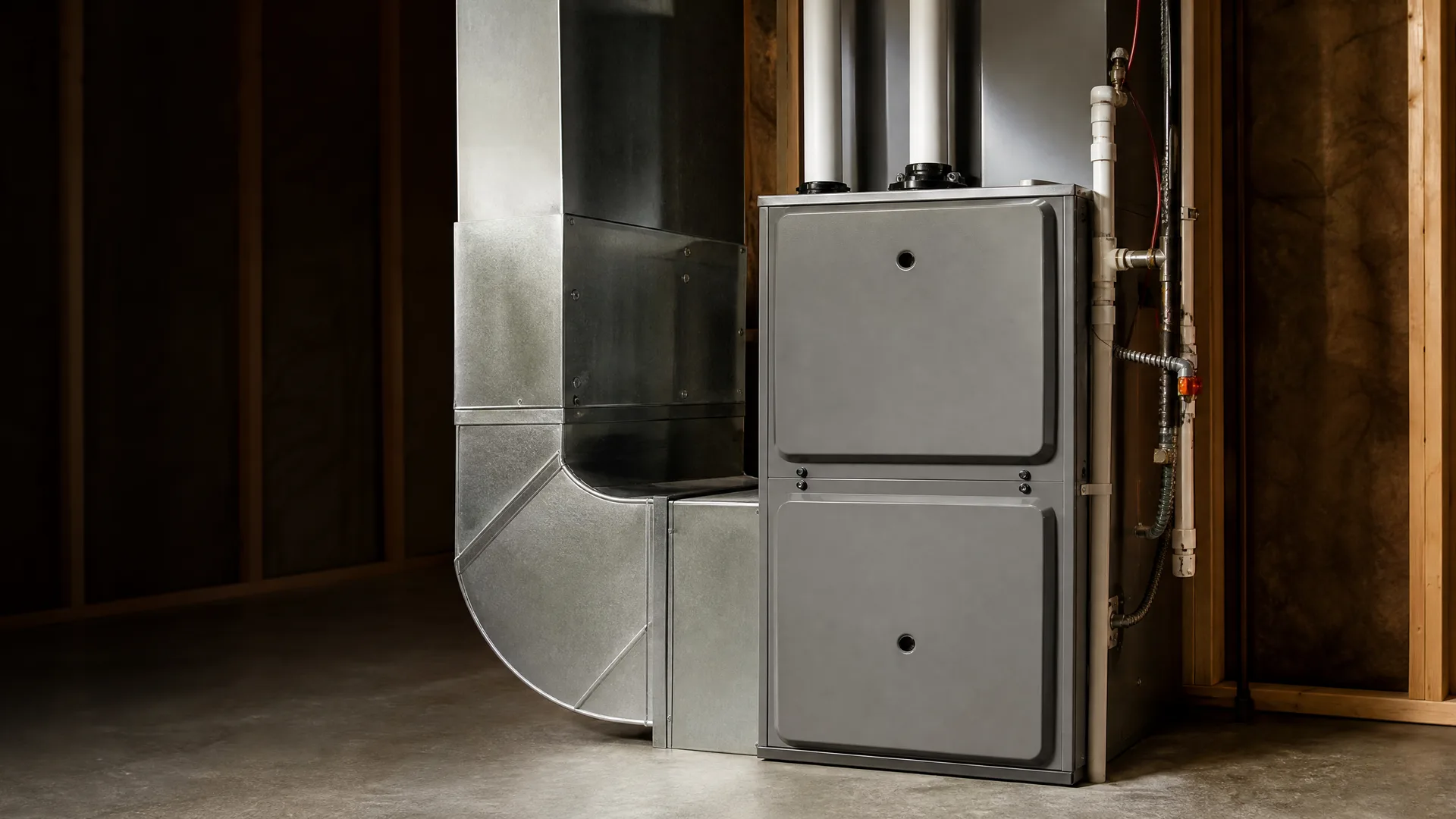
A dark gray furnace with two access panels stands in a basement, connected to galvanized sheet-metal ductwork and PVC pipes, with exposed wood framing and a bare bulb light in the background.

Finding a pro stops being your job

Why your furnace is blowing dust in Virginia

Dust coming out of your vents usually traces back to the furnace itself, not just a dirty filter. Most homes in Virginia heat with electricity, and an electric furnace has its own reasons for pushing dust through the house, from a clogged filter to a leaky duct connection. This page walks through what to check and what it means. Once you send the form, finding someone to look at it is off your plate.

I'm done searching

Dust blowing out of your vents almost always means the filter isn't catching what it should, or the furnace itself is stirring up more than it can trap. A filter that's packed with lint and pet hair lets fine dust pass right through, and if it's the wrong size or sitting loose in its slot, air leaks around the edges instead of through the media. If your furnace is electric, which most homes in Virginia are, the heating coils can also dry out dust that's settled inside the cabinet over the summer, then push it through the ducts once the blower kicks on for the season. Loose duct joints and a dirty blower wheel add to it too. Left alone, the dust keeps recirculating every time the heat runs, and it's worth having someone check the filter fit, the blower, and the duct connections before the cold settles in for good.

A gas furnace with a louvered upper panel stands on a concrete pad in a basement, flanked by sheet-metal ductwork, white PVC and metal pipes, and insulated columns.
Before you get your furnace maintenance
A dark high-efficiency furnace on a concrete pad in a basement, connected to galvanized ductwork, white PVC vent pipes, and copper and black gas piping, with concrete walls and wood framing nearby.
After you get your furnace maintenance

Most residential filters only catch particles down to a certain size unless they carry a MERV rating of 8 or higher. A low-rated filter lets fine dust pass straight through on every single pass of air.

An electric furnace cycles air through that filter dozens of times a day, so even a small gap in filtration adds up fast. That's why the dust keeps coming back no matter how often you dust the furniture.

A man in a navy sweater reclines with closed eyes in a beige armchair in a living room, with a lamp, wooden cabinet, bookshelf, potted plant, and a side table holding a newspaper and mug nearby.
A man in a blue henley shirt reclines on a leather chair with his eyes closed, beside a window, a houseplant, a side table with a newspaper and a dark mug.
A man in a gray sweatshirt reclines with his eyes closed in a dark leather chair, with a bookshelf behind him and a side table holding folded newspapers, a mug, and a potted plant by a window.
A man in a blue sweater leans back on a brown leather chair with his eyes closed and a slight smile, in a room with bookshelves, framed pictures, a potted plant by a window, a folded newspaper and a dark mug on a table.

What keeps coming back

You wipe down the shelves and the TV stand, and a week later the film is back. It settles on the furniture fastest in the rooms closest to the vents. You notice it more on the registers themselves, a gray ring building up around the edges. If anyone in the house has allergies or asthma, this is usually when it flares up worst, right as the furnace starts running every day. Some homeowners also notice a faint burning smell when the system kicks on, which points to dust sitting on the heat exchanger itself.


What it does to the furnace

Dust pulled past the filter doesn't stay in the air. It settles on the blower wheel and the heat exchanger, and both run less efficiently once they're coated. A furnace working harder to push air through will run longer to reach the same temperature, which shows up on your electric bill. Left long enough, the buildup can shorten the life of the blower motor. None of this fixes itself. It gets worse through the winter until something is cleaned or replaced.

Winter nights average 29°F statewide

Nights in the high 20s mean your furnace is running long stretches to keep up, and every one of those cycles pulls more air through the filter and the cabinet. If dust has been building since fall, cold nights like these are when you'll see the most of it.

NOAA nClimDiv 1991-2020 county normals weighted by homes

A gas furnace with two gray access panels stands against a plain wall in a basement, connected to sheet-metal ductwork, white PVC vent pipes, and a yellow gas line.

Skipping the filter check

A filter left in past its month gets packed solid, and once air can't pass through it easily, it starts pulling air around the edges of the frame instead. That unfiltered air carries dust straight into the blower and back out through your vents. The furnace doesn't know the difference. It just keeps running, keeps pulling air, and keeps pushing whatever gets past that filter into every room on the system.

A gray high-efficiency furnace in a basement corner with white PVC vent pipes, copper and black gas piping, and sheet-metal ductwork beside a plain white wall and wooden stair framing.

Having it looked at yearly

A contractor who services electric furnaces checks the blower wheel for buildup, looks at the cabinet seams for gaps, and confirms the filter slot is sized right for your system. Dust that's been collecting on the blower blades gets knocked loose and carried into the house with every cycle, and a technician cleans that off rather than leaving it to blow around all winter. It's the kind of thing that's hard to catch on your own.

Why does the dust keep coming back after you clean

You run a cloth over the end table, and by the next week there's a thin layer again, same as before. The vent covers show it first, a dark smudge spreading out from the slats. You might notice it on your hands after you adjust a register, or a faint burning smell the first time the furnace kicks on after sitting idle. Some households notice it more if anyone has allergies or asthma, since the same dust the furnace is pushing out is what they're breathing all day. Left alone, a furnace that's circulating dust this way isn't going to stop on its own, and the buildup inside the cabinet and ductwork only adds to what gets pushed back into the house each time it runs.

  1. Air gets pulled in through the return and the filter

  2. A clogged or loose filter lets fine dust pass through

  3. Air moves across the heat exchanger and blower wheel

  4. Dust built up on the blower gets thrown into the duct

A beige high-efficiency furnace with white PVC vent pipes stands beside galvanized sheet-metal ductwork in a basement with a concrete floor, exposed wood studs, and metal piping along the wall.
A furnace running clean moves air through the filter and out the ducts without stirring up anything extra.
An older beige furnace with a louvered vent panel stands on a concrete basement floor beside galvanized sheet-metal ductwork, a metal flue pipe and vertical pipes along a concrete wall.
Once a furnace starts failing, the cabinet and blower can shed dust into every room it feeds.
A dirty pleated air filter leans against a furnace with metal ductwork in a dim concrete basement.

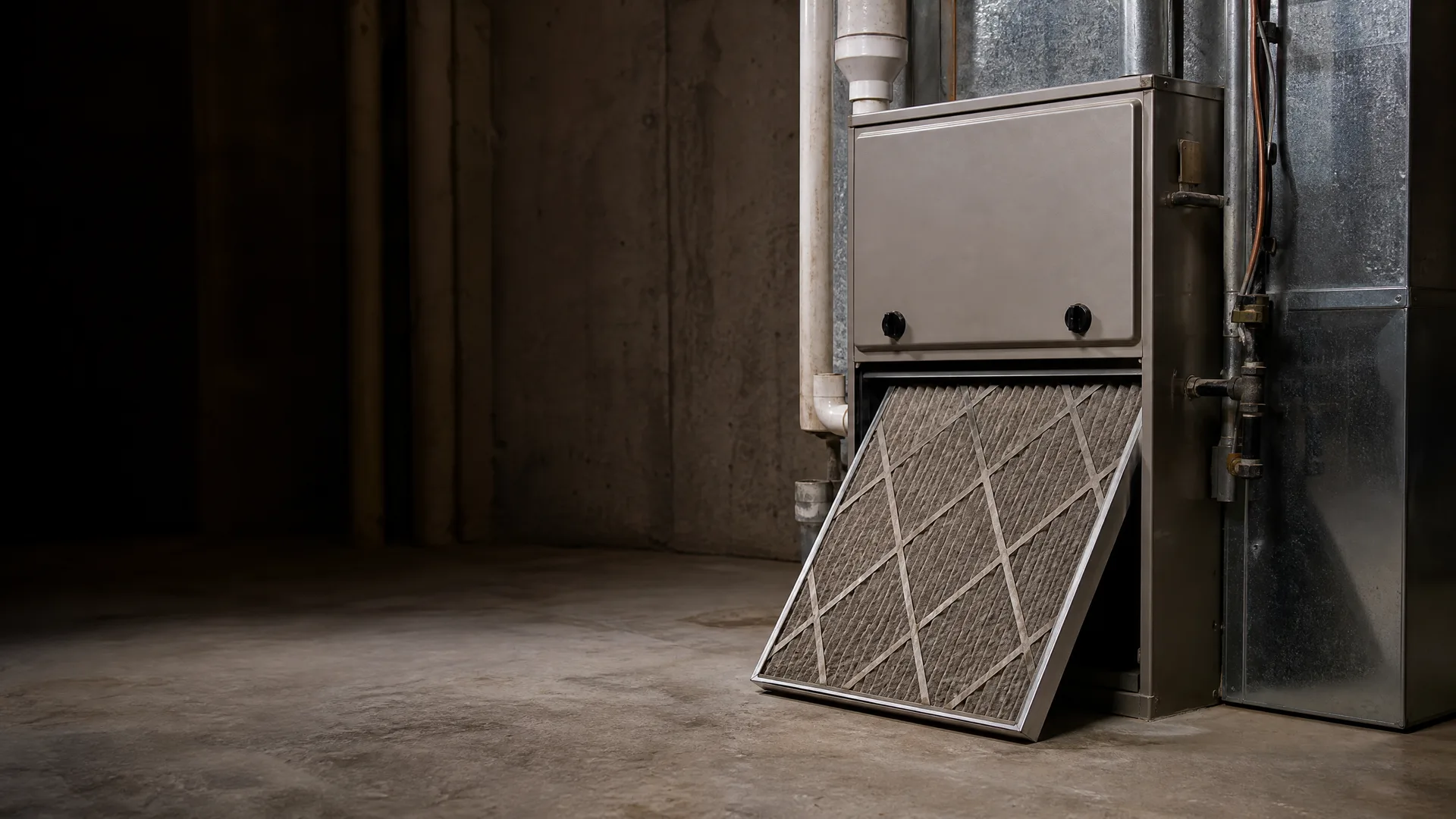
You go down to check the thermostat wire and the basement is cooler than the rest of the house, that October chill already sitting in the concrete. The furnace is running, you can hear the blower. You slide the filter out to see how it's holding up and it's gray all the way across, the pleats packed flat with dust. Behind it, the cabinet edge where the filter sits has a thin coat of the same gray, like it's been getting past the frame for a while. You hold the filter up to the bare bulb overhead and can't see light through more than a corner of it. You set it on top of the furnace and stand there a second, looking at the duct running off into the house.

Let someone else find the pro

A licensed local pro takes the request for your furnace tune-up.

There's no charge for the request.

A gray high-efficiency furnace with two PVC vent pipes stands in an unfinished basement beside sheet-metal ductwork, a framed and plastic-covered wall, and a bare concrete wall with vertical pipes.

Furnace running clean

This is what a furnace looks like when nothing's wrong. The cabinet is sealed, the flue pipes are tight, and air moves through the filter and out the ducts without picking up anything extra. A furnace like this doesn't need you to think about it in January.

A gray furnace cabinet in a basement, connected to galvanized sheet-metal ductwork and white PVC pipes, against a concrete wall with exposed metal piping and insulation overhead.

Furnace losing the fight

Set on a pallet with galvanized ducts above it, this furnace is already working against a few things. Bare block walls and open joists mean the basement runs cold, and a furnace that's straining to keep up is one that's more likely to be shedding dust instead of just moving air.

Can a leaky duct joint really cause this much dust?

You've checked the filter and it's fine, so you're wondering if it's the ductwork itself, maybe a joint that's come loose somewhere in the basement or crawlspace, and whether that alone could really be pulling in enough dust to coat every room this badly.

Yes, a single bad joint can pull dust into the whole system

A leaky joint on the return side doesn't just leak air out, it pulls air in. The blower creates suction on that side of the system, so any gap in the metal or a seam where the tape has failed draws in whatever is sitting in the basement or crawlspace, insulation fibers, concrete dust, anything loose nearby. That air never passes through the filter at all. It joins the airstream past it and gets pushed straight into every room the duct feeds. One joint, if it's in the right spot, is enough to account for dust showing up at registers throughout the house, not just near the furnace.

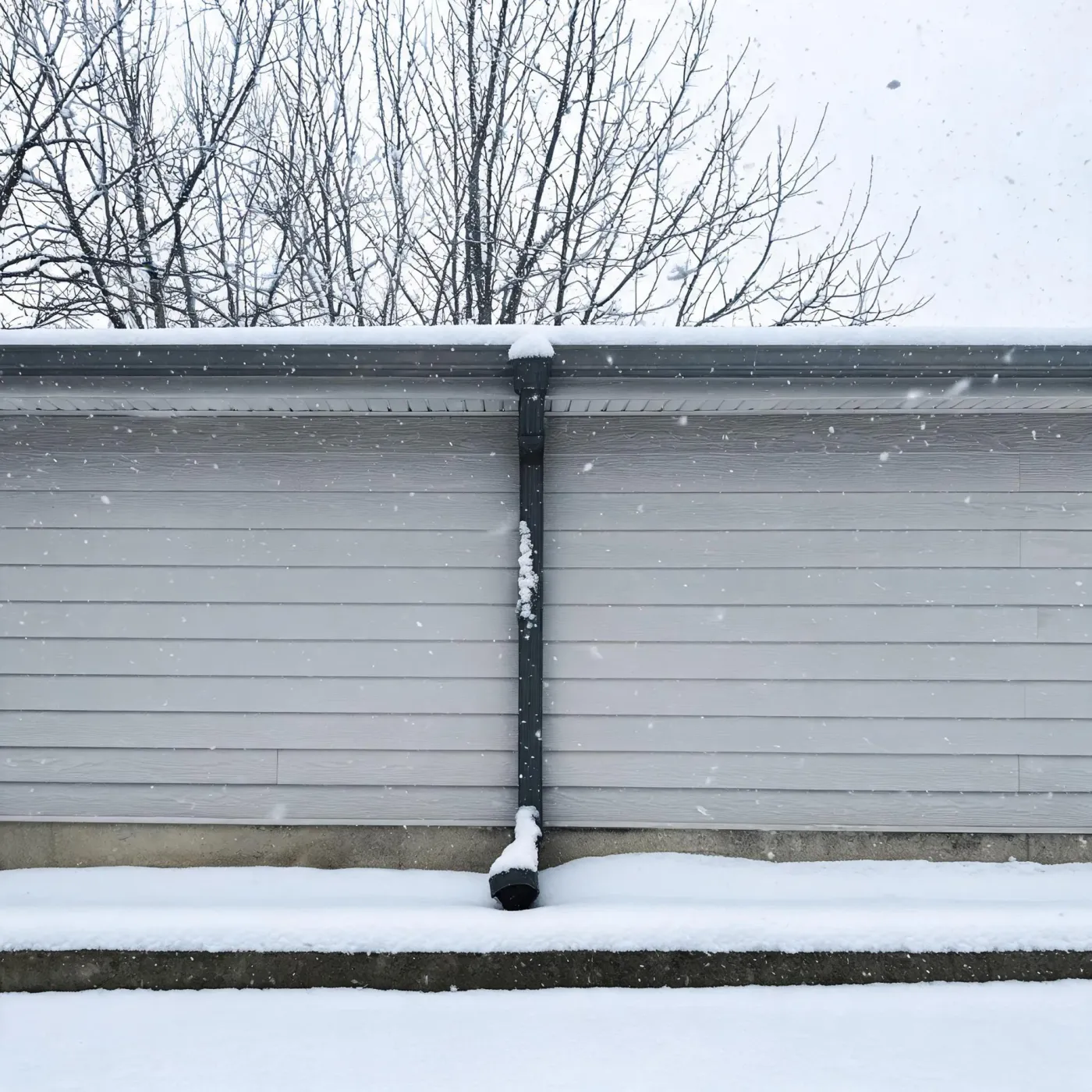
Exterior wall of a building with light gray horizontal siding and a dark downspout running to the ground, with snow on the roofline, steps, and ground, and bare trees behind during falling snow.

The National Weather Service puts the statewide average winter night at 29°F. That's cold enough that your furnace isn't just kicking on here and there, it's holding a long steady run most of the night to keep the house even. A long run means more total air pulled through the cabinet and the filter before morning. If the filter's loaded or the blower wheel has dust caked on it, those extended nights are exactly when you'll see the most of it drifting out through the vents.

NOAA nClimDiv 1991-2020 county normals weighted by homes

A gray-haired man in a blue quarter-zip sweater sits in an armchair with his eyes closed, beside a large window with bare trees outside and a potted plant and lamp nearby.
A woman in a cream knit sweater sits in an armchair with her eyes closed and head tilted back, beside a window showing orange autumn foliage and a wooden side table with a mug.

The Furnace Is Where This Ends

  • A furnace that's clogging a filter fast or coating the cabinet in dust is telling you something needs attention, not patching with another wipe-down.
  • The source is almost always one of a few things: a filter rated too low, a loose duct joint, or a blower wheel caked in buildup.
  • A technician who services furnaces in Virginia all winter knows which of those three shows up most and checks it first.
  • Matching you with one local, licensed contractor means a single visit handles the diagnosis instead of juggling callbacks from several companies.
  • Once the real cause is found and fixed, the dust stops coming back week after week.
  • Where you stand now is simple: the furnace is the source, and a local contractor who knows this equipment can confirm which part needs work.

Dust that keeps coming back isn't a cleaning problem. It's the furnace, and by now you've seen enough to know that: a filter that's rated too low, a duct joint that's come loose, or a blower wheel carrying enough buildup to shed it into every room the system feeds. Any one of those will keep filling your house with dust no matter how often you wipe the shelves down.

Finding out which one it is doesn't take guesswork, but it does take someone who's inside furnaces all winter in Virginia and knows which of these three turns up most. A technician who works this equipment every season in your area has usually already seen the exact version of what's happening in your house, whether that's a filter that's the wrong size for the furnace or a seam in the ductwork that opened up with age.

You'll be matched with one contractor, local and licensed, not a handful of companies competing for the job. That means one visit, one person looking at the filter, the ductwork, and the blower wheel, and one diagnosis instead of several different opinions on the phone. No chasing callbacks or explaining the problem over again to someone new.

The dust has a cause, and the cause is in the furnace. Once it's found, it gets fixed, and the gray film that's been settling on your furniture and building up around the registers stops coming back.

A gray high-efficiency furnace with two white PVC vent pipes stands in an unfinished basement beside galvanized sheet-metal ductwork, with insulated wood-framed walls and piping behind it.

One request and it's handed off

Tune-up, service, or cleaningFurnace or heatingVirginia
Step 1 of 2

What ZIP code is the job in?