

Why your house is so dusty in Dumfries, VA

Get matched with a pro who works on ducts in Prince William County.

Get a duct system pro

Why is my house so dusty in Dumfries, VA?

You're running the duster over the same shelf every few days and it never seems to help. Furniture, windowsills, even the TV screen get a gray film back within a day or two. It's not that you've stopped cleaning. Something is putting dust into the air faster than you can wipe it away, and in a lot of homes around Dumfries that something is the duct system moving air through the house all day.

Your ducts are recirculating dust faster than you can wipe it away

Every time your furnace or AC runs, air moves through the ducts, past the filter, and back out into every room. If the filter is the wrong size, loose in its slot, or just overdue to be swapped, it stops catching the fine stuff and lets it ride right back into your living room. Winters here mean the furnace runs for months straight, and summers push the AC just as hard, so that air is cycling constantly. A duct system that's leaking at the joints can also pull in dust from the attic or crawlspace and spread it through the house on every cycle. Cleaning the ducts themselves, not just swapping the filter, is what deals with dust already built up inside the system.

Empty concrete-walled basement room with bare floor and an exposed wood-joist ceiling carrying galvanized rectangular and round sheet-metal ducts, black pipes, and wiring.

Ducts sealed tight

Sheet metal joints fit close, and the trunk lines and branch runs hold their shape. Air moves through without pulling in whatever's sitting in the joist bays above. What comes out the vents is what the furnace or AC actually treated, not a mix of that and basement dust.
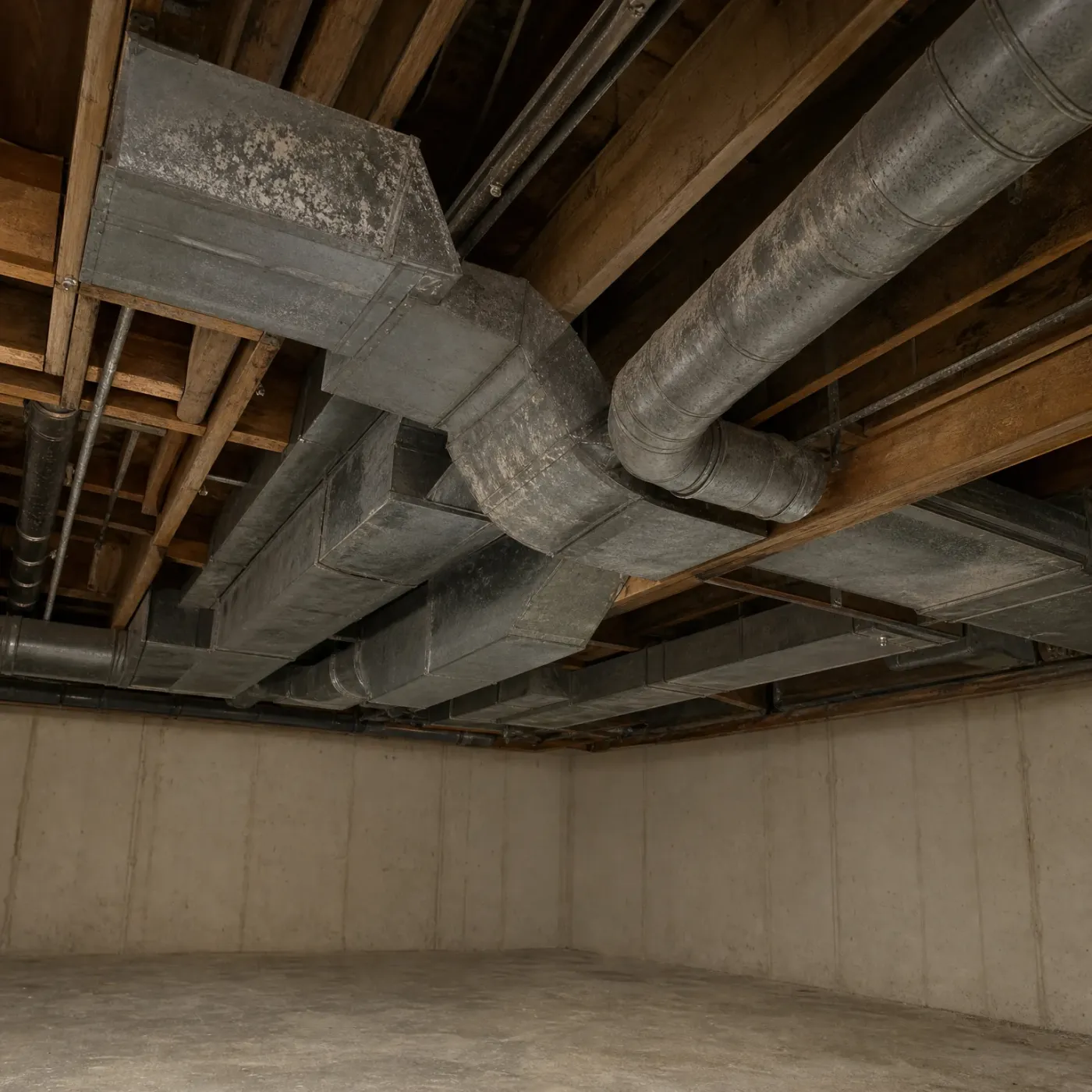

Empty concrete-walled basement room with exposed wooden joists and galvanized rectangular and round ductwork plus pipes running across the ceiling.

Ducts leaking and corroded

Rust and surface oxidation on old galvanized duct mean the seams have likely opened up. Every time the blower runs, it draws air through those gaps from the basement and the space around the joists, and that air carries dust straight into the rooms above.

What's behind the dust in a Dumfries house?

  • Half the homes here were built by 1995

    Half the homes in the county were built in 1995 or earlier, and older duct joints and seams have had decades to work loose and start pulling in attic or crawlspace dust.

  • Heat runs October through April

    Heat runs October through April here, about seven months, and that's seven months of air getting pushed through the same ductwork, any gaps blowing dust straight into your rooms.

  • Cooling runs June through September

    Cooling runs June through September, so for four more months that same duct system is moving air just as hard, carrying whatever it's picking up along the way.

ACS 2020-2024 · NOAA nClimDiv 1991-2020

What the filter is actually catching

A one-inch filter is rated to stop dust before it hits the blower and the coil, not to scrub a house's worth of air clean. Most of what you're seeing settled on the shelf never passed through the filter at all. It came in through a loose return seam, a gap at the plenum, or a boot that pulled away from the subfloor, picking up whatever's in the attic or crawlspace along the way. The filter only sees air that enters where it's supposed to. Air that enters anywhere else bypasses it completely and gets delivered straight to the room.

Why sealing changes what settles

Once the joints and seams are sealed, every cubic foot moving through the system has to pass the filter first. The furnace or AC keeps running the same hours it always has, October through April on the heat side, but what comes out the vents is filtered air instead of a mix of filtered air and attic dust. You'll still need to dust and vacuum. What stops is the fast return, the film that's back within a day or two. A duct system that's been sealed and cleaned holds a clean pass noticeably longer than one still pulling in air from the joist bays.

A woman with dark shoulder-length hair sits wrapped in a gray fleece blanket on a sofa with an open book on her lap, beside a lit lamp and a dark window.
A smiling older woman with gray hair in a loose bun wearing a ribbed beige sweater stands in a dimly lit kitchen beside a window showing darkness outside, with a loaf of crusty bread on a wooden board in the foreground.
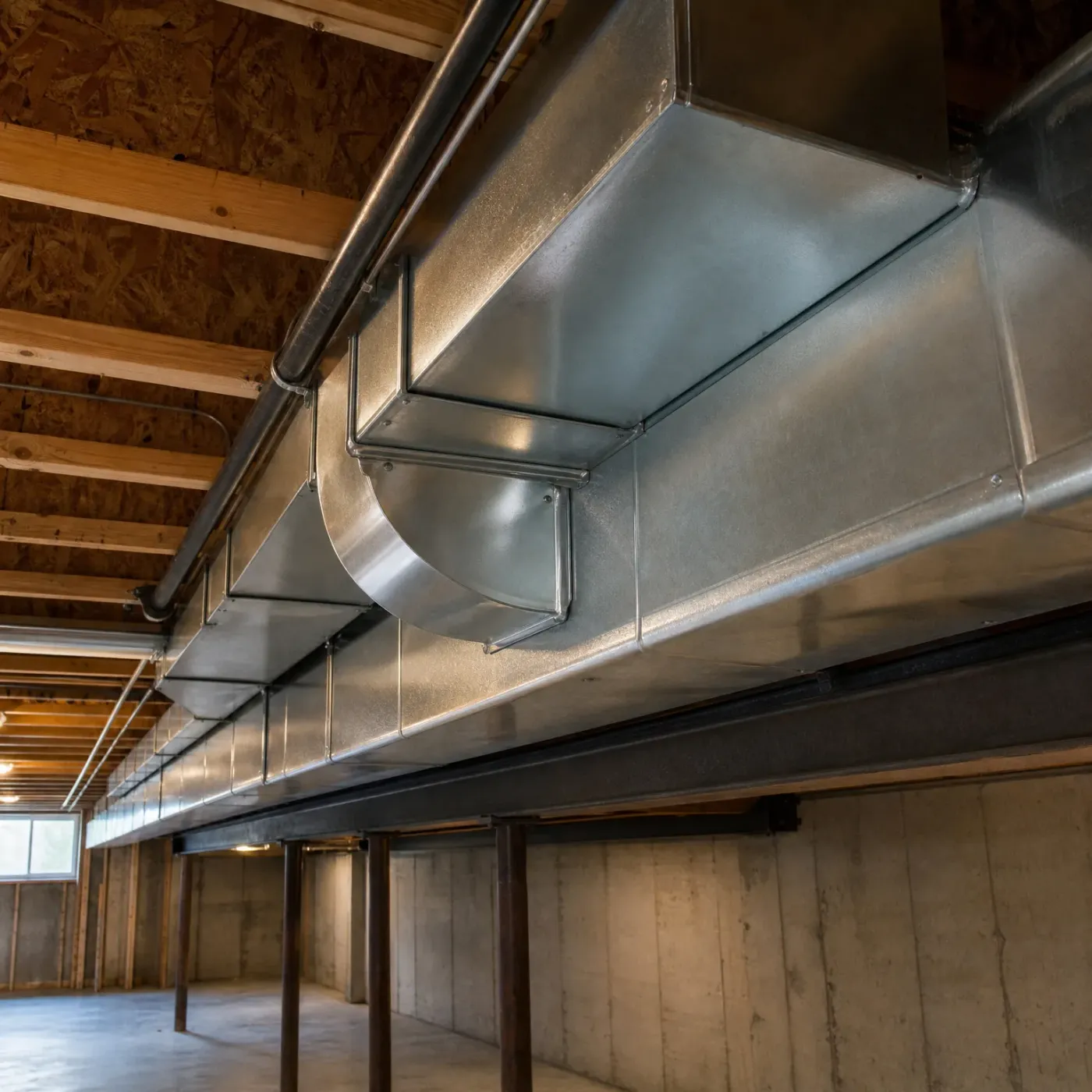
Galvanized sheet metal HVAC trunk ducts and branch takeoffs running below a wood-joist ceiling in an unfinished basement with concrete walls, steel support columns and a concrete floor.

Get matched with a duct system pro in Prince William County

The pro who gets in touch is licensed in Virginia and works in Prince William County.

Your request goes to a Prince William County pro who takes ductwork jobs.

Get a licensed local pro

You're not committing to anything by asking.

Why does dust keep coming back so fast?

You've probably noticed it's not just the shelves. Dust sits in the bottom of closets that stay shut most of the week. It collects on top of the ceiling fan blades and along the baseboards faster than it should. If anyone in the house has allergies or asthma, you may have noticed more sneezing or a stuffier nose indoors than outdoors, especially right after the heat or the AC kicks on. Check the supply vents themselves. A ring of gray buildup around the edge of the vent cover means the duct behind it is feeding dust straight into the room every time air moves. Left alone, that's more dust landing on the same surfaces you already keep wiping down.

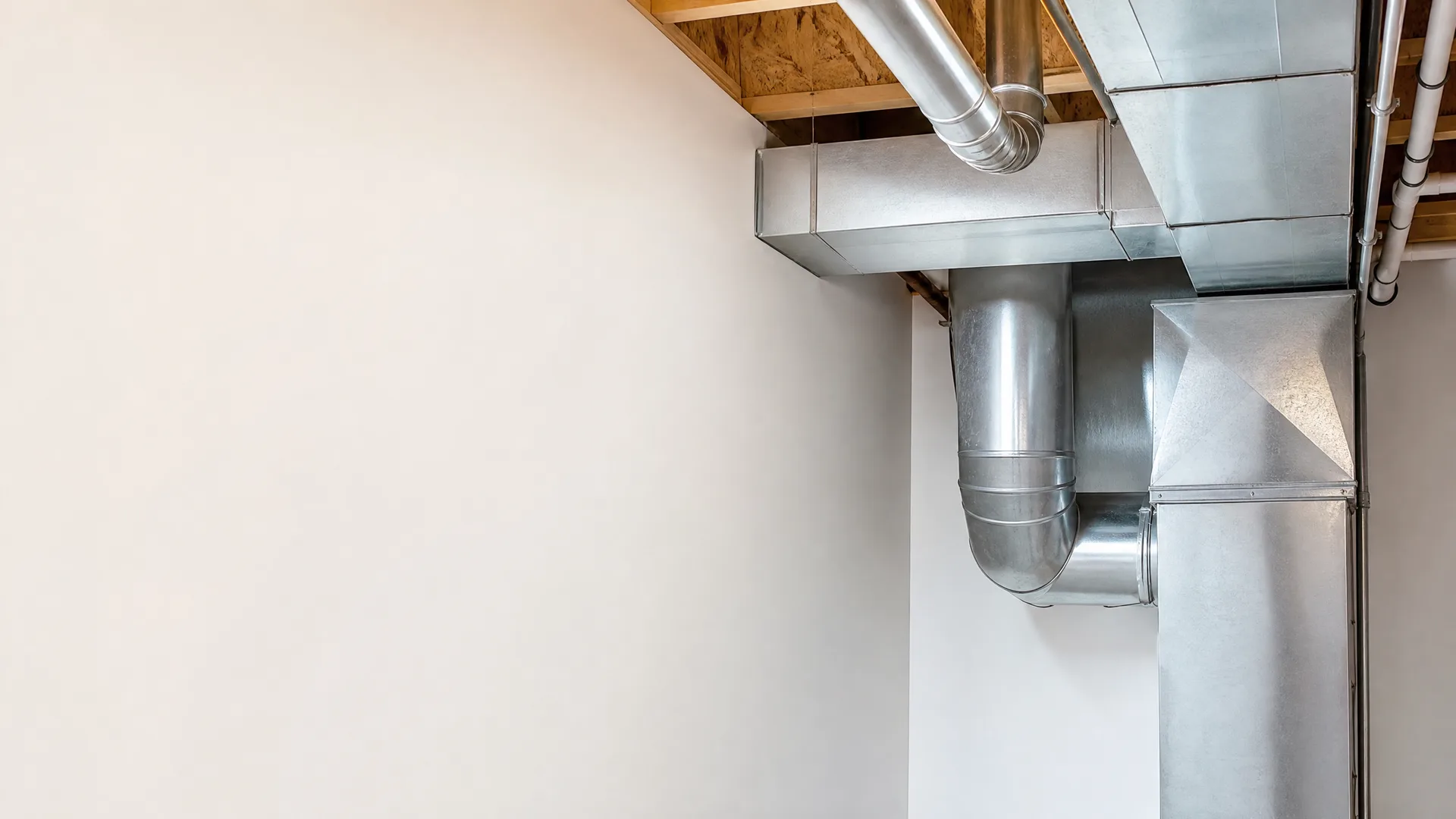
Galvanized sheet-metal ductwork and pipes running along an unfinished basement ceiling beside a plain beige wall, with a gray equipment cabinet below.

A house that runs clean

Supply air comes out close to room temperature and smells like nothing. Vents don't leave a dark ring on the ceiling or wall around them. A cloth wiped across a shelf a week after cleaning comes back with a light coat, not gray. Registers stay cool to the touch near the edges, and you can run a finger inside one without pulling out a gritty line. The system is moving the air it was built to move, and what settles in the house is only what came in through the windows and doors.

Galvanized sheet metal rectangular and round HVAC ducts running along a ceiling and down a white interior wall, with exposed wood joists and subfloor above.

A house working against itself

Vents leave a faint sooty shadow on the ceiling within a season of painting. Air coming out smells faintly of attic or basement, especially right after the furnace or AC kicks on. A shelf dusted on Monday needs it again by Thursday, and the top of a door frame collects a line you can write in. Register covers feel gritty on the inside edge where air has been dragging fine particles across the metal for months. None of this means the house is dirty. It means the ducts are feeding the rooms more than the furnace or AC ever treated.

Clean the Ducts or Just Wait

Clean the ducts

  • A contractor runs a brush and vacuum through the trunk line and branch runs, pulling out what's built up on the sheet metal walls.
  • Loose insulation or debris sitting in a damaged run gets removed instead of blown back into the house every time the blower kicks on.
  • Registers and the inside of the supply boots get wiped down, so the gray ring around the vent doesn't just come back next week.
  • A contractor working ducts in Dumfries homes every week can tell you if a joint or seam is loose enough to need sealing while they're in there.
  • Cleaning doesn't fix a cracked plenum or a gap at a joist bay, so the pull-in can start again until that's addressed.

Replace the filter and wait

  • A fresh filter catches more of what passes through it for a while, but it does nothing for dust already settled inside the ducts.
  • If a return is pulling air from a crawlspace or attic through a bad seam, a new filter can't stop what's entering the system before the filter ever sees it.
  • Dust keeps resettling on shelves and baseboards at the same rate, because the source was never in the filter housing to begin with.
  • It costs less up front and takes a few minutes, so it's worth doing anyway alongside anything else.
  • Without a look at the ductwork itself, there's no way to know whether a torn run or loose joint is the real reason the house stays dusty.
  1. A tech opens the trunk line and checks each branch run.

  2. A camera or mirror checks for gaps pulling in attic or crawlspace air.

  3. A brush loosens dust packed into the sheet metal walls.

  4. A vacuum pulls the loosened debris out through the access point.

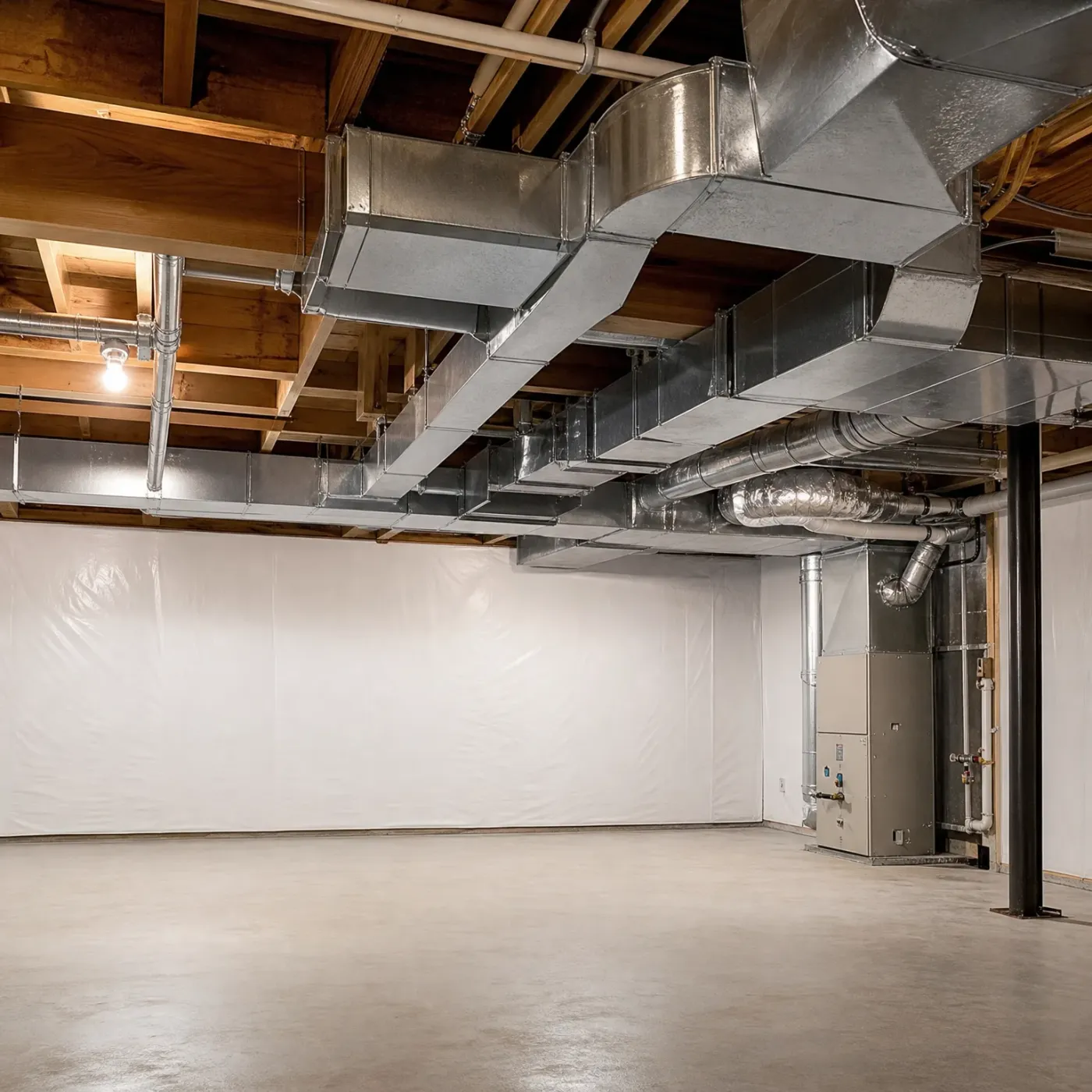
Empty basement with bare concrete floor, white plastic sheeting over one wall, exposed wood joists, galvanized sheet-metal ductwork and pipes overhead, and a furnace unit with a steel support column at right.
Joints fit tight and the metal runs straight to the furnace, so the basement stays a basement and not a dust source.
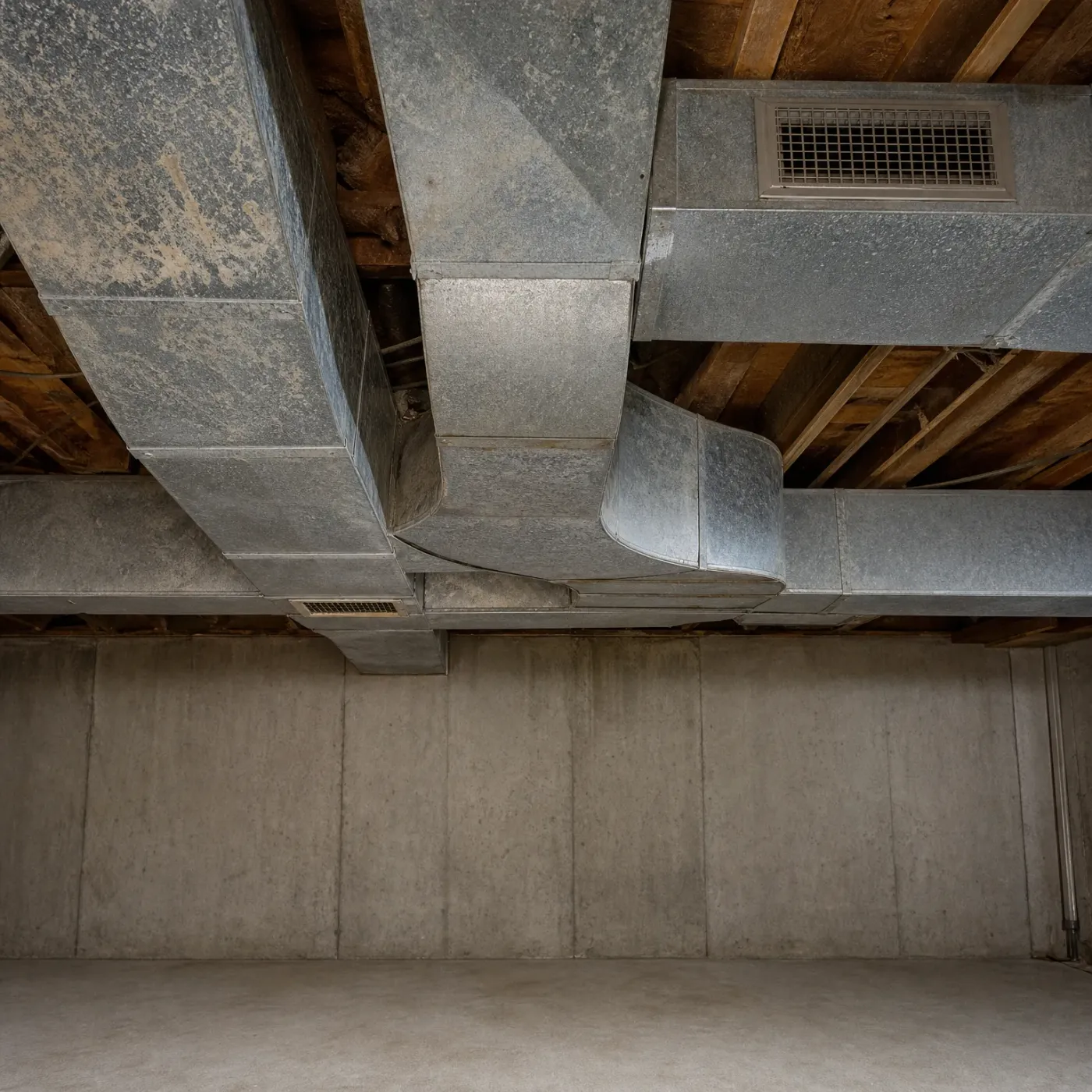
Galvanized sheet metal HVAC ducts with vent grilles run along a wooden floor joist ceiling above bare concrete walls and floor in an unfinished basement.
Here the ducts cut corners through open joist bays, picking up whatever has settled on that bare concrete and old insulation.

Power here costs 13.91 cents per kilowatt-hour

At 13.91 cents a kilowatt-hour, running the blower longer than it needs to costs you something real. A leaky duct run makes the system pull extra air through gaps instead of the vents, so it cycles longer to keep the house at temperature, and that extra runtime is what shows up on the bill.

EIA-861 2025

The dust comes from somewhere specific: a seam that's worked loose, a branch run cutting through a joist bay, a filter doing its job while the rest of the system pulls in air it never should. A contractor who opens up your ducts can see which one it is. Sealed joints and a clean trunk line mean the air coming out of your vents is the air the furnace or AC actually treated, nothing picked up along the way. That's the difference between wiping a shelf once a week and wiping it every other day. The house you want is the one where a cloth comes back with a light coat instead of gray, where the vents don't leave a ring on the wall. Getting there means someone looking at your actual runs, not guessing from the outside. That's a job for a contractor who works on these systems around Dumfries and knows what tends to fail in houses built the way yours was.

An older man with gray hair and a beard, wearing a dark coat flecked with snow, stands smiling in a dimly lit home hallway with lamps, a framed picture, and a wooden door.
A gray-haired, bearded man in a dark coat dusted with snow stands just inside an open door of a warmly lit home, looking off to the side.
An older bearded man in a dark snow-dusted coat and gray scarf stands just inside a dimly lit home entry, with a framed picture, lit table lamp, and an adjoining room with a fireplace behind him, and snow visible through the open door.
A gray-haired bearded man in a dark coat and scarf dusted with snow stands smiling in a dimly lit entryway with a white front door, a side table with a lit lamp, an oval mirror, and a patterned rug.

Ductwork Cleaning

Find a duct system cleaning pro in Prince William County

A licensed pro who works in Prince William County gets your request.

A smartphone with a blank green screen stands upright against a plain light gray background.
Duct and vent cleaningDucts or ventsPrince William County, VA
Step 1 of 2

What ZIP code is the job in?