Mini Split Installation in Chester, VA
A new system here will heat from October through April and cool from May through September every year. Tell us about the house, and a licensed contractor who covers Chesterfield County will get in touch.
Tell us about the job
It takes about a minute.
What a mini-split in Chesterfield County has to handle
Your mini-split will run nearly year round here. Winter nights average 30°F from December through February, and the heat pump has to pull warmth out of that cold air for all of the seven months, October through April, that homes here need heat. Then it switches jobs. Summer afternoons average 87°F, and cooling runs May through September, five more months of steady work.
That is 12 months a year the system is heating or cooling, with almost no season off. Any mini-split made since January 2023 has to meet 14.3 SEER2 for cooling and 7.5 HSPF2 for heating, and in a place that asks for both this many months a year, a unit that clears those numbers with room to spare will earn its keep.
- 7 months
- October through April, your system heats
- 5 months
- May through September, it cools
- 30°F
- the average winter night it heats against
- 87°F
- the average summer afternoon it cools against
NOAA nClimDiv, 1991–2020 normals
Virginia requires HVAC contractors to hold a state license.
The license is held by the contractor, not issued per job. It covers this installer's work across the state, not just this one project. Virginia does carve out an exception for small jobs, since work under $1,000 does not need a licensed contractor. A mini-split installation runs well past that, so the contractor doing this job needs to hold the license.
Most cities and counties in Virginia require a permit for a mini-split installation, with an inspector checking the finished work when it is done. That inspection is what catches a bad connection or a line that was not run right. The license is what says the contractor doing the work was tested and is on record with the state.
Sources: Virginia General Assembly · Virginia Department of Professional and Occupational Regulation
- Is a mini split worth it?
- For most homes, yes, especially if you're heating with electric resistance now. Chester runs 7 months of heating and 5 months of cooling, so the system works most of the year rather than sitting idle. A mini split moves heat instead of generating it, which is why it costs less to run than baseboard or an old electric furnace. If your home already has good ductwork and a working central system, the case is weaker, since a mini split earns its keep in rooms that ducts don't reach well or in homes without ducts at all.
- How many rooms can a mini split cover?
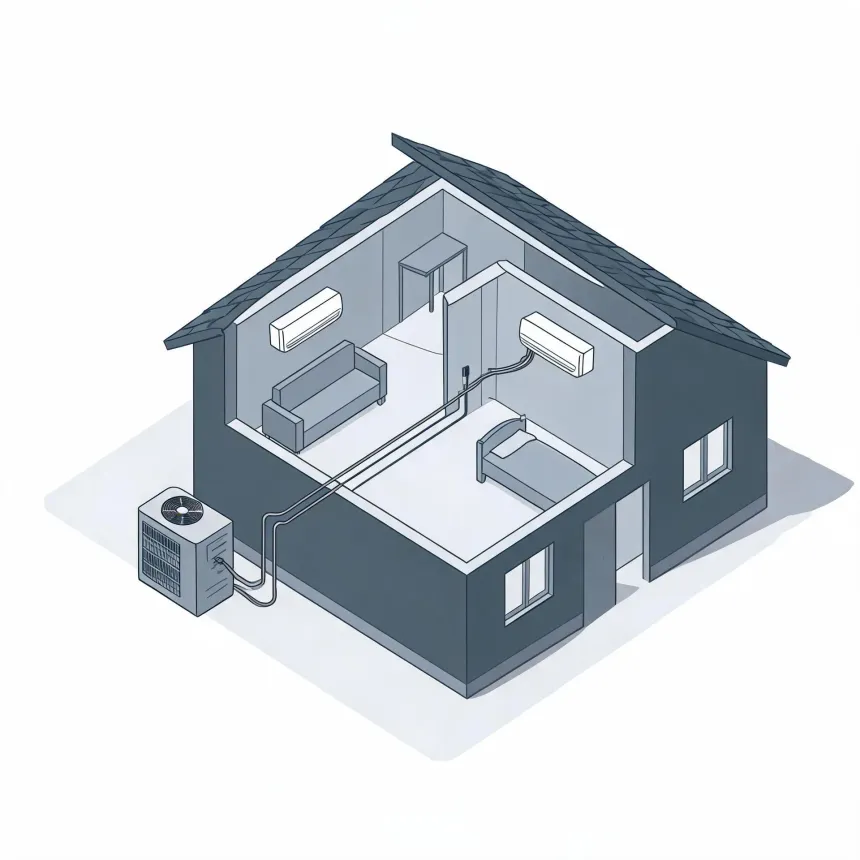
- A single outdoor unit can run one indoor head or several, depending on the system. Single-zone systems handle one room or open area. Multi-zone systems split the output across several indoor heads, each with its own thermostat, so you can heat or cool a few rooms independently. The right number comes down to how much heating and cooling capacity each room needs, which is why a contractor sizes the system room by room rather than guessing at a number that fits every house.
- Can a mini split heat a whole house?
- It can, if it's sized and placed for the whole house rather than a room or two. A multi-zone mini split with enough indoor heads can cover every room, and on nights near 30°F, which is the winter average here, the system still needs enough heating capacity to keep up. That's a different design question than adding one head to a bonus room, so a whole-house mini split needs a proper load calculation for the house, not just a unit picked off a shelf.