Signs of a clogged dryer vent in Herndon, VA

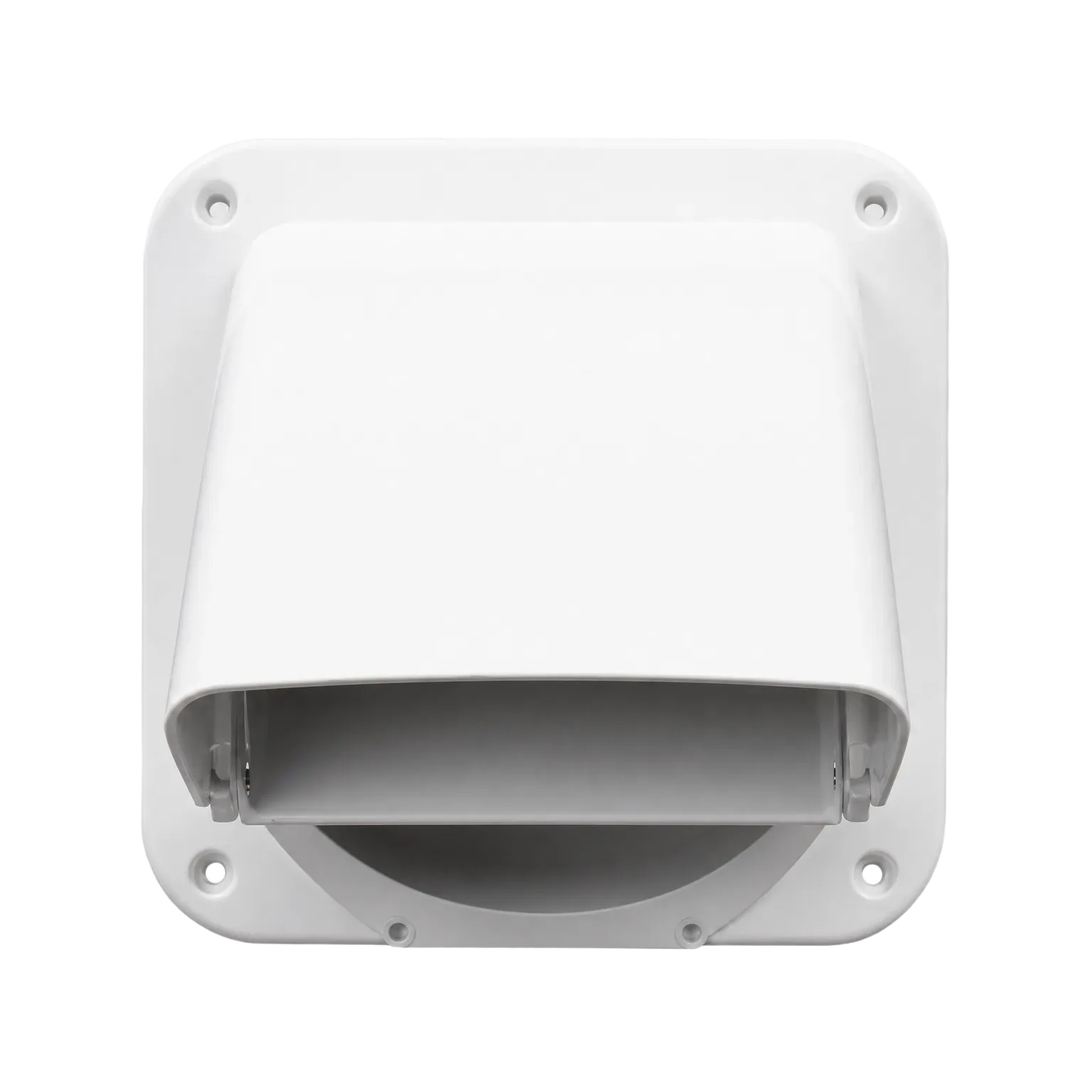
A white plastic wall vent with a square mounting flange, hooded cover, and round duct collar visible beneath, shown against a plain light gray background.
Hand it off

What are the signs of a clogged dryer vent?

Clothes coming out hotter than usual, or still damp after a full cycle, is usually what sends people looking for an answer. Running a load twice gets expensive and takes up a Saturday you didn't plan to spend standing by the dryer. In Fairfax County, with humidity thick for a good stretch of the year, a damp towel that won't dry reads differently than it might somewhere dry, and it's worth knowing what's actually going on before you call anyone.

Clothes that take more than one cycle to dry and a dryer that runs hot to the touch

A clogged vent means the hot, damp air the dryer pushes out has nowhere to go, so it backs up into the drum and the machine itself. That shows up as clothes still damp after a full cycle, a dryer that feels hot on the outside, a burning smell, or the room getting warmer and more humid than it should. Check the outside vent hood too. If the flap barely moves or you don't feel much air coming out while the dryer runs, that's the clog. Summers in Fairfax County already carry a lot of humidity, so a vent that's partly blocked has less margin to push air out, and the signs tend to show up faster than they would somewhere drier.

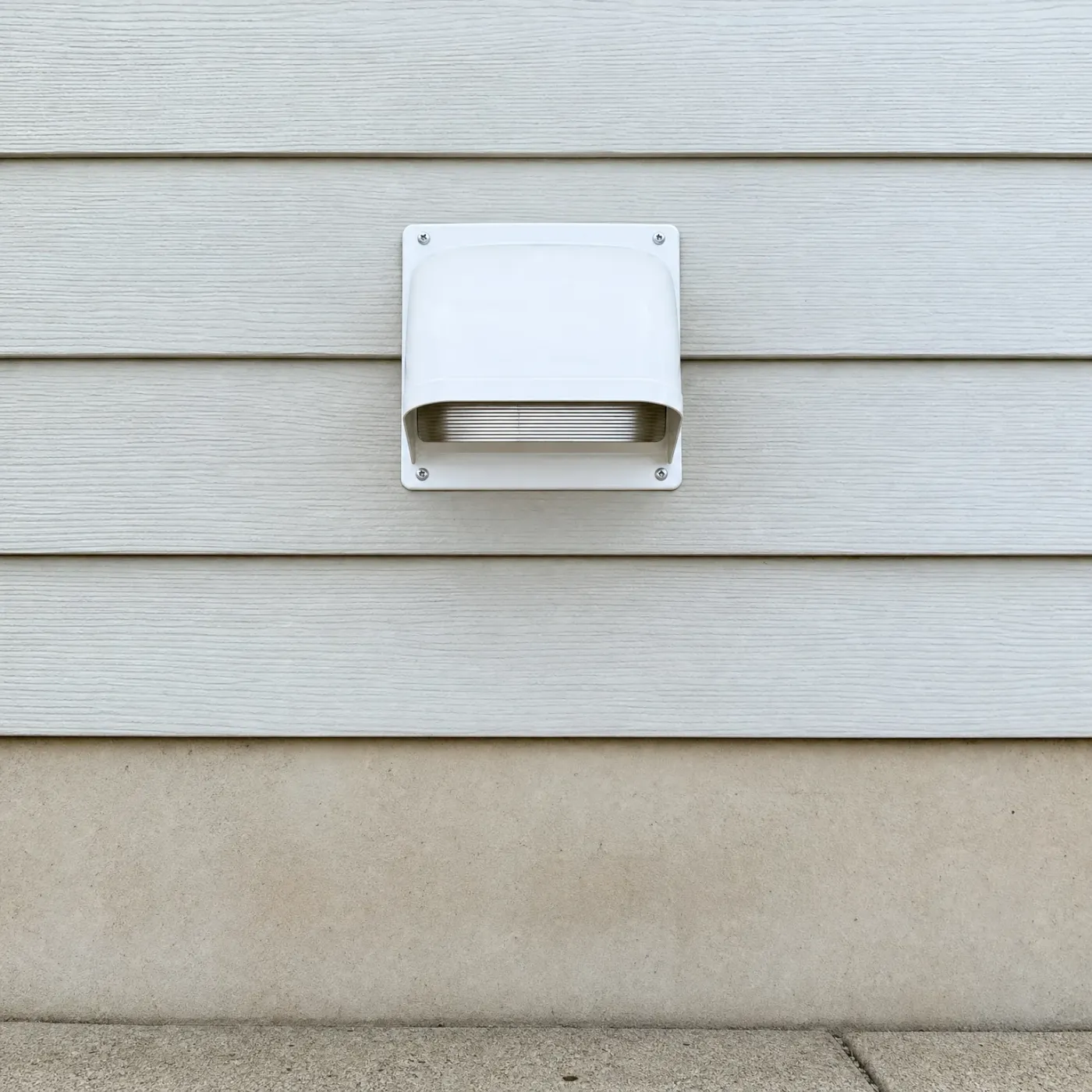
A white hooded dryer vent with a louvered opening mounted on light beige horizontal lap siding above a concrete foundation and sidewalk.

What a clear vent looks like

Air pushes the louvers open while the dryer runs and they fall shut when it stops. No lint sits in the opening or on the cover itself. A load of towels comes out dry in one cycle, and the vent hood stays cool enough to touch.
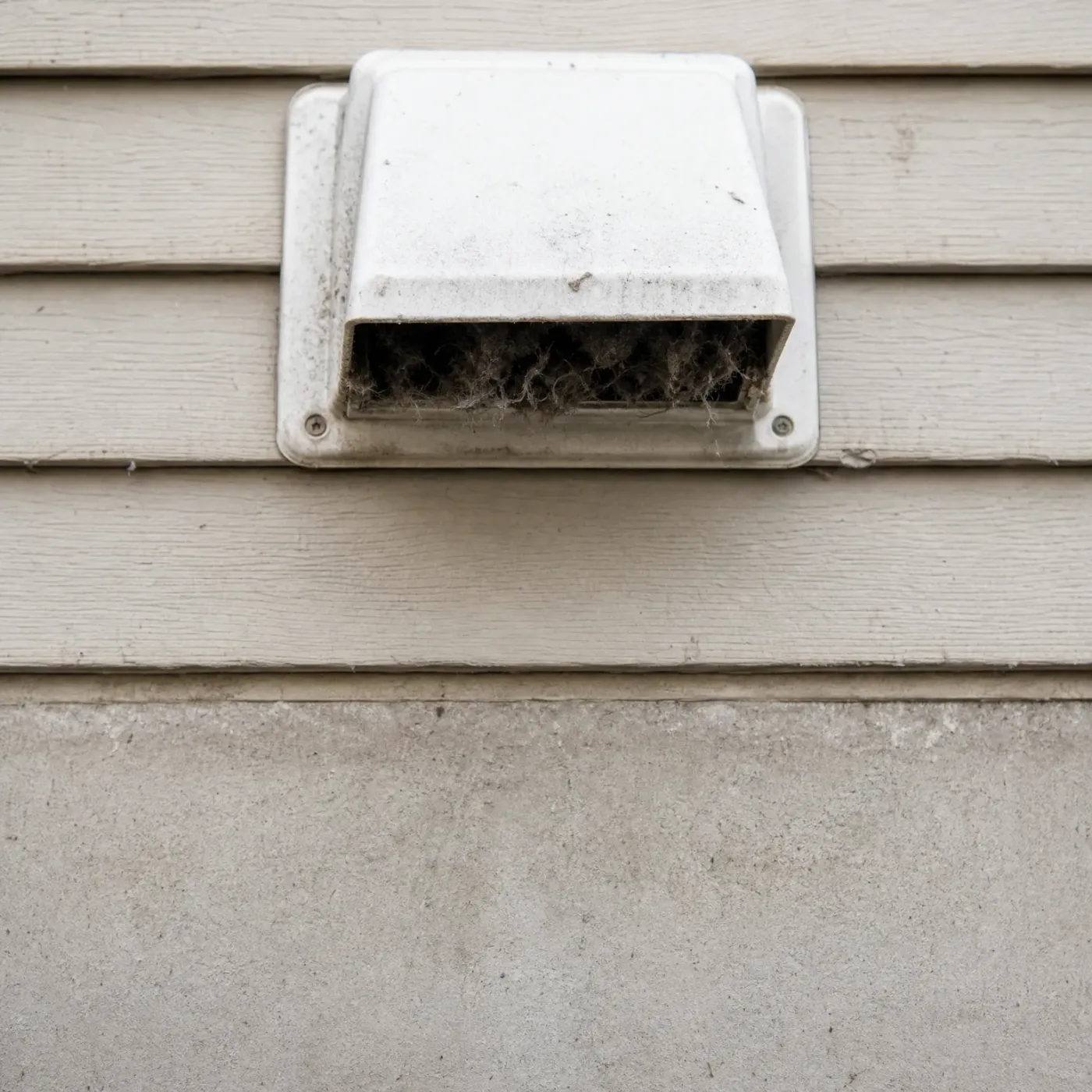

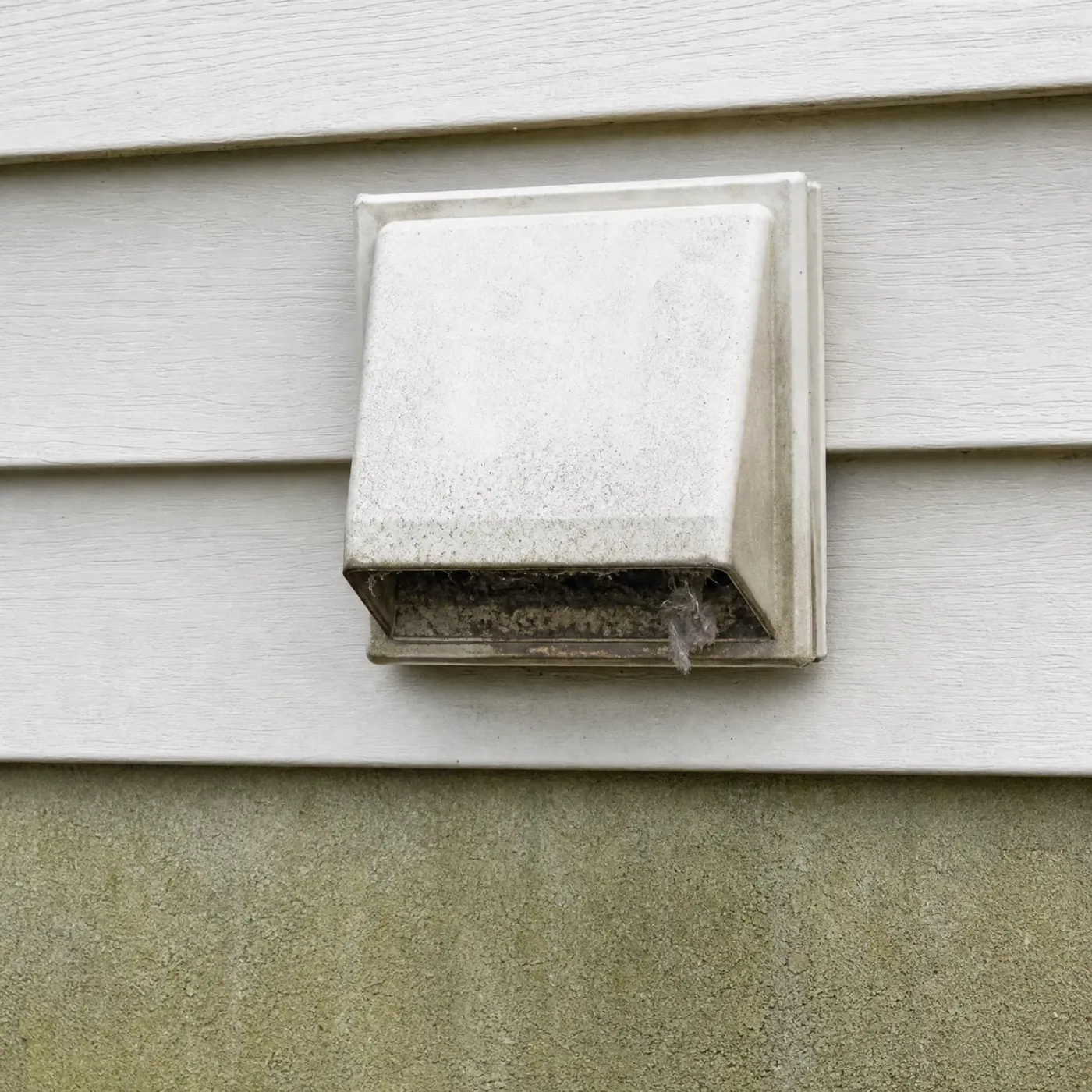
A white plastic dryer vent hood clogged with grey lint, mounted on beige horizontal lap siding above a concrete foundation wall.

What a clogged vent looks like

Lint builds up across the opening until the louvers can't open all the way, even with the dryer running. You'll feel weak airflow at the hood, or none at all. Inside, clothes take two cycles to dry, and the dryer itself runs hot to the touch.

Does your household make a clogged vent more likely?

  • 2.75 people per household on average

    With 2.75 people in the average Fairfax County household, laundry runs often enough that lint builds up fast if the vent isn't checked.

  • Half the homes here were built by 1983

    Half the homes in Fairfax County were built in 1983 or earlier. An older vent run is more likely to have joints and bends where lint collects.

  • Power here costs 15.03 cents per kilowatt-hour

    At 15.03 cents per kilowatt-hour, a dryer forcing air through a clogged vent runs longer per load, and that shows up on the bill.

ACS 2020-2024 · EIA-861 2025

Why the lint trap isn't enough

The trap in the door catches most of the lint, not all of it. What gets past it rides the airflow down the duct and sticks to the inside walls, especially at bends and joints. Over time that lining narrows the duct until the dryer is pushing hot, damp air through a smaller and smaller opening. A screen can look clean every time you pull it out while the vent behind it is already choked. That's why the symptoms, long dry times, a hot dryer, a hot laundry room, show up before anyone suspects the duct itself.

Why a blocked vent gets worse fast

A dryer vent doesn't stay the same once lint starts building up. Each load adds a little more to what's already stuck inside, so the airflow gets weaker and the next load takes longer to dry, which means more lint going through for a longer cycle. That speeds up the buildup instead of slowing it down. A duct that was moving air fine six months ago can be most of the way blocked now without anything else in the laundry room changing. Left alone, it doesn't level off on its own.

A smiling man in a green long-sleeve shirt stands at a dark kitchen counter with a ceramic mug, with wood cabinets, white tile backsplash, and a window and dining table behind him.
A smiling man with wavy dark hair and a beard, wearing a navy sweater, sits at a kitchen counter with a gray mug, with a dining table, potted plant and windows behind him.
A bearded man in a dark green sweater smiles and looks to his right while seated at a white kitchen counter with a gray mug, with windows and greenery behind him.
A smiling man in a dark navy sweater stands in a home interior beside a counter with a white mug, with a kitchen, hallway and potted plant in the background.
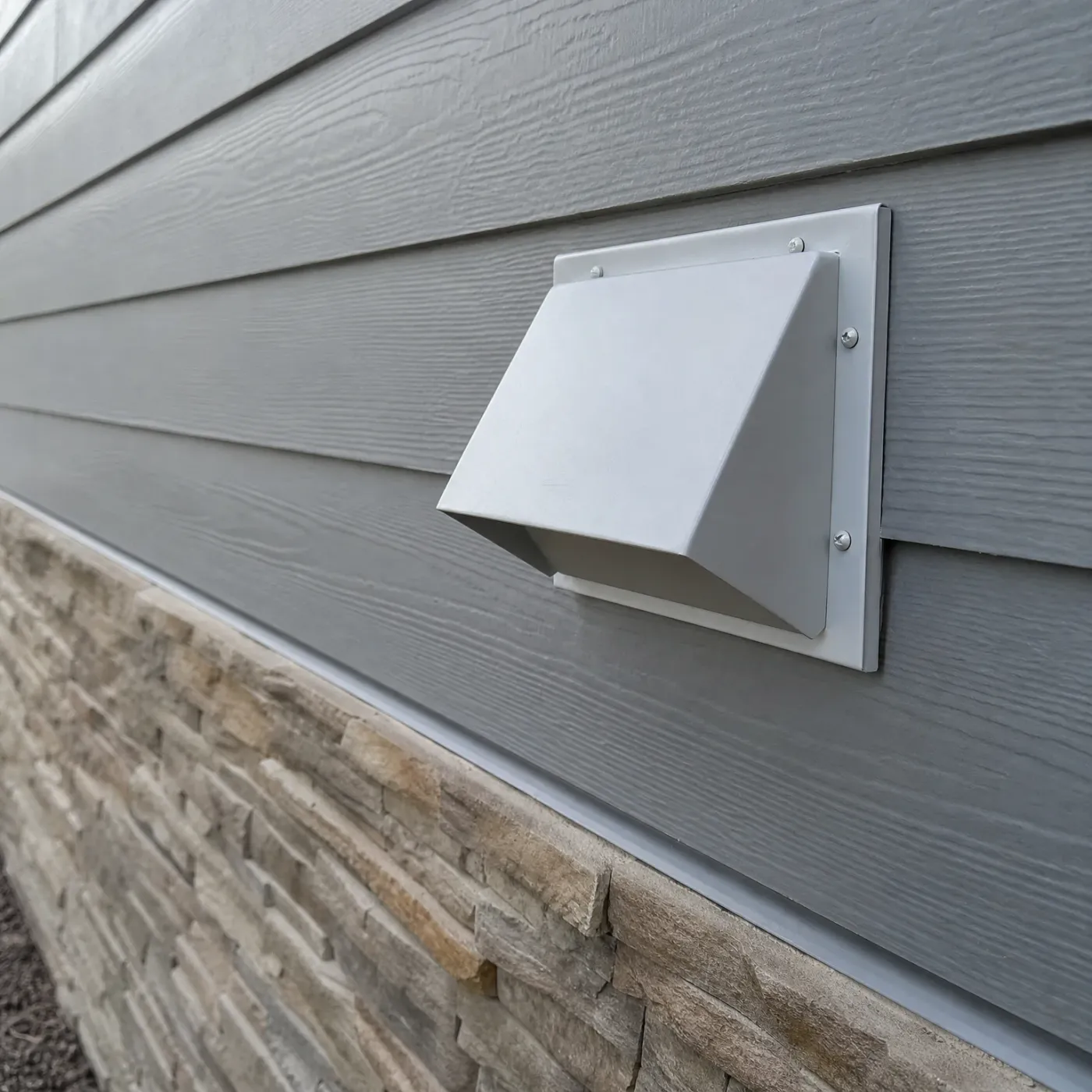
A white hooded exterior vent cover screwed to gray horizontal lap siding above a stacked stone veneer base.

It's off your list after this

The pro who gets in touch is licensed in Virginia and works in Fairfax County.

One request and the dryer vent cleaning stops waiting on you.

Reach a local pro

No fee to send it, and nothing to sign.

Clear It Yourself or Call It In

Clean it yourself

  • A brush rod from the hardware store reaches the first several feet of duct from either end and pulls out loose lint.
  • You can see and reach the vent hood outside, so you can check whether the louvers open fully while the dryer runs.
  • It costs you nothing but time, and you can do it the same afternoon you notice a problem.
  • A rigid duct with no more than one or two bends is short work this way, but most Herndon homes have longer runs with turns through a wall or floor joist.
  • If the clog sits past where your brush reaches, you'll clear the ends and still have hot, damp clothes after a full cycle.
  • There's no way to confirm from inside the house that the full duct run is clear once the brush stops meeting resistance.

Have it cleaned

  • A contractor who works on vents every season carries equipment that reaches the entire duct run, not just the first few feet.
  • They can tell from the airflow and the lint pulled out whether a bird's nest, a long run, or a bad joint is behind the clog.
  • One company handles the job, so you're not fielding calls from several contractors after you ask for help.
  • A full cleaning clears bends and joints a brush from either end can't reach, including runs that go through a wall or up through more than one floor.
  • Local contractors know how Fairfax County's older ductwork, with its tighter bends and longer runs in homes built before the 1980s, tends to clog.
  • It settles whether the vent is actually clear, instead of leaving you to guess from how the next load dries.
A white hooded dryer vent with a square mounting plate screwed onto light gray horizontal vinyl siding, above a gray stucco-textured lower wall.

Vent working normally

The louvers hang open while the dryer runs and swing shut the moment it stops. The screws hold a clean white cap against the siding, with no lint caught in the hood or the opening. Air moves fast enough that nothing has a chance to build up at the flap.

A white plastic dryer vent hood mounted on light-colored horizontal lap siding, with lint caught in its lower opening and a green-stained foundation wall below.

Vent in trouble

Lint packs the opening and a tuft hangs out past the flap, which can no longer fall shut all the way. The hood traps heat and moist air instead of pushing it outside. Once lint shows at the cover like this, it has already built up well back into the duct.

Is a clogged vent causing problems in your house

A dryer that takes two or three cycles to finish a load of towels is the clearest sign something's wrong. Touch the vent hood outside while the dryer runs. If it's hot, or you can't feel much air coming out at all, the duct is likely restricted. Check the lint screen too. If it's covered in a fine film even after you clean it, lint is building up further down the line where you can't see it. The laundry room itself can tell you something: a burning smell, or the room running warmer than the rest of the house during a cycle. Left alone, a blocked vent keeps the dryer running hotter and longer than it's built for, and that heat has nowhere to go but back into the duct and the room around it.

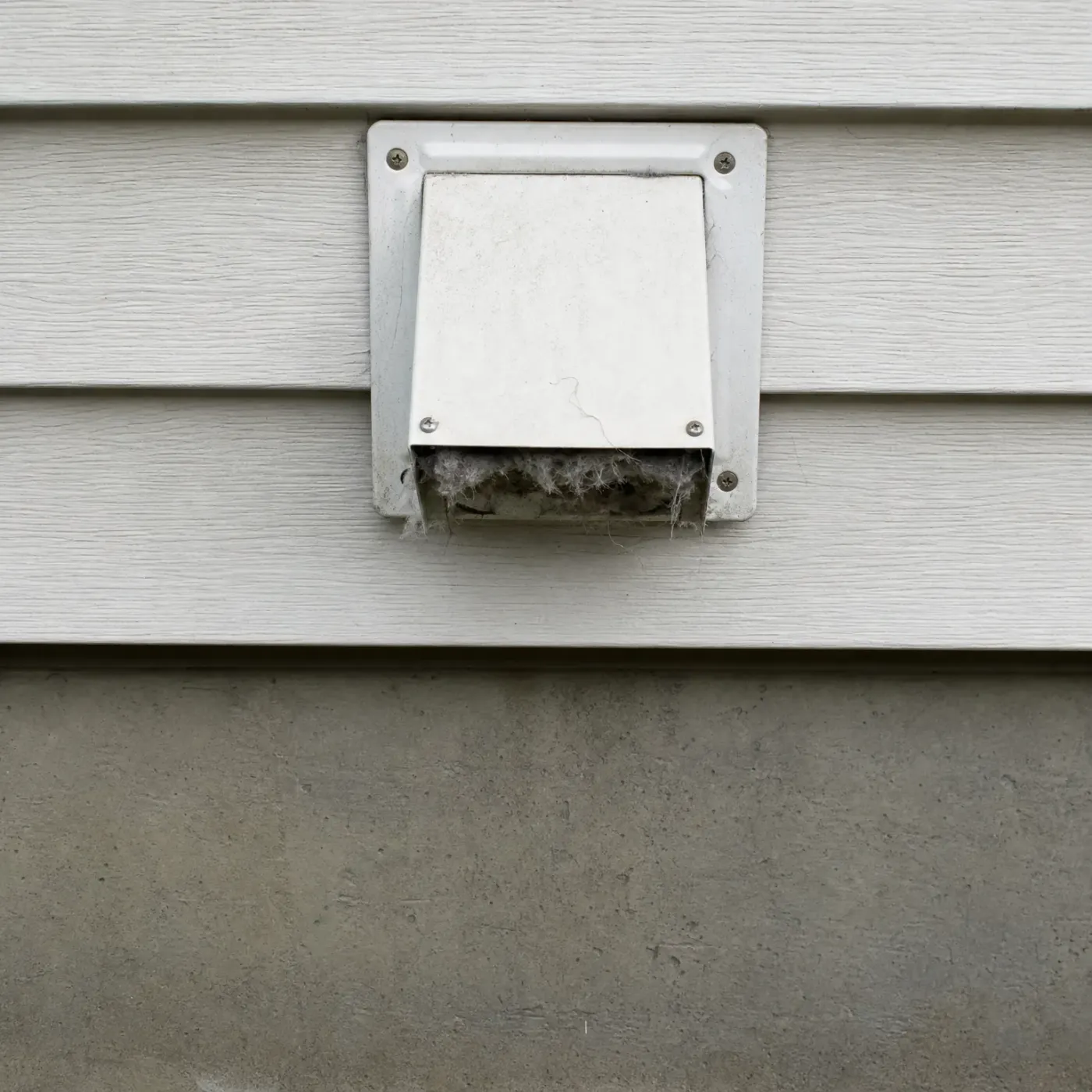
A white plastic dryer vent hood with a hinged flap mounted on light grey horizontal lap siding, with lint clogging the opening beneath the flap and a concrete foundation wall below.
Before you get your dryer vent cleaning
A white hooded dryer vent with a grille mounted on tan horizontal lap siding above a concrete slab.
After you get your dryer vent cleaning

Left alone

Lint keeps narrowing the duct, so the dryer runs hotter and longer to get clothes dry. That strain is what leads to a burnt-out heating element or a vent fire.

Find a licensed dryer vent pro

Cleaned out

A full pass through the duct clears the lining back to bare metal. The dryer pulls air the way it did when it was new, and one cycle gets the clothes dry again.

Find a licensed dryer vent pro
A bearded man in a dark gray T-shirt sits smiling on a light gray couch, with a houseplant and a framed picture on the wall behind him.
A bearded man in a red and dark plaid flannel shirt looks out a frost-edged window at a snow-covered yard, with a gray mug on the sill in the foreground.

2.75 people per household on average

At close to three people in the average Fairfax County house, the dryer is probably running most days of the week. That kind of use builds up lint faster, so the vent is worth a look before it turns into a longer dry time or a hot vent hood.

ACS 2020-2024

A dryer that runs long, a vent hood that's hot to the touch, lint around the outside cap: any one of those means the vent needs to be cleared, not watched a while longer. The fix is the same whether you caught it early or the duct's been narrowing for months. A local contractor who works on vents like yours all year, in houses like the ones around Herndon, knows where the lint usually packs in and how to clear it without tearing into the siding to do it. You'll be matched with one contractor, not a handful calling you back at once, and the work gets done once instead of guessed at twice. Clothes drying in one cycle, air moving freely through the hood, no burning smell when the dryer kicks on: that's what a clear vent gets you back, and it's a quick thing to confirm once someone's been out to look at it.

A single-story house with horizontal siding and large windows lit from within at dusk, beside a lawn, low path lights and a dark gravel driveway, with pine trees and a distant waterway under an orange and blue sky.

Dryer Vent Cleaning

Send one request and you're done looking

Duct and vent cleaningFairfax County, VA
Step 1 of 3

What kind of equipment?

  • A wicker sofa with a cream cushion and a draped gray throw sits in a corner beside a window, with a potted green plant on a wood floor.
    • Get matched with someone who does this kind of work in Fairfax County.
    • Get matched with a Fairfax County pro who cleans dryer vents.
  • A round wooden side table holding a white ceramic vase with leafy stems and a small glazed bowl, beside an upholstered sofa with a cushion, next to a window with sheer curtains.
    • Send the form and the dryer vent cleaning stops sitting on your list.
    • Send the request and finding a pro stops being your problem.
  • A living room corner with a cream sofa and green textured cushion beside a dark wood side table holding a ceramic table lamp and a small plant in a wooden bowl, with linen curtains at a window and a framed tree photograph on the wall.
    • Skip searching for someone who cleans dryer vents in Fairfax County.
    • Fill out one short form instead of calling around.
  • Interior corner with a white-framed multi-pane window and deep sill, two wooden stair treads with white risers, and a wooden console table holding a weathered gray ceramic vase with leafy branches and a wooden bowl.
    • The pro who reaches out is licensed in Virginia.
    • Only one pro gets your request, so you hear from one company.