

Is a clogged dryer vent a fire risk in Virginia

After you send the request, you're done searching.

Let a pro reach out

Yes. A clogged dryer vent is one of the more common causes of house fires, and it happens because lint builds up inside the vent line until hot air can't escape the way it's supposed to. The dryer keeps heating, but the air has nowhere to go, so heat and loose lint sit together inside the duct. That lint ignites easily. Virginia summers get humid, and humid air makes clothes take longer to dry, so the dryer runs hotter and longer to finish a load, pushing more lint into a vent that's already struggling to clear it. A dryer that now takes two or three cycles to dry a load that used to take one is a sign the vent is blocked, not that the machine is wearing out. The fix isn't a new dryer. It's clearing the vent so air and heat move through it the way they're built to.
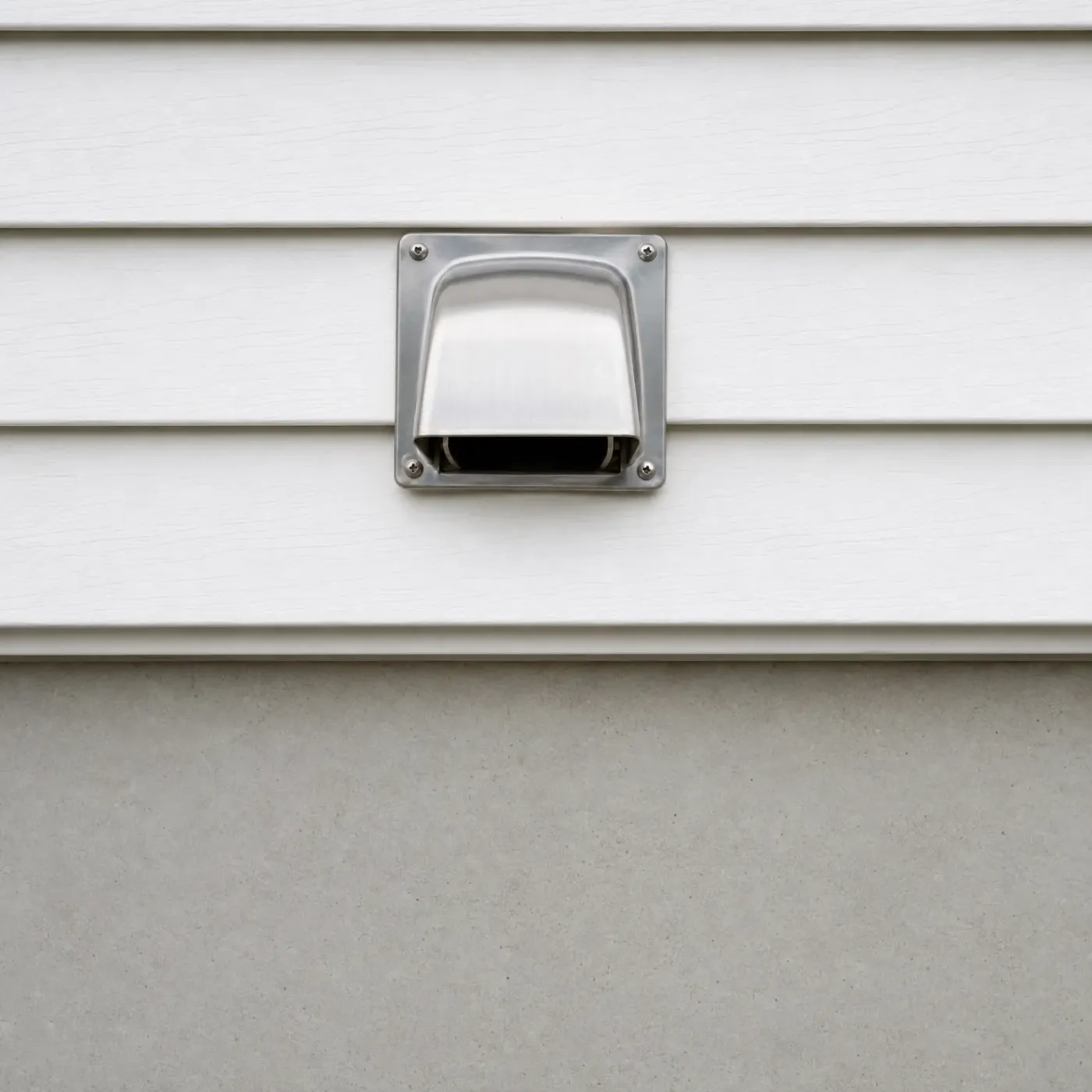
A stainless steel hooded dryer vent with four corner screws mounted on white horizontal lap siding above a gray concrete foundation.

Clear and venting properly

The flap opens when the dryer runs and closes again when it stops. Hot, damp air pushes straight outside in one steady flow. Nothing lingers in the line to catch heat or build into a fire hazard.
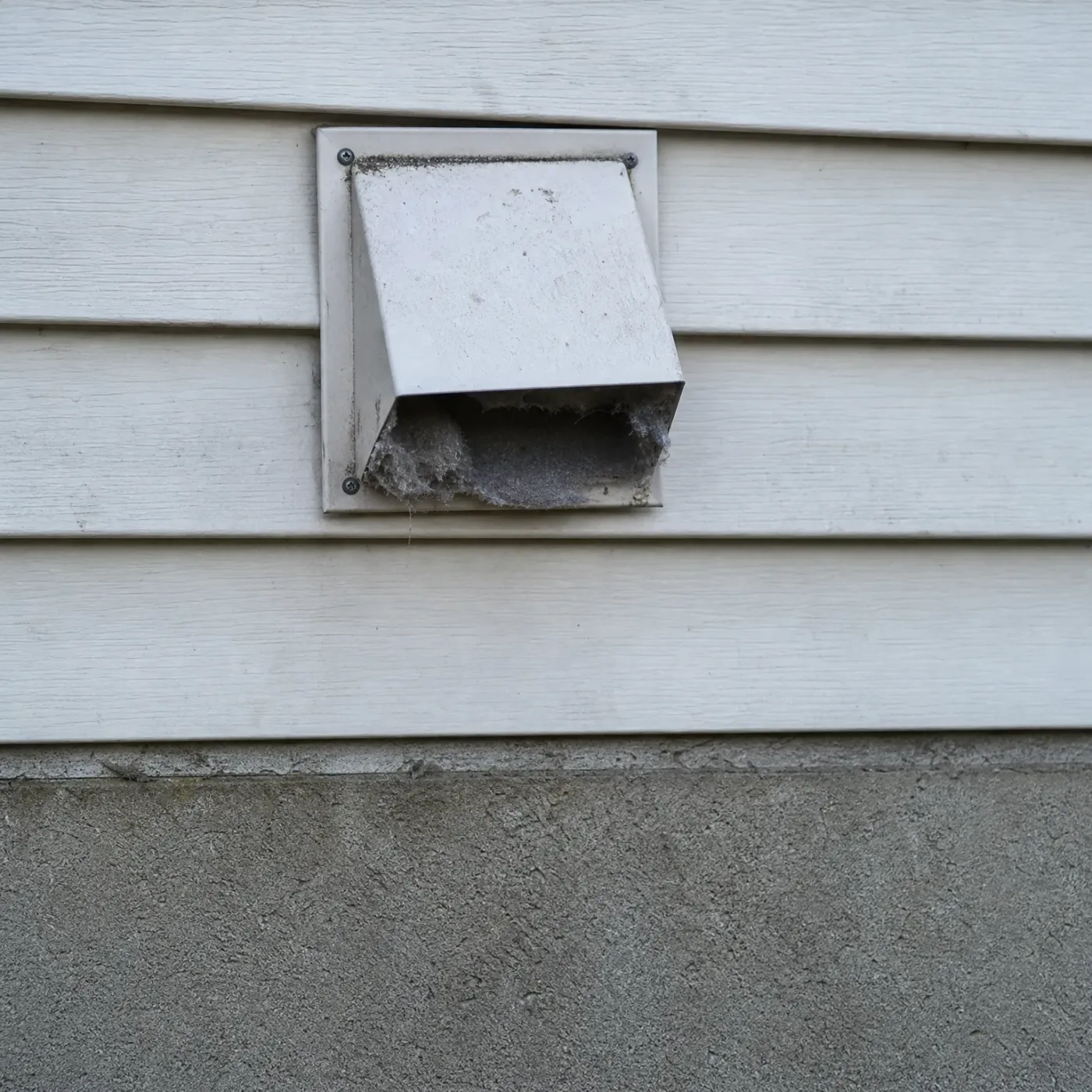
A white hooded dryer vent mounted on light-colored lap siding above a concrete foundation, with lint clogging its opening.

Clogged and holding heat

Lint has packed the hood until the flap can't shut. Air that should escape outside is backing up into the vent line, and heat is building where it has nowhere to go. This is the state that leads to house fires.

Why does a clogged dryer vent actually start a fire?

You know lint builds up and blocks the vent, but that alone doesn't explain how a fire actually starts. You want to understand the mechanism, not just the warning.

Trapped heat with nowhere to go ignites the lint itself

A dryer pushes hot air through the vent line to carry moisture outside. When lint packs the line, that air backs up instead of escaping. The heating element keeps running because the dryer has no way of knowing the vent is blocked, so the air inside the line gets hotter than it's built to handle. Lint is dry, loose fiber, and it sits right where that heat collects. At a certain point the heat is enough to ignite it, usually right at the clog or back near the dryer itself. Virginia summers add to this, since a dryer already working against warm, humid air outside pushes even harder through a line that's partly blocked, raising the temperature inside faster.

  1. Lint sheds off wet clothes and travels through the vent line

  2. Lint catches on the duct walls and the flap at the end

  3. The layer thickens with every load until airflow slows down

  4. Heat and moisture can no longer escape outside as they should

Clean Vent vs. Clogged Vent

Vent cleaned on schedule

  • Airflow stays strong, so a load that should take forty minutes doesn't stretch into two cycles.
  • The dryer shuts off when the load is actually dry instead of running on heat it can't push outside.
  • Lint has nowhere to build a thick enough layer to trap heat inside the line.
  • The outside flap keeps moving freely, opening fully when the dryer runs and sealing shut when it's off.
  • Humidity and heat from the load go where they're supposed to, out of the house, not back into the laundry room.

Vent left clogged

  • Clothes come out damp or hot to the touch even after a full cycle finishes.
  • The dryer runs longer and hotter trying to push air through a line that's partly blocked.
  • Lint keeps collecting behind the blockage with every load, thickening instead of clearing on its own.
  • Heat has nowhere to go but back toward the drum and the duct walls around it.
  • A dryer that smells hot or shuts off mid-cycle is often one this is already happening to.
A smiling man with dark curly hair in a dark green henley shirt sits on a light sofa in a living room with large windows, a lamp, shelving, a stone fireplace, and a bowl of popcorn in the foreground.
A smiling man in a dark long-sleeved henley shirt sits on a beige sofa in a living room, with a bowl of popcorn and a remote on the table in the foreground and shelves, a lamp, and a doorway behind him.
A smiling man with graying hair and stubble in a blue henley shirt sits on a gray sofa with cushions in a living room, with a bowl of popcorn on a wooden table in the foreground.
A smiling man in a dark green long-sleeve shirt reclines on a sofa in a dimly lit living room, with a bowl of popcorn on a side table in the foreground and a bookshelf, lamp, and houseplant behind him.

Finding a pro stops being your job

You've read how this happens. Now there's the question of your own vent, sitting there in a Virginia house with the dryer running load after load through a sticky summer and a heating bill that already leans on electricity all winter. A clogged vent doesn't announce itself. It just runs hotter and longer until something gives, and most people don't find out until a load that should take forty minutes takes two. Getting someone out to clean it means calling around, explaining the same thing to a few different outfits, and sitting with quotes that are hard to compare because nobody measured the same job. Sending this form instead skips that. One request goes to one contractor who does this work, not five numbers to chase down yourself. You still have a vent that needs cleaning. What you don't have anymore is the work of finding someone to do it.

What a clean vent looks like

A clean line gets checked once a year, sometimes twice if the dryer runs most days. The duct stays free of lint from the drum to the outside flap, so hot air leaves the house as fast as the dryer makes it. Nobody notices a clean vent. The dryer finishes on schedule, the laundry room doesn't warm up, and the flap outside snaps shut the second the dryer stops. It's the vent nobody thinks about, which is exactly the point.

What a neglected one costs you

Skip a few years and lint stops being a thin layer and becomes a real plug somewhere in the line. The dryer still runs, still heats, but the air backs up instead of venting out. That trapped heat is what starts fires, and it's also what burns out igniters and thermal fuses from the strain of pushing against a blocked line. A vent that's gone unchecked for years isn't a smaller version of the risk. It's the version where lint has had the time to build into something a single clog doesn't.

Power costs 15.28 cents per kilowatt-hour statewide

At 15.28 cents a kilowatt-hour, a dryer that has to run two cycles to finish one load because a clogged vent is holding back the airflow costs more every time you turn it on. Clearing the line gets that load back down to one cycle, which is the part you can control.

EIA-861 2025 statewide residential average

A white hooded exterior vent cover with a mesh screen mounted on gray lap siding above a concrete foundation.
The hood sits flush against the siding and the flap moves freely, so air from the dryer pushes straight out with nothing to block it.
A white plastic hooded dryer vent mounted on beige lap siding, with gray lint clogging its louvered opening and hanging below it.
Lint has packed the opening until the flap barely moves, and what should be a clear path out is almost sealed shut.
A woman in a cream knit sweater reclines on a beige couch with eyes closed and a slight smile, a gray hardcover book resting open on a textured blanket over her lap, with a lit table lamp and a leafy plant in the dim background.
A smiling middle-aged man in a dark green sweater sits at a candlelit table with a glass of red wine and a bowl of salad in the foreground.
A closed laptop and a ceramic mug of coffee on a wooden table, with a blurred kitchen counter, cutting board, utensil jar and plant in the background.

A clogged dryer vent is a real fire risk in your home

The facts stay the same no matter how you came to this page. Lint blocks the vent, heat has nowhere to go, and that's how a dryer fire starts. A dryer that vents freely doesn't build up that risk load after load.

You don't have to figure out who handles this or spend an evening calling around and explaining the same thing twice to get a quote. Send the form and the search for someone qualified is off your plate. That's the part that stops being your job tonight.


A mug and a small round vase sit on a wooden windowsill beside sheer and heavier curtains, with blurred autumn trees seen through the rain-speckled window and a sofa with cushions and a throw in the foreground.
A dark-clad house with large windows beside a gravel driveway lined with in-ground path lights, ornamental grasses and hydrangeas, with distant hills and an orange sunset sky.

Dryer Vent Cleaning

Let someone else find the pro

Duct and vent cleaningVirginia
Step 1 of 3

What kind of equipment?

  • A dimly lit living room corner with a beige upholstered sofa holding a dark green cushion and a chunky knit throw, beside a wooden sideboard with a lit ceramic table lamp, a small potted plant, and a wooden bowl, with a framed artwork on the wall and a mug on a book in the foreground.
    • A local pro who cleans dryer vents gets in touch with you.
    • Your dryer vent cleaning request goes to a local pro who does this work.
  • A round wooden coffee table holding a round stone vase of green foliage, a lit candle in a glass container, and a small dark bowl, with a beige sofa, cushions and knit throw behind and a window at left.
    • After this form, you can stop searching for a dryer vent pro.
    • One request and the search for a pro is handled.
  • Sunlit living room with a wooden coffee table holding a ceramic vase of leafy branches and a carved wooden tray with two stacked books, in front of a beige sofa with tan and green cushions and a potted plant near a window.
    • Fill out one short form instead of calling around.
    • Explain the job once and skip repeating it on every call.
  • Interior corner with a lit ceramic table lamp and wooden bowl on a wood sideboard, a framed picture and branch-filled vase behind, a knit throw over an upholstered chair, and a lit candle in a glass holder, stoneware mug and round planter of green foliage on a wooden table in the foreground.
    • Your request stays with one local pro.
    • Your dryer vent cleaning request goes to one local pro.