






Virginia HVAC Pros

Dryer hot but clothes still wet in Virginia

A square stainless steel wall vent with four corner screw holes and a hinged flap cover, partly open to reveal a dark circular duct opening, shown against a plain light gray background.
Skip the search

A dryer that runs hot but leaves clothes damp almost always means the air can't get out. Heat is building up in the drum, but the moist air has nowhere to go because the vent is clogged with lint, so the load never dries no matter how long you run it. In Virginia, summer humidity makes this worse. Air pulled in from outside is already heavy with moisture, and a restricted vent can't push that extra moisture back out along with what's coming off your clothes. You'll often notice the dryer takes two or three cycles to do what one used to, the outside vent flap barely moves when it's running, or the laundry room feels warmer and damper than usual. This isn't a sign the dryer is wearing out. It's a sign the vent needs to be cleaned out so air can actually move through it again.

A white plastic hooded dryer vent with a screened opening mounted on gray horizontal lap siding above a concrete foundation and gravel bed.
Air moves freely through the vent hood, so the flap swings open and heat carries the moisture straight outside.
A white plastic dryer vent hood mounted on horizontal lap siding, clogged with gray lint at its lower opening, above a concrete foundation and walkway.
Lint has packed the opening shut, so the drum keeps heating but the damp air stays trapped with nowhere to go.

The heat comes from a burner or a coil, but it's the blower that does the real work, pushing moist air down the vent and out of the house. That blower can only move as much air as the vent will let through. Once lint packs into the duct, the air backs up into the drum and the load stops drying no matter how long the cycle runs. Most dryers have a thermal fuse near the exhaust duct, and when airflow drops low enough, that fuse cuts power to the heater as a safety measure. The lint trap behind the door only catches what lands on the screen. The lint that gets past it collects along the rest of the vent run, especially in vinyl or foil hose, where the ribs and sags catch far more than a straight metal duct would. A lot of this starts right at the outside hood, where the flap is supposed to swing open under airflow. When lint packs in around that flap, the whole vent chokes from the outside in.

Where the air actually goes

  • A dryer heats with a gas burner or an electric coil, but a motor-driven blower is what actually pushes the moist air out through the vent.
  • That blower can only push air out as fast as the vent lets it escape, so a clogged vent backs pressure up into the drum.
  • Most dryers have a thermal fuse near the exhaust duct that cuts power to the heater once airflow drops and temperatures climb too high.
  • A lint trap only catches what collects on the screen inside the door, while the rest packs itself along the full length of the vent run.
  • Vinyl or foil vent hose sags and ribs catch lint far more than rigid metal duct, so the same clog forms faster in those runs.
  • The outside hood has a flap that should swing open under airflow, and lint buildup right at that flap is often the first place a vent chokes.
A smiling woman with long brown hair in a cream sweater sits at a stone counter with a glass of red wine, with a dimly lit living room, beamed ceiling and glass doors behind her.
A woman with shoulder-length dark wavy hair in a beige sweater laughs while looking off to the side, seated at a white marble counter with a glass of red wine, in a dimly lit home interior with a kitchen and sofa in the background.
A smiling woman with long dark hair in a black sweater sits at a white marble counter with a glass of red wine, in a dimly lit kitchen and living area with pendant lights, a potted plant, and flowers.
A smiling woman with long brown hair in a light knit sweater sits at a stone-topped counter with a glass of white wine, with a dimly lit living room, sofa, fireplace and round mirror behind her.

No phone calls to make

Your dryer vent cleaning request goes to one local pro.

You're not committing to anything by asking.

Why the humidity makes it worse

Virginia summers run sticky, and a dryer vent already fighting lint has less room to push that extra moisture out. The air leaving your house has to shove past the clog and past the heavier, wetter air waiting outside the hood. A vent that was marginal in a dry month can stop working almost entirely in July or August. That is why a lot of homeowners notice the problem getting worse as the weather changes, even though nothing about the dryer itself has changed. The lint buildup was likely there before summer. The humidity just removed the last bit of slack the system had.

What a full lint trap can't catch

The trap in the door only catches lint from inside the drum. It does nothing about what collects further down the vent run, where lint sticks to the inside of the duct every time the dryer runs. Over months that layer narrows the passage until the blower is pushing air through a much smaller opening than the vent was built for. Cleaning the trap after every load does not touch that buildup. The only way to clear it is to clean the vent itself, from the back of the dryer to the hood outside, which is the job a dryer vent cleaning actually does.

A hooded dryer vent mounted on beige lap siding, with gray lint buildup packed in and hanging from its louvered opening.
Before you get your dryer vent cleaning
A white hooded exterior vent cover with a screened lower opening, screwed to beige horizontal lap siding above a concrete foundation.
After you get your dryer vent cleaning

Every extra cycle you run to get a load dry is pulling power you wouldn't otherwise use, and with most homes here heating electrically, that cost shows up on the same bill you already watch.

A dryer that can't vent properly is also pushing hot, wet air back into the room instead of outside where it belongs, and that moisture has to go somewhere in a house already carrying Virginia's summer humidity.

Power costs 15.28 cents per kilowatt-hour statewide

At 15.28 cents per kilowatt-hour, every extra cycle you run chasing a dry load adds up fast. A clogged vent can turn one cycle into two or three, and you're paying full price each time just to get the same basket of clothes dry.

EIA-861 2025 statewide residential average

A white square dryer vent hood with a hinged flap mounted on light gray horizontal siding above a concrete foundation wall.

Vent clear

This is what a clear vent looks like from outside. The flap hangs loose and swings open when the dryer runs, because there's enough airflow pushing against it. Heat and moisture move straight out through the opening instead of backing up into the drum.


A white plastic hooded dryer vent screwed into light gray horizontal lap siding above a concrete foundation wall, with lint and dirt visible inside the vent opening.

Vent clogged

Lint has built up around the opening and packed it in. The flap barely moves because there isn't enough air pressure left to push it open. That's the point where a dryer keeps heating a load that never actually dries.

A closed laptop and a ceramic mug of dark coffee sit on a wooden table, with a blurred kitchen counter, potted plant, wooden utensils and cutting boards, and a large window in the background.

A hot dryer that won't dry means the air is stuck

Your dryer heats the way it always has. The problem is the air behind that heat has nowhere to go, so the moisture rides along with your clothes cycle after cycle. Clearing the vent is what lets that air leave the way it's supposed to, and once it does, the drum stops fighting itself.

You could spend an evening searching for someone who handles vent cleaning, then another one calling around to see who actually answers and who can come out this week. One contractor local to Virginia who works on vents all season knows what a packed one looks like before the cover's even off, and you deal with just that one call instead of sorting through a handful of quotes for a job this straightforward.

A shallow dark wooden bowl and a stack of books rest on a wooden table in front of a beige sofa with linen and green cushions, with a tall ceramic vase of thin branches beside a window in the background.
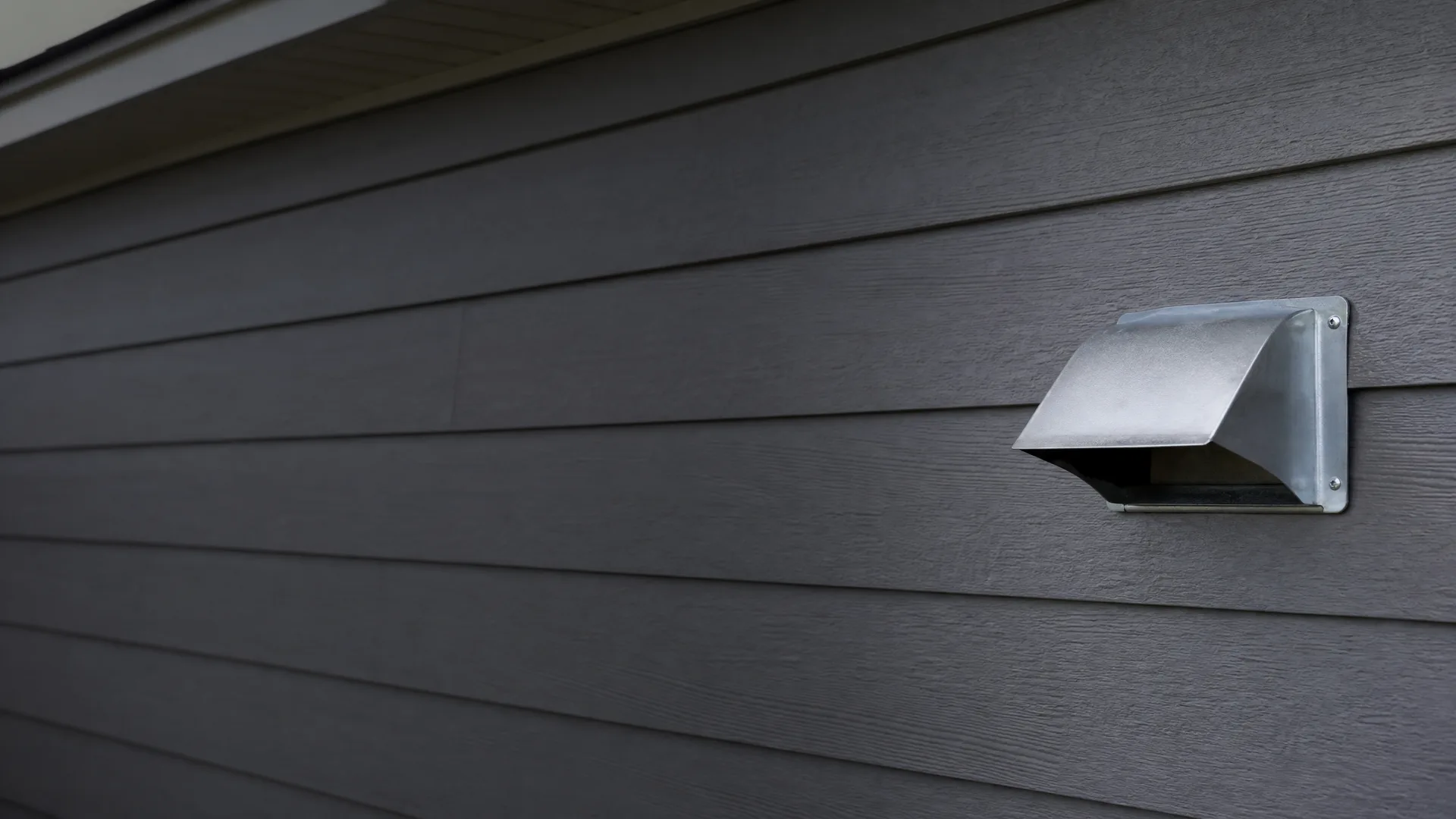
A metal hooded exterior vent cover mounted on dark gray horizontal lap siding, photographed at an angle along the wall.

One form, no calling around

Only one pro gets your request, so you hear from one company.

Duct and vent cleaningVirginia
Step 1 of 3

What kind of equipment?