Profile view of a bearded man wearing a dark baseball cap and a dark gray T-shirt against a plain off-white background.

Why your dryer takes so long to dry in Virginia

Duct and vent cleaningVirginia
Step 1 of 3

What kind of equipment?

Why does my dryer take so long to dry clothes?

You run a load and it comes out damp, so you run it again, and maybe a third time. Clothes that used to dry in one cycle now need two. It's not your imagination, and it's usually not the dryer itself acting up. Something is slowing the machine down, and in Virginia summers, with the air already heavy outside, a sluggish dryer is easy to blame on the weather when the real cause is somewhere else.

A clogged vent is almost always why

A dryer works by pushing hot, wet air out through the vent while pulling in fresh air to heat again. When lint builds up in that vent line, less air moves through, so the moisture has nowhere to go and the drum stays warm but damp. Virginia's muggy summers make this worse because the air coming in is already carrying moisture, so a partly blocked vent has even less room to work with. Most homes here run on electric dryers, which depend even more on steady airflow since there's no gas flame adding extra heat to compensate. Once the vent is clear, a load that took two cycles should go back to drying in one.

A metal hooded dryer or exhaust vent mounted with screws on gray horizontal lap siding, beside a plain off-white wall surface.

Lint builds up where you can't see it

The lint trap only catches what's near the surface. The rest moves down the vent line and sticks to the inside of the duct, especially at bends and joints. As that layer thickens, the vent gets narrower, and the dryer has to push the same wet air through a smaller opening. Every load adds a little more. By the time you notice longer dry times, there's already a real buildup inside the line.

A white metal hooded exterior vent screwed to a square backing plate on light gray horizontal lap siding, with a blank off-white wall filling the left half of the frame.

Humid air outside slows the exchange

A dryer works by pushing moist air out through the vent and pulling drier air in to replace it. Summers in Virginia run sticky, so the air coming in is already carrying moisture. That alone would add time to every load. Combine that with a vent that's partly blocked, and the dryer is fighting two problems at once: less room for air to move, and less dry air available to move through it.

A woman in a long cream cardigan and jeans stands at an open wooden front door of a gray shingled house with stone-based porch columns, with a second person visible inside, and potted flowers and shrubs beside the entry.

What a slow-drying dryer is doing to your house

Every load that runs twice is pushing hot, damp air into a vent that's already struggling to move it. Some of that moisture doesn't make it outside. It settles in the laundry room, and in Virginia's sticky summers, that's air that's already heavy with humidity. A dryer that runs longer than it should is also running hotter than it should, and that heat has nowhere to go but back into the drum, the lint trap, and the air around it.

You don't have to figure out whether this is a minor clog or something worse before you do anything about it. Answer a few questions about your dryer and your house, and a contractor who handles vent cleaning in your area will get in touch. That's one less thing to research on your own, one less list of companies to call and describe the same problem to three or four times.

A large weathered ceramic vase and a shallow wooden bowl sit on a rustic wooden table beside a window with linen curtains, with a blurred sofa with cushions and a hanging fabric panel in the background.
A white hooded dryer vent with a louvered grille screwed to beige horizontal lap siding above a lighter foundation wall.

Air moving freely

This is what a clear vent looks like from outside. The hood sits flush against the wall, and the flap hangs open enough to let air push past it. Warm air and moisture leave the house in one cycle, the way the dryer is built to work.


A wall-mounted plastic dryer vent hood on light-colored horizontal vinyl siding, clogged with lint and debris hanging from its opening, above a gray painted foundation.

Lint blocking the opening

Here the hood is packed with lint, and it looks like something has nested in there too. Air has nowhere to go, so it backs up into the duct and into your laundry room instead of outside. This is what's behind the extra cycles.

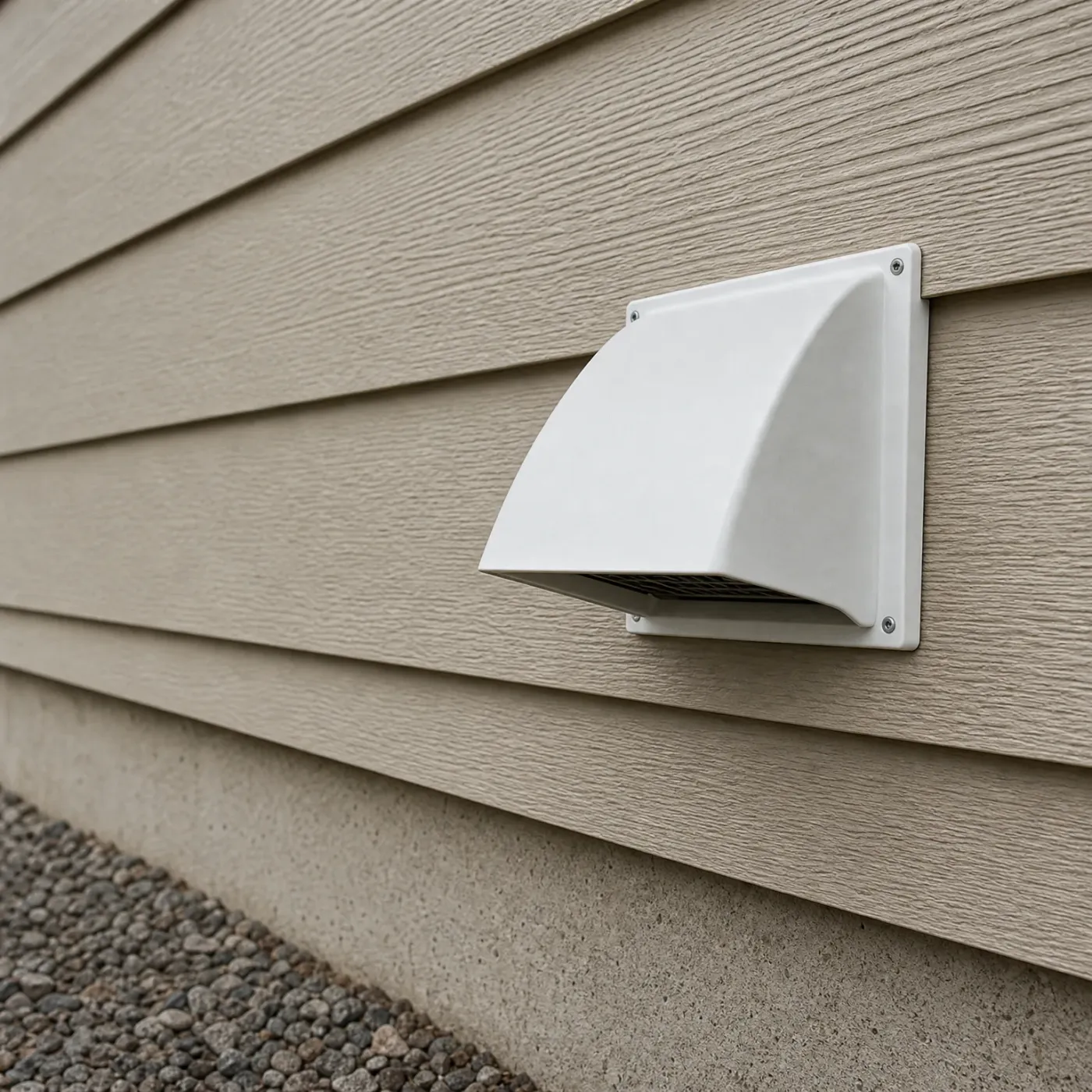
A white plastic hooded dryer vent with a louvered grille mounted on horizontal vinyl siding above a textured concrete foundation wall.
Before you get your dryer vent cleaning
A white plastic hooded dryer vent with a mesh screen, fastened by four screws to beige horizontal lap siding above a concrete foundation wall.
After you get your dryer vent cleaning
A white hooded exterior vent cover with a screened opening mounted on beige lap siding above a concrete foundation and gravel strip.

The right pro for this job

Skip calling around for someone who cleans dryer vents.

Your dryer vent cleaning request goes to a local pro who does this work.

Fill out one form

There's no charge for the request.

A smiling woman with long dark hair in a gray sweater sits at a white stone counter with a glass of white wine, with a kitchen, fireplace and sofa visible behind her.
A smiling woman with dark hair in a cream sweater sits at a marble table with a glass of red wine, with a lit lamp, sofa, fireplace and kitchen counter behind her.
A woman in a cream sweater laughs while seated at a marble countertop with a glass of red wine, with a dimly lit living room and sofa behind her.
A woman in a beige turtleneck sweater with her hair up sits laughing and looking to the side at a white marble table with a glass of red wine, in a dimly lit interior with a lamp and seating area behind her.

Code limits how many bends a dryer vent run can have, because every bend is a place lint can catch and build up. The hood on the outside wall has a flap that's supposed to swing open when the dryer's running and close the rest of the time. Once lint narrows the duct, that flap barely lifts, and you can check this yourself from outside while a load runs. Longer runs sometimes have a booster fan partway down the line to help push air the distance. Buildup doesn't slow that fan down, it just makes it strain harder while the airflow stays poor. Inside the dryer, a thermal cutoff trips when exhaust air can't get out fast enough, which is why a load sometimes stops heating halfway through for no obvious reason. The duct material matters too. Rigid metal sheds lint better than foil or plastic accordion duct, which catches it at every ridge. And if the vent runs through an attic or crawlspace that isn't heated, the warm moist air cools along the way and leaves moisture on the duct walls before it ever gets outside.

How the vent actually fails

  • A dryer vent run has a set number of allowed bends under code, and more bends mean more surface for lint to catch.
  • The vent hood flap on the outside wall is supposed to swing open under air pressure and close when the dryer is off.
  • A booster fan is sometimes added mid-run on long vent lines, and lint buildup makes it work harder without moving more air.
  • The thermal cutoff inside the dryer trips when exhaust air can't escape fast enough, which is why some loads stop heating partway through.
  • Rigid metal duct resists lint buildup better than the foil or plastic accordion style, which traps lint at every ridge.
  • A vent that runs through an unconditioned attic or crawlspace loses heat along the way, so moist air cools and sticks to the duct walls before it ever reaches outside.
A white plastic louvered dryer vent hood mounted on beige horizontal lap siding above a concrete foundation wall bordered by gravel.
This is what a clear vent looks like from outside. The hood sits flush against the wall, and the flap moves freely, so air from the dryer pushes straight out past it.
A dusty white plastic dryer vent hood with lint-clogged louvers mounted on beige horizontal vinyl siding above a concrete foundation wall and a bed of rounded gray rocks.
This is what's choking the airflow. Lint has built up around the hood and the flap can't close right, so the dryer is pushing air against a wall that won't let it through.

Power costs 15.28 cents per kilowatt-hour statewide

At 15.28 cents a kilowatt-hour, a dryer that runs twice to finish one load is burning through power you're paying electric rates on, not gas. With most Virginia homes heating electric already, that second cycle shows up plainly on the bill.

EIA-861 2025 statewide residential average

A dryer that needs two cycles to finish one load is telling you the vent is restricted, not that the machine is wearing out. Clear the lint built up along the duct and the airflow comes back, the drying time drops, and the moisture stops collecting in the laundry room. That's the whole answer. What's left is finding someone who'll actually look at the vent instead of just the lint trap, and that part takes more evenings than the fix itself. Searching through contractors, calling a few, explaining the same thing about the extra cycles and the damp room each time, then sitting with quotes trying to tell them apart. You've already spent the time figuring out what's wrong. You shouldn't have to spend more tracking down who can clean it.

Interior corner with a lit stone fireplace, built-in wood shelving holding a bowl, books and a pale ceramic vase, a potted olive branch and woven basket on a round table, and an upholstered chair with a fringed throw and cushions.
A large pale planter with a leafy green shrub sits on a stone front step of a gray clapboard house, beside a column, dark-framed windows, a wooden porch chair with a cushion, and clipped hedges in low sunlight.
A wooden front door with divided-light glass panes and sidelights on a cream clapboard house, approached by wide wooden steps and a stone path flanked by trimmed boxwood shrubs, potted plants, and overhanging tree branches.
Sunlit corner of a room with linen curtains at a white-framed window showing green tree leaves, an upholstered armchair with a cushion at right, and a round wooden table holding a ceramic bowl in the lower left.
A beige upholstered armchair with a matching cushion and a knitted fringed throw sits in a corner by two tall windows, beside a round wooden side table holding a bowl and a ceramic vase of leafy branches, on a wood floor with a woven rug.

Matched to your dryer vent job

Answer a few questions about the dryer vent cleaning and skip the search.

Skip the search

You only hire the pro if you want to.