Repair now
Someone looks at the system this week, tells you what failed, and gets the cold air moving again. The house stops climbing once it's fixed.
A hot afternoon in Virginia and the air coming out of the vents has gone warm, or stopped moving at all. With summer here running sticky and long, every hour the system sits broken is an hour the house heats up and the people in it get uncomfortable. The first instinct is to check the thermostat and the breaker before anything else.
Before anything else, look at the breaker panel. Central air conditioners pull enough power that a tripped breaker is one of the most common reasons a system goes dead with no warning. Reset it once. If it trips again, leave it off and call for repair rather than resetting it again and again. Next, check the thermostat is set to cool and the temperature is actually below room temperature. If the breaker holds and the thermostat looks right but the air still is not cold, the problem is inside the unit itself, something like a failing capacitor or a refrigerant leak, and that is a job for a licensed technician. Running a broken system or flipping the breaker repeatedly can turn a small repair into a bigger one.
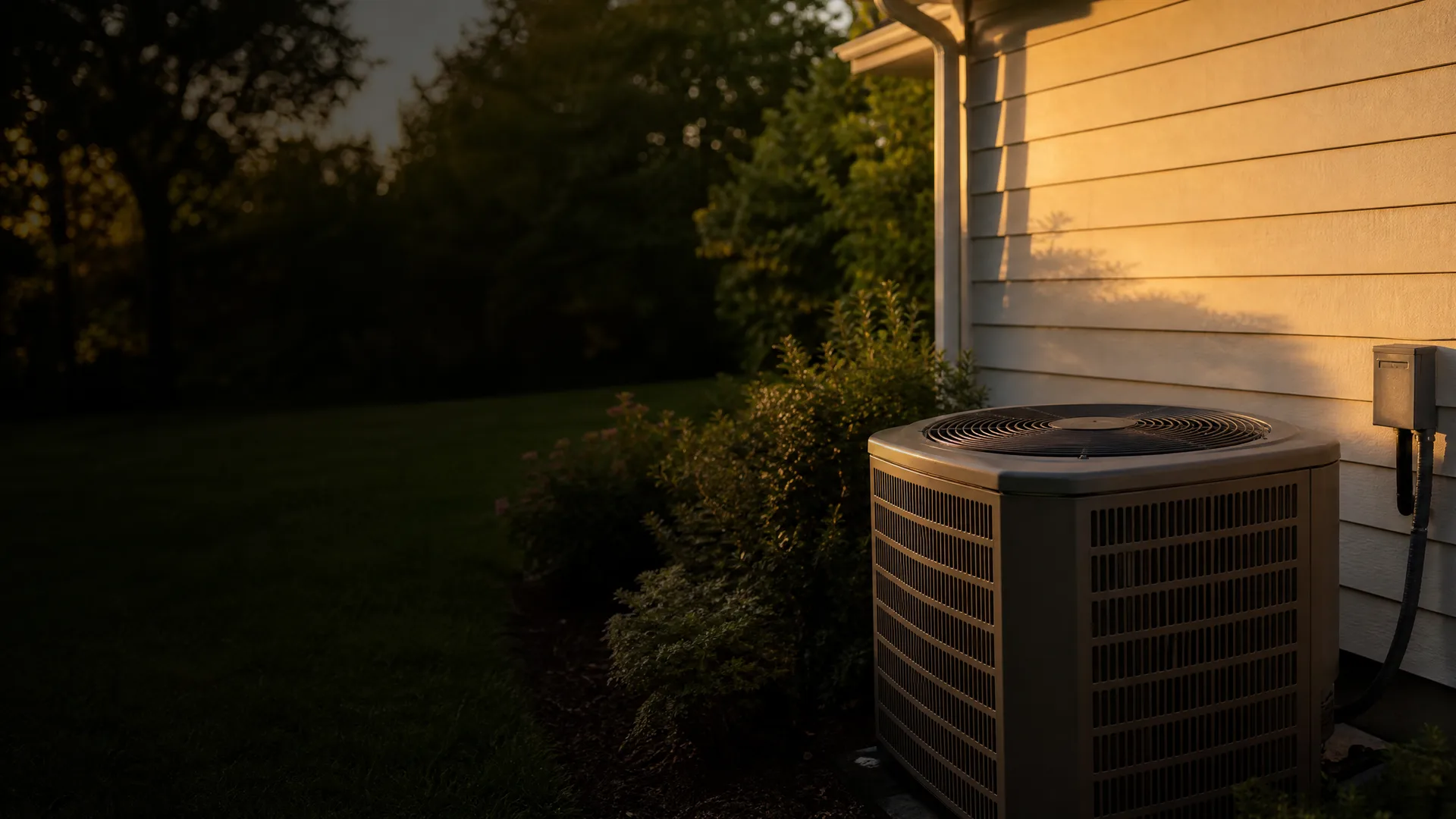
You're out back around seven, grass still warm underfoot, and the condenser by the fence has gone quiet. No hum, no fan turning behind the grille. The sun is low over the yard, that gold light August gets in Virginia, and the air hasn't broken yet the way it does some nights. Inside, your spouse has the windows cracked, trying to catch a breeze that isn't coming. The kids are still out on the porch because it's cooler there than the living room. You crouch down and touch the side of the unit. Warm metal, no vibration. You stand back up and just look at it a minute, the fan blades still, the light fading behind the trees.
Walk through the rooms. If every one of them is warmer than the thermostat says it should be, and the air from the vents feels like room temperature or worse, the system isn't keeping up. Listen at the indoor unit and the outdoor unit. A compressor that clicks and won't start, a fan that doesn't spin, or a smell like something hot and electrical coming from the vents are all signs this isn't a thermostat setting or a closed vent somewhere. Check if ice has formed on the refrigerant line outside. None of this fixes itself by waiting, and a house that sits hot for days in a Virginia summer can be hard on anyone inside who's older, very young, or sick.

A condenser that won't start doesn't care what number is on the thermostat. The outdoor unit holds the compressor and fan that move heat out of the house, and if that fan isn't turning, nothing downstream changes. Dropping the setting lower doesn't make the system try harder. It just keeps calling for cooling that isn't coming, and the indoor blower may keep pushing air that was never cooled.

The thicker of the two copper lines running to the outdoor unit should feel cool or sweat a little when the system is working. If it's warm to the touch, refrigerant isn't moving through it the way it should. That's not something to top off or adjust from outside the unit. It points to a sealed system problem, and a contractor has the gauges and training needed to find where the charge is actually going.




A broken AC in a Virginia summer isn't something to sit with while you figure out who to call. The usual route is calling one company, getting a voicemail, calling the next, explaining the same warm-vent, quiet-condenser story three or four times before anyone shows up. That takes hours you don't have when the house is climbing past what the thermostat says it should be. Filling out the form above hands that off. One request goes out, matched to a contractor who covers your area and this kind of repair, and they call you instead of the other way around. You still have to wait for the visit and whatever the fix turns out to be. What you skip is the sorting through names, the repeated explaining, the back and forth comparing who can come soonest. With the house heating up by the hour, that's the part worth not doing yourself.
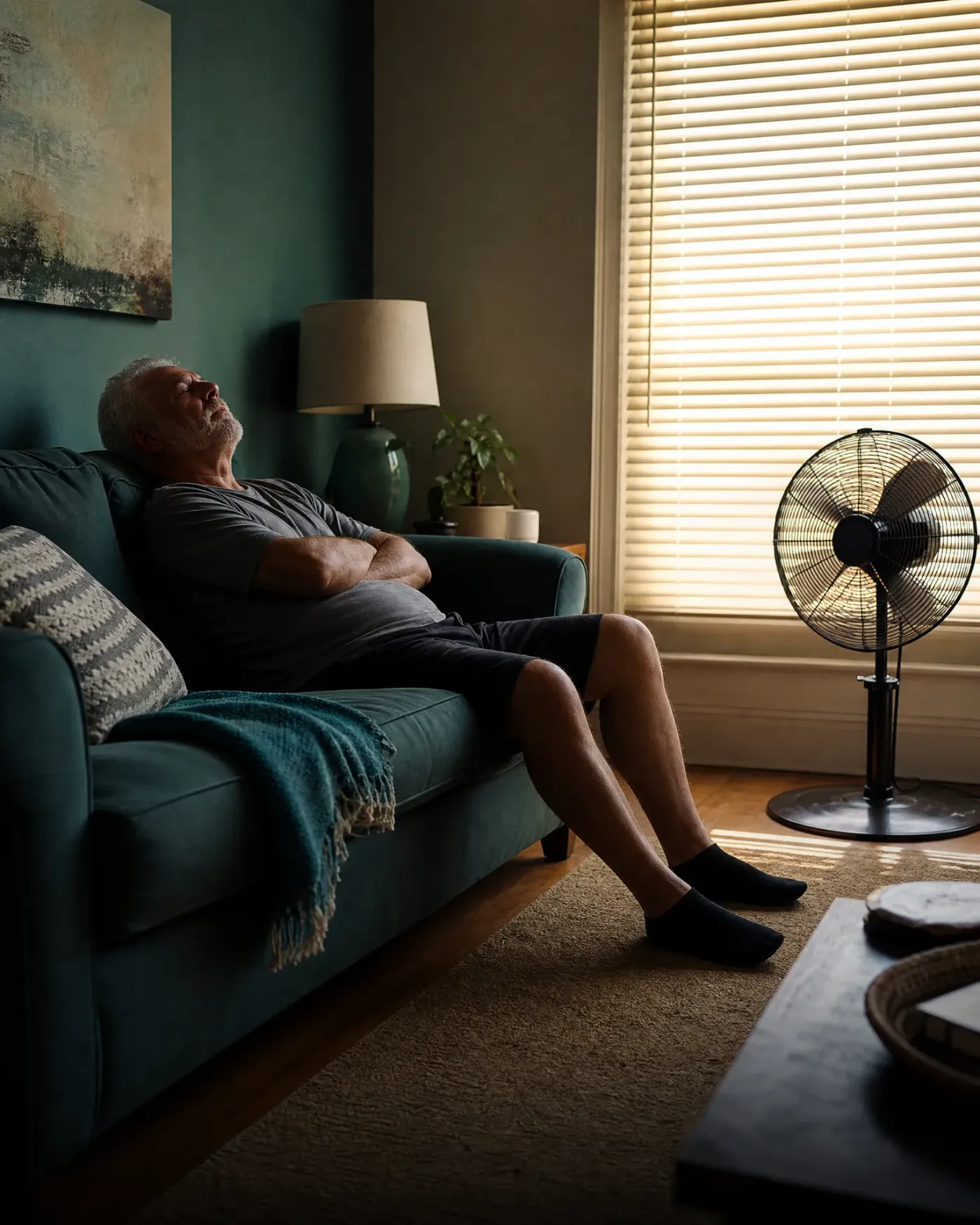
Once the sun goes down, the house loses some of that afternoon heat even without the AC running, and a lot of people decide to just open windows and get through the night. If the house isn't holding dangerous heat and nobody inside is at real risk from it, that can get you to morning. You lose sleep, the air stays heavy, but the system sits untouched and whatever's wrong with it doesn't get worse from being ignored for a few hours. Fans help move air around so the rooms don't feel as still. It's a real option, not a failure, if the night is mild enough and everyone in the house can handle the heat without trouble.
If the house is already hot by mid-morning and only going to climb from there, waiting stops making sense. A tech out the same day can tell you in one visit whether it's a capacitor, a clogged drain line tripping the safety switch, or something that needs a part ordered. You get an answer instead of another night of guessing and opening windows. This matters more with young kids, older adults, or anyone with a health condition in the house, since a hot bedroom at 2am is a different problem than a hot living room at 2pm. Getting someone out today doesn't fix it faster than the problem allows, but you stop losing days to not knowing.


Someone looks at the system this week, tells you what failed, and gets the cold air moving again. The house stops climbing once it's fixed.
Every day the condenser sits quiet is another day of heat building up indoors, and whatever's wrong with it doesn't fix itself by morning.

The compressor is the part doing the real work, squeezing refrigerant so it can shed heat outside instead of inside your house. It needs a jolt from the capacitor to get started, and that capacitor is one of the first things to fail after years of Virginia summers running the system hard. When it goes, the fan might twitch or hum instead of spinning, or the whole unit stays dead quiet. A low refrigerant charge causes a different problem: the compressor still runs, but it can't move enough heat, so the air inside stays warm even though the system sounds normal.
That difference matters because it changes what kind of help you need and how fast. A tech who's actually looked at your unit can tell a capacitor from a refrigerant leak from a seized compressor in a few minutes, and each one calls for a different repair. Instead of describing a humming sound to three different companies and hoping one of them has someone free, you can get matched with a contractor who takes that description once and calls you back knowing what they're likely walking into.

At 15.28 cents a kilowatt-hour, a struggling AC doesn't just leave you hot, it runs up the bill while it fails. A compressor straining to start can pull hard on the circuit for hours before anyone notices the house never actually cooled down.
EIA-861 2025 statewide residential average
Fix the one part that failed, and the rest of the system keeps running the way it has for years. A capacitor or a contactor is a small, specific repair, done once, and the AC goes back to holding the house at whatever temperature you set.
Let that same part keep straining and the compressor behind it takes the damage next. What would have been a small repair turns into replacing the compressor, or the whole outdoor unit, because one cheap part was left to fail under load.



Virginia summers run heavy as much as hot. Averaged across June, July and August, the dew point here sits at 64°F, according to NOAA climate data. That's thick enough that a working AC is pulling moisture out of the air as much as it's cooling it, which is why the house feels clammy fast once the system quits. A condenser that's struggling or dead doesn't just let the temperature climb. The air inside goes damp, sheets feel sticky, and rooms that should've dried out by evening stay heavy all night. That's the dew point doing its work with nothing to stop it.
NASA POWER T2MDEW county cells weighted by homes
A quiet condenser on a sticky Virginia afternoon comes down to one thing: a part failed, and the house will keep warming until that part gets fixed or replaced. Nothing about that changes by waiting, and nothing about it gets better by guessing. What usually eats the time isn't the repair, it's getting to someone who can do it. Calling one company and landing on voicemail, trying the next, telling the warm-vent story again to each one, then sitting with two or three quotes trying to figure out which tech actually knows what they're looking at. That's the part that goes away here. You describe the house once, and a contractor who covers your area gets in touch. What they find once they're at the condenser, whether it's a capacitor, a contactor, or something further in, is theirs to tell you. The house doesn't cool down any faster for having read this far. But you're no longer guessing at who to call or starting the explanation over for the fourth time.





Describe your air conditioner job once, to one pro.
It costs nothing to send, and you don't have to hire anyone.