
HVAC Repair in Dumfries, VA
Homes here need heat from October through April and cooling from June through September. If your system quits, tell us what it's doing and a licensed contractor who covers Prince William County will get in touch.
Tell us about the job
It takes about a minute.

Eleven months of work, most years
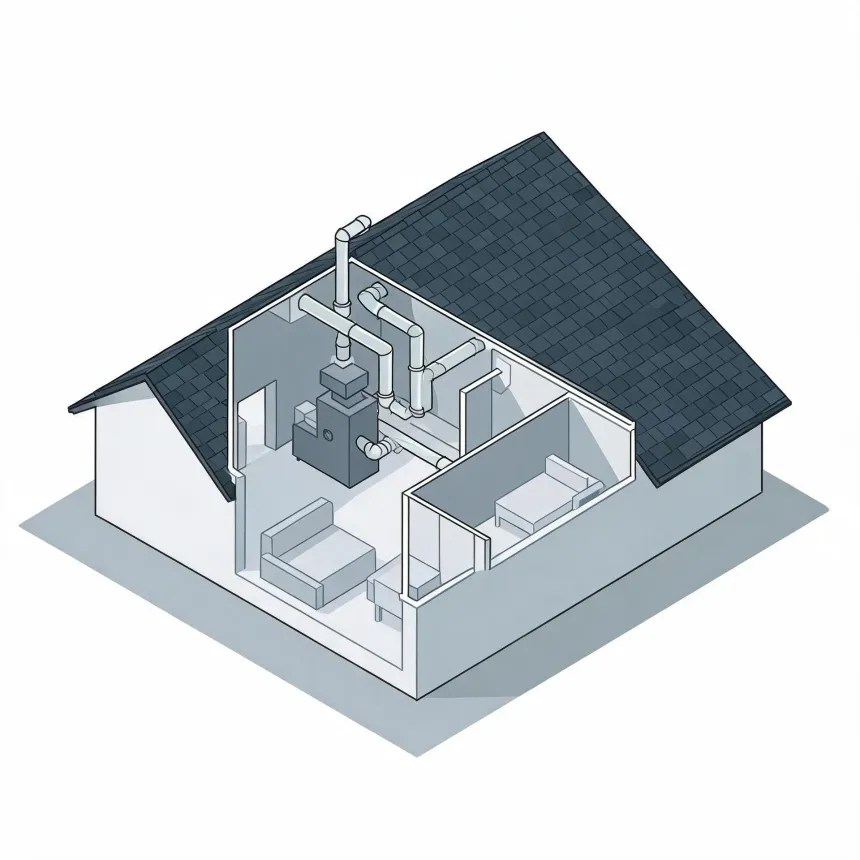
Prince William County only gives your system a short rest. Heat runs October through April, seven months, then cooling takes over June through September. That is eleven months where the furnace or the AC is doing something, and only a few weeks where neither has to.
Winter nights averaging 28°F mean the burner cycles on and off for hours at a stretch, and each start puts a little more wear on the igniter. Summer afternoons near 86°F push the compressor hard for four straight months. Add in the wind, 169 damaging wind events here over the past ten years, and the power grid takes hits too. Almost a quarter of Virginia households lost power for a full day or more in 2024, and when it comes back, your system needs to as well.
- 7 months
- October through April, your system heats
- 4 months
- June through September, it cools
- 28°F
- the average winter night it heats against
- 86°F
- the average summer afternoon it cools against
NOAA nClimDiv, 1991–2020 normals
A new furnace and air conditioner would cut about $160 a year off heating and cooling for a typical Prince William County home.
Estimates for a typical Prince William County home, compared with an older unit built to the previous federal minimum, from EIA household energy data, Virginia fuel prices and NOAA climate normals. Your home will differ.
Repair makes sense when one part has failed.
Replacement makes sense when the furnace's heat exchanger is cracked, the air conditioner's compressor has failed, or repairs keep coming.
Virginia requires HVAC contractors to hold a state license.
Virginia licenses HVAC contractors through the Board for Contractors, and the license belongs to the contractor, not to any single job. Work under $1,000 falls outside that requirement, so a small repair can legally be done without a licensed contractor.
A repair to a heating and cooling system is not likely to fall under that $1,000 line once the cost of parts and labor is added up, so the contractor doing this job should hold that state license. The license is what stands behind the work here, since Virginia is a state that licenses the trade itself rather than leaving it to counties or requiring nothing at all.
Sources: Virginia General Assembly · Virginia Department of Professional and Occupational Regulation
- Why is my heat not working?
- The most common cause is the thermostat, the igniter, or the flame sensor. If the thermostat screen is blank, check the batteries first. If the furnace runs but shuts off after a few seconds, the flame sensor may be dirty and failing to detect the flame it should be reading. A furnace that will not start at all, with no fan and no sound from the burners, often points to the igniter. On nights averaging 28°F here, a furnace that will not stay on is worth getting looked at quickly.
- Why is my system running but not cooling the house?
- Check the air filter first, since a clogged filter blocks the airflow the system needs to cool the air. Next, check the outdoor unit for leaves, grass clippings, or anything blocking the coil. If the filter is clean and the outdoor unit is clear but the air coming from the vents is not cold, the system may be low on refrigerant or have a failing part, and that calls for a contractor to diagnose. On afternoons near 86°F, a system that runs constantly without cooling the house is losing ground it will not make up on its own.
- What can I check before calling for HVAC repair?
- Check the thermostat, the power, and the filter first. Make sure the thermostat is set to heat or cool as needed and has working batteries. Check that the breaker for the system has not tripped, especially after a storm. Look at the air filter and replace it if it is visibly dirty, since a blocked filter can cause problems that look like bigger issues. If the system still is not working after these checks, a licensed contractor can diagnose what is going on.