Mini Split Installation in Norfolk, VA
A new system here will heat from November through April and cool from May through September every year. Tell us about the house, and a licensed contractor who covers Norfolk will get in touch.
Tell us about the job
It takes about a minute.

Eleven months of work a year for your new mini-split
Norfolk only gives a mini-split about one month of rest. Heat runs November through April, cooling runs May through September, and winter nights that average 35°F sit close behind summer afternoons that average 86°F. The unit has to handle both ends with barely a break between them.
Any new mini-split installed today has to clear the federal minimum for a split-system heat pump, 14.3 SEER2 for cooling and 7.5 HSPF2 for heating. That applies whether it replaces an old unit or is the first one going into a room that never had one. Most homes in Norfolk heat with electricity, so when a storm knocks out power, the heat pump stops with it until power comes back.
- 6 months
- November through April, your system heats
- 5 months
- May through September, it cools
- 35°F
- the average winter night it heats against
- 86°F
- the average summer afternoon it cools against
NOAA nClimDiv, 1991–2020 normals
Virginia requires HVAC contractors to hold a state license.
The license is tied to the contractor, not to any single job. It covers the business doing your installation rather than a one-time sign-off on this particular unit. Virginia also sets a threshold. Work under $1,000 does not need a licensed contractor. A mini-split installation runs well past that, so this job falls under the license requirement.
A licensed contractor is the accountable party for this installation. Most cities and counties in Virginia also require a permit for this kind of work, along with an inspection once the job is done. That inspection comes from the local building office, separate from the state license, and it is the check on the finished installation itself.
Sources: Virginia General Assembly · Virginia Department of Professional and Occupational Regulation
- Is a mini split worth it?
- For most homes it comes down to what room you're trying to fix. A mini split handles a bonus room, addition, or garage that your ducts never reached, and it heats and cools that space without opening up walls. Norfolk winters average 35°F and summers hit 86°F, so the unit needs to work in both directions here, and a heat pump mini split is built to do that. Where it makes less sense is trying to condition an entire house room by room with separate heads. A contractor can look at your layout and tell you whether one or two zones solve the problem or whether it's better handled another way.
- How many rooms can a mini split cover?
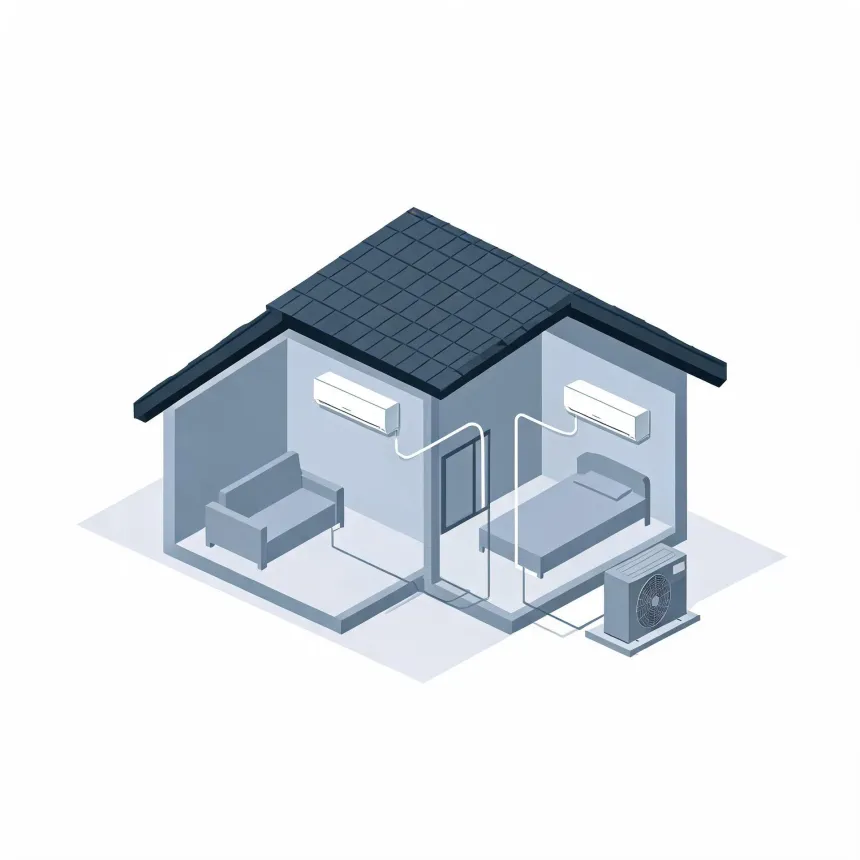
- One outdoor unit can run several indoor heads, and how many depends on the system a contractor picks for your house. Each indoor head is sized to the room it serves, so a bedroom and a great room won't pull from the same head. The limit isn't really the number of rooms, it's the total capacity of the outdoor unit and whether the layout lets the lines reach each spot. A contractor sizes this room by room rather than guessing at a whole-house number.
- Can a mini split heat a whole house?
- It can, but it takes enough indoor heads placed correctly. One outdoor unit with a single head in a hallway won't heat a house evenly. Homes here need heat from November through April, six months a year, and winter nights average 35°F, so whatever setup you choose has to keep up on the coldest nights, not just the mild ones. Some homes do go fully ductless, with a head in every main room. Others use a mini split for an addition or problem area and keep existing ducted heat for the rest of the house. A contractor can walk the house and say which approach fits yours.