






Signs of mold in your air ducts in Virginia

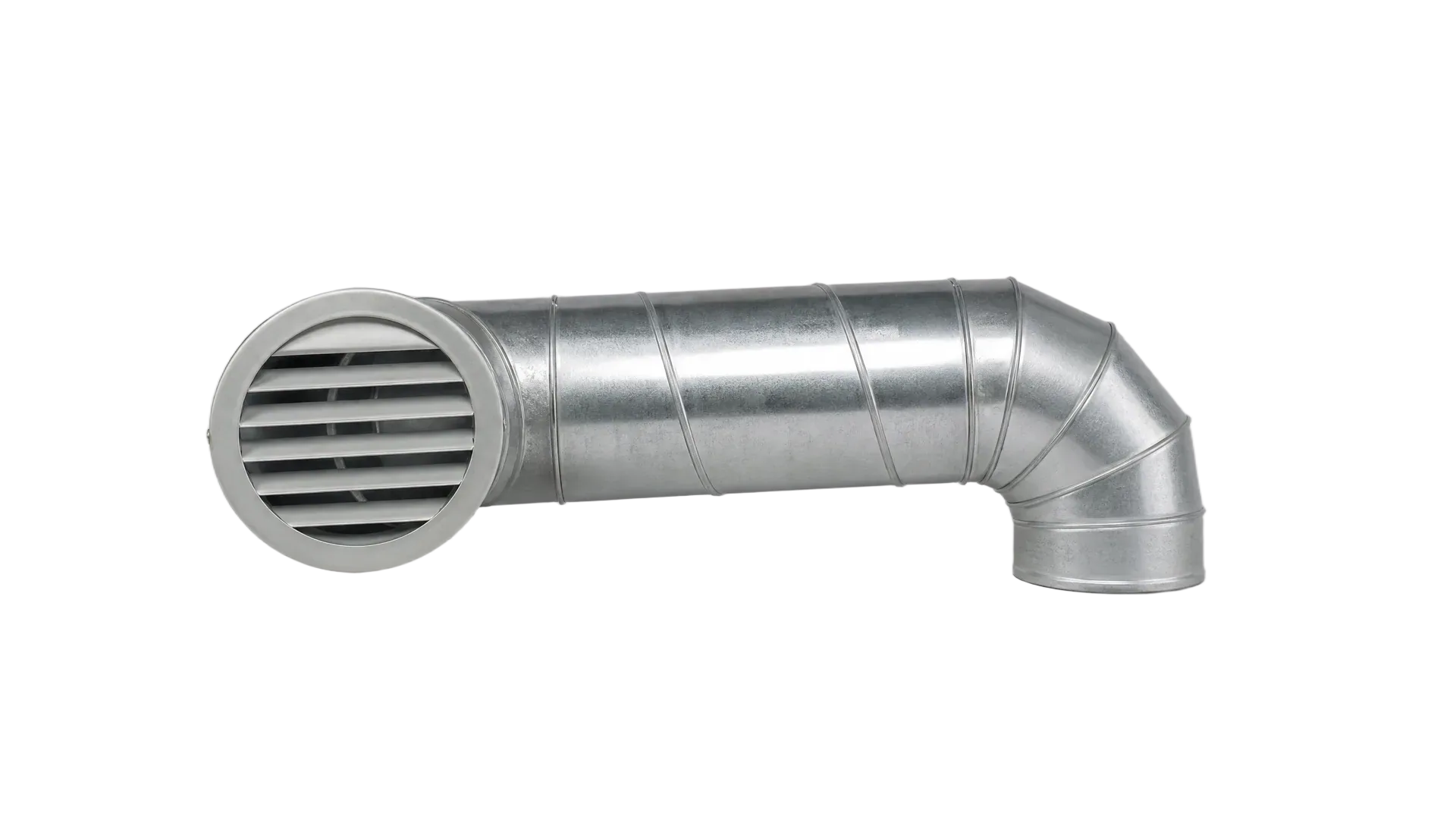
A galvanized steel round duct section with a 90-degree elbow at one end and a louvered vent grille at the other, photographed against a plain gray background.
Find a pro near me

What are the signs of mold in air ducts?

Virginia summers run sticky for months, and that moisture has to go somewhere. If your air ducts carry it instead of just conditioned air, you may notice a musty smell, dark spots around the vents, or family members sneezing more indoors than outside. You want to know what you're actually looking for, and whether what you're seeing means mold or something else entirely.

A musty smell near the vents and dark spots around the registers are the clearest signs

A smell that comes and goes with the blower, dark or black spots around the supply and return vents, and dust that looks damp or clumped instead of dry are what mold leaves behind in a duct system. The humidity that builds up in Virginia summers gives mold the moisture it needs, and ductwork that runs cool while the air outside is warm can collect condensation on its own. If anyone in the house is congested or coughing more indoors than out, that points the same direction. None of these prove mold on their own, but together they mean the ducts are worth a closer look.

Empty basement with bare concrete walls and floor, a small window at left, and exposed wood joists with galvanized sheet metal ductwork and pipes overhead.
Clean metal ducts stay bare and silvery, with no streaking or dust buildup where they meet the joists above.
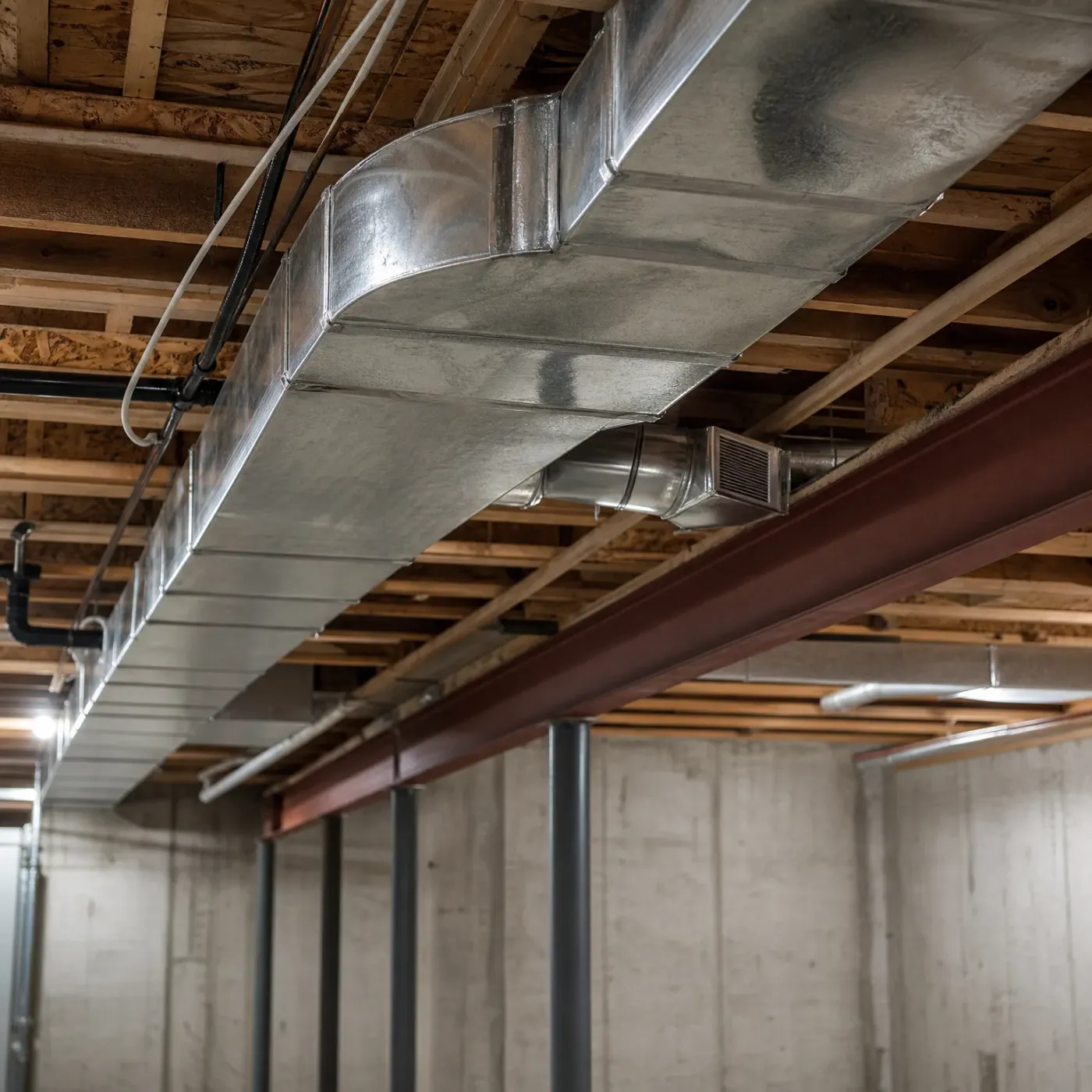
Dusty sheet-metal HVAC ducts with a rectangular vent register run beneath wooden floor joists above an empty concrete-walled basement.
Caked-on grime like this along the duct seams is where spores collect and spread every time the system runs.

Why Mold Grows Inside Ducts

  • Mold needs moisture, and a duct that runs cooler than the air around it will sweat on the inside just like a glass of iced tea does outside.
  • Return ducts pull air from closets and crawlspaces, so a musty smell near a return vent often starts with damp wood or insulation, not the duct itself.
  • Flex duct has a ridged inner liner, and dust that settles in those ridges holds moisture longer than it would on smooth sheet metal.
  • A disconnected or crushed duct section lets humid attic or crawlspace air leak in around the joint, feeding growth right at that seam.
  • Mold growing near the evaporator coil or in the drain pan gets pulled into the duct system every time the blower turns on.
  • Insulation wrapped around a duct can hide growth underneath for months, since the mold never reaches air until the wrap tears or peels back.

Mold needs three things to take hold in a duct system: moisture, a surface to grow on, and still air. Virginia summers supply the moisture. Warm, humid air meets a cold duct wall and condenses, the same way it beads on a glass of iced tea left on the counter. That film of water sits on whatever surface is there, and some surfaces hold it longer than others. Flex duct has a ribbed liner, and those ribs trap dust and moisture in a way a smooth metal duct does not. Insulation wrap compounds the problem, since it can hold dampness against the duct wall for months without ever showing on the outside. A joint that has come loose or a section that got crushed during other work opens a path for humid attic or crawlspace air to leak straight into the system at that spot, which means growth can start right at the seam rather than spreading in from somewhere else. The air handler itself is often the real source. The evaporator coil and the drain pan underneath it stay wet for hours after the system cycles off, and if mold takes hold there, the blower carries spores into every duct it feeds. A return duct adds another wrinkle, since it pulls air from wherever it is routed, closets, crawlspaces, sometimes unconditioned attic space, so a musty smell at a return vent can start with damp framing nearby rather than the duct itself.

A smiling gray-haired man in a dark wool coat with snow flecks stands in a dimly lit home entryway, with a lit table lamp, potted plant, framed pictures and a living room visible behind him.
An older man with gray hair and a beard, wearing a snow-dusted dark coat and knit scarf, stands smiling in a dimly lit house entry with a lit lamp, mirror, and a living room with snow visible through the window behind him.
An older man with gray hair and a beard, wearing a dark snow-dusted coat and plaid scarf, stands smiling in a warmly lit hallway with a lamp, side table and glass-paned doors behind him.
An older man with gray hair and a beard, wearing a dark coat dusted with snow, stands in a home entryway with a lit lamp, a staircase railing, and a living room with large windows behind him.
Galvanized sheet metal trunk ductwork with a round branch and register running beneath wood floor joists in an unfinished basement, alongside pipes, wiring, a steel beam and concrete walls.

Get the right pro for your ductwork

After this form, you can stop searching for a duct system pro.

Your duct cleaning request goes to a local pro who does this work.

Get my match

Sending the form costs nothing.

Is It Your Ducts or Something Else

Mold in the Ducts

  • A musty smell comes back within a day or two of running the system, even after you've aired out the house.
  • Dark spots show up on the vent covers themselves or on the wall just below them.
  • Someone in the house gets stuffy or starts coughing shortly after the air kicks on, then feels fine once it's off.
  • The smell is strongest near a return vent, especially one that pulls air from a closet or crawlspace.
  • Dust near the vents looks damp or clumped rather than dry and loose.
  • Cleaning the vent covers themselves does nothing, because the smell comes from further back in the duct.

Something Else

  • The musty smell is strongest in a specific room, like a basement or bathroom, and has nothing to do with whether the air is running.
  • A dead rodent or old water damage inside a wall can smell a lot like mold without ever touching the ducts.
  • The vents look dusty but dry, and wiping them down clears the smell for good.
  • Someone's allergies flare in the whole house, not just when the air or heat is on.
  • A musty smell shows up only after heavy rain, which points to a leak or damp crawlspace rather than the ductwork.
  • The furnace or coil itself looks fine when the access panel comes off, with no visible staining or buildup.
A basement with a gray furnace on a concrete pad connected to large sheet-metal ducts running along an exposed wood joist ceiling, with PVC pipes and plastic sheeting on the walls.

Ductwork running clean

This is what a duct system looks like when it's doing its job. The metal stays bare, the joists overhead are dry, and nothing is growing where the ducts meet the floor above. Air moves through without picking up anything it shouldn't.


Galvanized sheet metal HVAC ductwork with a vent grille running along a wooden joist ceiling above a bare concrete wall.

Ductwork in trouble

Here the ducts sit low against the joists with wiring and framing pressed close on every side, the kind of tight, closed-off space that stays damp once moisture gets in. A duct run like this, hidden above a basement or crawlspace, can carry mold through the whole house before anyone spots it.

Why does my house smell musty when the AC kicks on

You walk in, the system cycles on, and there it is, a damp basement smell that wasn't there a minute ago. It fades, then comes back the next time the AC runs. Check the vent covers themselves for dark speckling, especially on returns near a closet or crawlspace. Look at the wall just under a vent for a faint gray or black stain. Notice if anyone in the house has started waking up congested or coughing more than usual, particularly in a bedroom with its own vent. None of these on their own proves mold, but together they point at moisture sitting somewhere in the ducts instead of leaving the house with the air.

An unfinished basement with bare concrete walls and floor, showing exposed wooden floor joists, pipes, wiring, and metal HVAC ducts with a vent grille overhead.
Before you get your ductwork cleaning
Unfinished basement with galvanized sheet-metal rectangular and round ductwork running along a wood-joist ceiling, two steel support columns, a small window, and a furnace unit against the far right wall.
After you get your ductwork cleaning
Unfinished basement with bare concrete walls and floor, showing exposed wood floor joists overhead with sheet-metal rectangular ductwork, insulated flexible ducts, and pipes.

Ducts running dry

The metal stays bare where it meets the joists, no streaking, no dust caked along the seams. Flex duct and sheet metal both look the same months apart. Air moves through the basement and up into the house without picking up anything along the way.

Basement ceiling with galvanized sheet metal rectangular ducts and round pipes running between wooden joists above a bare concrete wall and floor.

Ducts holding moisture

Look along the trunk lines and the round flex pipes where they run close to the foundation wall. Dust built up on condensation turns into a film the system blows through every time it cycles. Check the seams near the joists first, that's where it usually starts.

A woman wrapped in a thick wool blanket sits in an armchair with an open book on her lap, beside a lit lamp and a frost-patterned window.
A smiling older woman with gray shoulder-length hair in a cream cable-knit turtleneck sweater stands behind a wooden board holding a round loaf of bread, in a warmly lit kitchen with a dark window and shelves behind her.

Power costs 15.28 cents per kilowatt-hour statewide

Most houses here heat with electricity, and at 15.28 cents a kilowatt-hour, a duct system that's clogged with grime makes the blower and the heat strip work harder to push air through. Cleaning out that buildup is one less drag on a bill that's already running on electric heat.

EIA-861 2025 statewide residential average

A musty smell that keeps coming back, dark spots on the vent covers, someone in the house always stuffy when the system runs. Any one of those is reason enough to get the ducts looked at. You don't have to figure out which sign matters most or how bad it's gotten before you act on it. Send the form and the work of finding someone who services ducts in Virginia is off your plate. A contractor who handles this will reach out and take it from there, matching what you described to what your system actually needs. You've already done the hard part, which is noticing. The rest, the inspection, the cleaning, deciding what's actually growing in there, is for someone who does this for a living. Your house told you something was off. Acting on it now is the whole point of paying attention in the first place.

Dim interior with a dark gray wall, exposed wood joist ceiling, sheet-metal ductwork, conduit, pipes and a sprinkler head.

A pro who works on ducts

One request and the search for a pro is handled.

Duct and vent cleaningDucts or ventsVirginia
Step 1 of 2

What ZIP code is the job in?