











Birds nesting in a dryer vent in Virginia Beach, VA

Get matched with a pro who works on dryer vents in Virginia Beach.

Find my pro

A bird in your dryer vent usually means a spring nest. Vent hoods have a flap meant to keep animals out, but if the flap is stuck open, bent, or missing its spring, a bird can push through and build inside the duct where it's warm and sheltered. You'll usually notice it first as a burning smell when the dryer runs, clothes taking longer to dry, or a muffled chirping near the vent. Nesting material, feathers, and debris block the airflow the dryer needs to vent hot, moist air outside, and that blockage is a fire risk, not just an inconvenience. It also means the dryer works harder and wears out sooner. The nest has to come out of the duct, not just the hood, and the vent needs a working flap or guard afterward so it doesn't happen again next season.

A metal hooded dryer vent with a louvered opening mounted on gray horizontal lap siding, next to a plain off-white wall.

Why spring is when this happens

Birds look for a tight, sheltered spot to build a nest from March into May, and a dryer vent gives them both. The duct stays warm from heating cycles and the hood blocks wind and rain. Once a nest is built, the flap can't close all the way, so the vent sits open to the weather until someone clears it out.

A stainless steel hooded dryer vent screwed to light gray horizontal lap siding, with a blank white wall occupying the left side of the frame.

What a blocked vent does to the dryer

A dryer pushes hot, damp air out through the vent with every load. Nesting material packed into the duct gives that air nowhere to go, so it backs up into the duct and the dryer itself. Drying times stretch out, the outside of the machine runs hotter than usual, and lint has more chances to collect where it shouldn't.

How does a bird nest in the vent affect a house like yours?

  • 2.49 people per household on average

    Most households here run 2.49 people, which means loads of laundry most days of the week. A blocked vent shows up fast.

  • Half the homes here were built by 1984

    Half the homes in Virginia Beach went up by 1984 or earlier. A vent hood that old has had decades for the flap spring to weaken or rust.

  • Power here costs 15.20 cents per kilowatt-hour

    Electricity here runs 15.20 cents per kilowatt-hour. A dryer fighting a blocked vent pulls more power to finish each load.

ACS 2020-2024 · EIA-861 2025

A metal hooded dryer vent with a louvered opening mounted on beige horizontal lap siding above a concrete foundation wall.
A vent hood like this still has its flap free to swing, so it opens on the dryer's exhaust and closes again once the load is done.
A white hooded dryer vent mounted on horizontal lap siding, with a thick mass of gray lint clogging the opening beneath the hood.
This cap is so packed with lint that the flap can't fall shut, leaving the duct open to anything looking for a place to nest.

The vent's job is simple. It carries hot, damp air from the drum out past the hood on your siding, usually turning a corner or two on the way. A nest built into that run doesn't block it outright. It narrows it. The dryer still pushes the same volume of air, but now through a smaller opening, so it works harder to move the same load. Lint that would normally ride the airflow straight outside starts catching on the twigs and grass instead, building up right at the nest. Over time that makes the narrowing worse. You'll notice the dryer running longer than it used to, and the drum and the air coming off it will run hotter, because the heat has nowhere to go but back into the machine. If the hose connecting the dryer to the wall is only held on with foil tape or a clamp that's past its prime, the backpressure from all this can work it loose. And lint sitting still inside a hot duct, instead of moving through it, is exactly the fuel a vent fire needs.

What a nest does to airflow

  • A dryer vent runs from the back of the machine to the hood on your siding, usually with at least one turn along the way.
  • Nest material packed into that run forces the duct to a smaller width, so the same airflow has to push through a tighter space.
  • Lint keeps leaving the dryer with every load and starts catching on the twigs and grass instead of blowing clear outside.
  • A dryer pulls double the time to finish a load once the vent is this restricted, and the drum runs hotter doing it.
  • The hose from the dryer to the wall can disconnect under that backpressure if it's only held with foil tape or a weak clamp.
  • Lint is the fuel in a dryer vent fire, and a packed nest gives it somewhere to sit instead of moving outside with the exhaust.
An older man with gray hair and a beard stands in a doorway of a home, wearing a dark coat dusted with snow, with a lit fireplace and lamp visible in the blurred room behind him.
A bearded older man in a dark snow-dusted coat and scarf stands just inside a home's front door, with a lamp-lit room and snowy window visible behind him.
An older man with gray hair and a beard wearing a dark snow-dusted coat stands in a home entryway, with a lamp-lit living room and a wooden staircase behind him.
An older man with gray hair, a dark coat and scarf dusted with snow stands in a warmly lit entryway with an open wooden door, a table lamp, framed pictures, and a plant in a vase.

Get matched with a dryer vent pro in Virginia Beach

The pro who gets in touch is licensed in Virginia and works in Virginia Beach.

Asking costs nothing, and the choice to hire stays yours.

What a blocked vent costs you

A dryer that can't push air out has to run the cycle again. Clothes come out of the dryer still damp, so you run them a second time, and that's a real jump in what the dryer draws on your power bill over a month of laundry. The motor and heating element also wear faster when they're working against a clogged duct instead of a clear one. If your dryer is electric, like most homes here, that strain shows up on the same bill that already covers your AC through the summer and your heat through the winter.

The fire risk behind the nest

Nest material is dry twigs, grass and lint, and it sits right where hot air from the dryer passes through on every load. A clear vent carries that heat outside. A blocked one holds it in the duct, and lint is one of the easiest things in a house to catch. This is why a bird's nest in the vent isn't just an inconvenience to clear out when you get to it. It's worth having someone look at the duct and clean it out before you run another load, not after the season ends.

A white plastic dryer vent hood mounted on beige horizontal vinyl siding, with lint clogging its lower opening and a concrete foundation below.
Before you get your dryer vent cleaning
A white louvered dryer vent hood mounted with four screws on beige horizontal lap siding above a gray stucco foundation and concrete walkway.
After you get your dryer vent cleaning

Clearing it yourself

If the hood is within reach from a ladder, you can pull the nest out by hand once you know the dryer is off. A lot of nest material comes out whole if you go slow and check the flap afterward to see it swings free again. What you can't see is what's packed further back in the duct, past the first bend, and a shop-vac from the hood end only reaches so far. If the duct runs any distance before it reaches your siding, material further in stays put.


Having it cleaned professionally

A contractor who works on vents every spring brings a brush and rod system built to run the full length of the duct, not just the first few feet from the hood. That clears material past the bends where a shop-vac can't reach, and checks that the flap itself still closes on its own once the nest is out. It also means someone looking at the hood itself, since a flap that's bent or missing its spring will let this happen again next spring.

A woman wrapped in a thick textured blanket sits on a sofa with an open book on her lap, beside a lit lamp and bookshelf, with a frost-patterned window behind her.
A woman in a cream knit sweater sits with closed eyes in an armchair beside a window showing orange autumn foliage, with a framed picture, plants, and a white mug on a wooden table nearby.

You wait and hope the birds move on. By the time the nest is old enough to abandon, lint has been building behind it all season, and the duct still needs to be cleared before the dryer can vent properly again.

You get the vent cleared now. The nest comes out, the flap is checked to see it swings free, and the dryer runs a normal cycle again instead of pushing hot, damp air back into the house.

2.49 people per household on average

With 2.49 people in the average Virginia Beach household, laundry runs most days of the week in a lot of homes here. A vent with a nest packed into it can't keep up with that pace, so the signs show up fast: longer cycles, damp clothes, a laundry room that feels warmer than it should.

ACS 2020-2024

A white hooded dryer vent with a louvered grille screwed to beige horizontal lap siding above a lighter foundation wall.

Vent hood working right

This is what the hood should look like year round. The flap hangs free and sits flush against the siding, with nothing blocking the grille. Air from the dryer pushes it open on each cycle and it falls shut again when the load ends, keeping wind, rain, and birds out.

A wall-mounted plastic dryer vent hood on light-colored horizontal vinyl siding, clogged with lint and debris hanging from its opening, above a gray painted foundation.

Vent hood packed with lint

Lint has built up around the opening until the flap can't close anymore. Once it's stuck open like this, a bird can work its way past it and start a nest inside the duct. From outside, the grille looks matted and gray instead of clear.

A woman in a cream sweater and jeans stands in an open black front door of a white stucco house, viewed over the shoulder of a man in a navy jacket in the foreground.

A bird in the vent means the duct needs to be cleared

That's really the whole answer. A nest pushed into the duct blocks the path your dryer needs to push air outside, and no amount of waiting fixes that. The flap on the hood has to hang free again, and the nest material has to come out of the run, not just off the end of it.

A local contractor who clears dryer vents sees this same thing every spring, house after house in Virginia Beach, and knows how far a nest usually sits back in the duct and what it takes to get all of it out, not just what's reachable from the hood. Answer a few questions about your vent and you'll be matched with one licensed contractor local to the area, who will reach out to you directly. No other companies calling you about it.

Living room interior with a light sofa holding a dark green cushion and a brown knit throw, a tall leafy plant by a black-framed window, a wooden coffee table with a round tray, and wooden shelves holding vases and books.
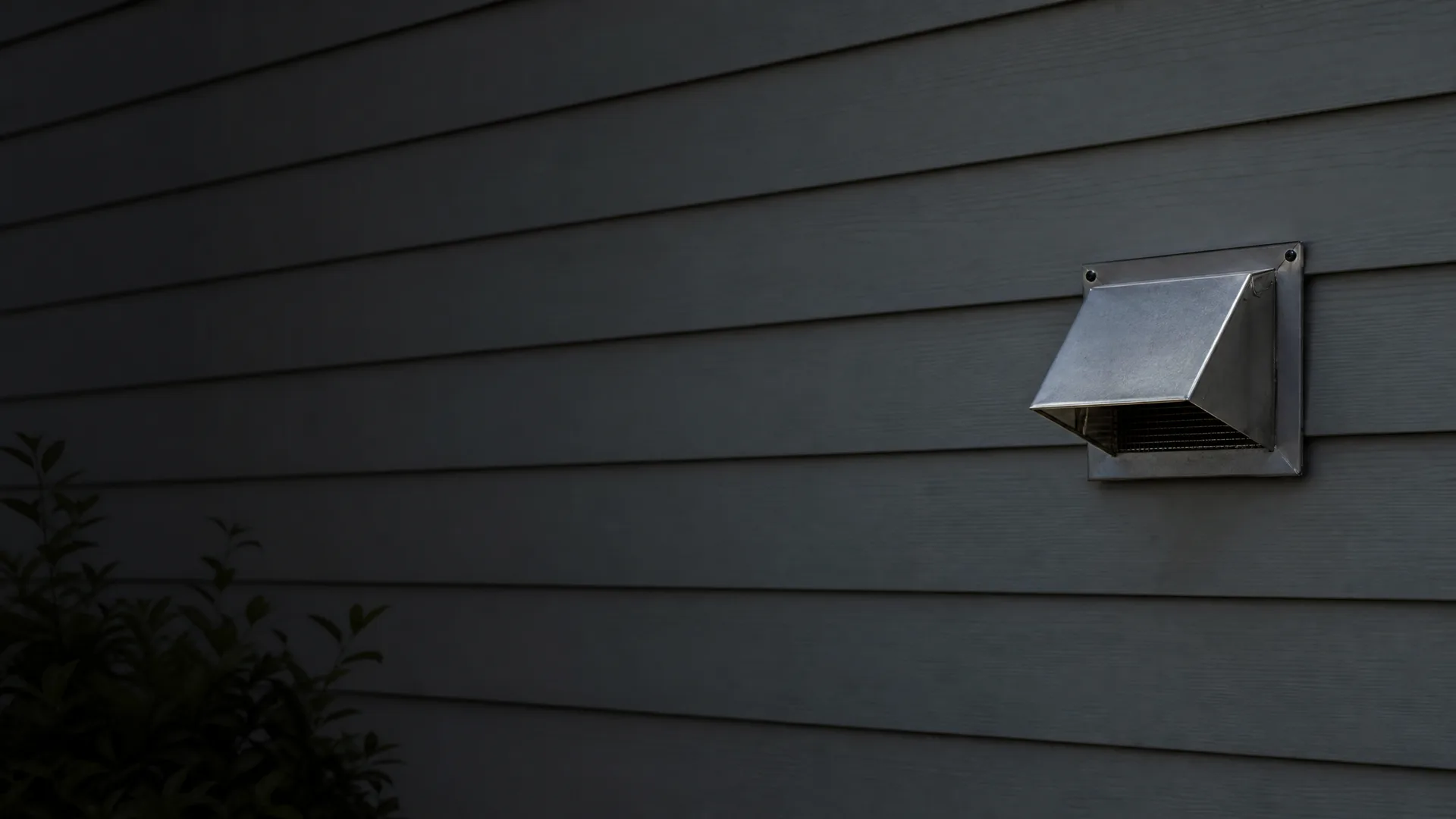
A metal hooded dryer vent with a louvered opening mounted on dark gray horizontal lap siding, with leafy shrub foliage in the lower left corner.

Find a dryer vent cleaning pro in Virginia Beach

A licensed pro who works in Virginia Beach gets your request.

Duct and vent cleaningVirginia Beach city, VA
Step 1 of 3

What kind of equipment?