How often to clean a dryer vent in Dumfries, VA

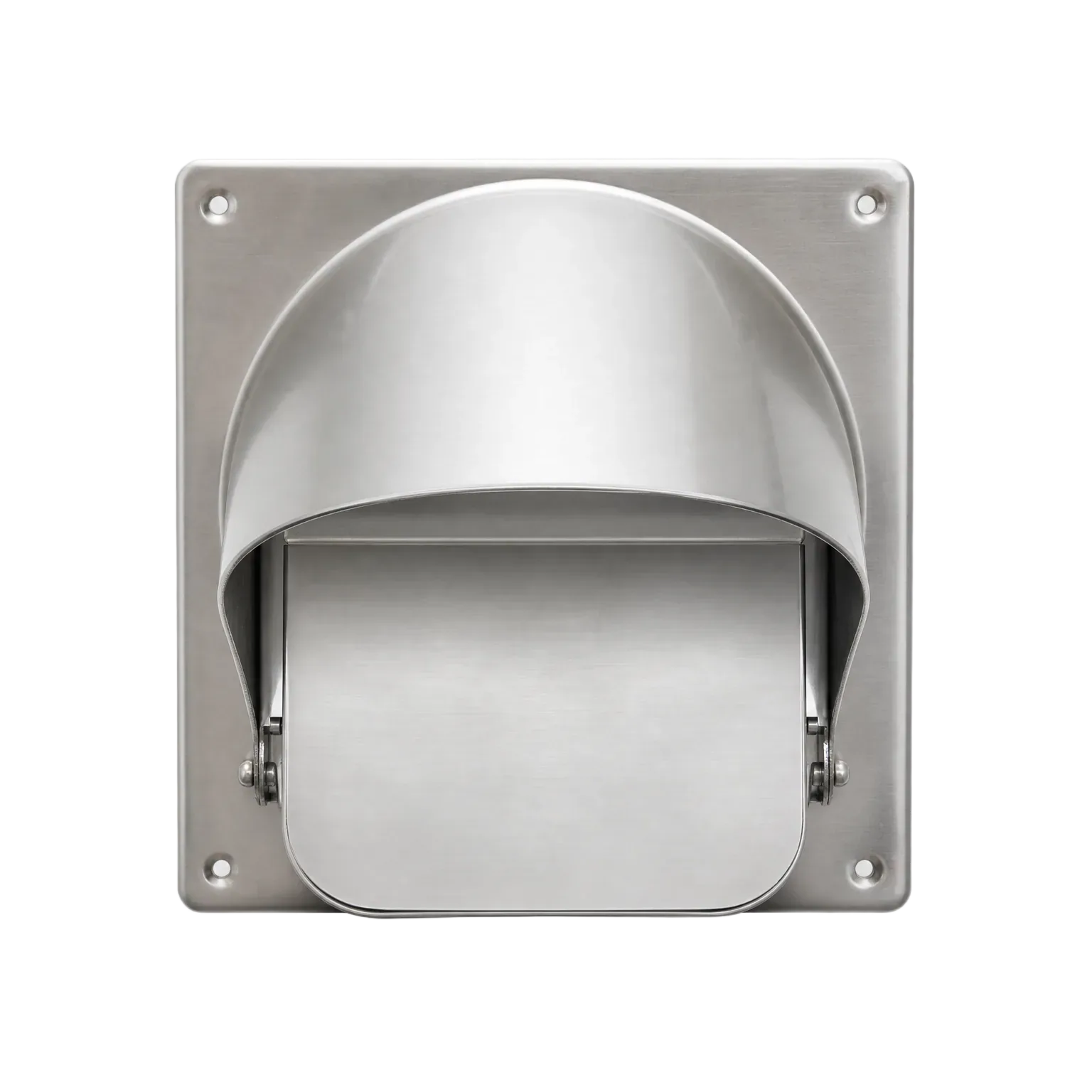
A stainless steel square wall vent with a curved hood and a hinged flap damper, shown straight on against a plain gray background.
Let a pro reach out

Clean your dryer vent once a year. If you run big loads often, or you're drying towels and bedding most weeks, check it every eight or nine months instead. The vent carries out more than lint. It carries out the moisture from every load, and in Dumfries that moisture has a harder time escaping during the muggy stretch of summer, when the air outside is already heavy. A vent that's choked with lint slows that air down, so the dryer runs longer to get clothes dry, and the motor and heating element work harder doing it. Full lint also means more heat trapped inside the vent run, which is how dryer fires start. If a load now takes two cycles where one used to do it, or the top of the dryer feels hot to the touch, the vent is already due.

A white hooded dryer vent with a screened opening mounted on beige horizontal lap siding.
A clean vent cap like this lets the louver swing open fully, so damp air escapes in seconds and the dryer shuts off on schedule.
A dirt-streaked white plastic dryer vent hood screwed to light gray horizontal lap siding above a concrete foundation wall.
Lint packed around the flap keeps it from closing right, and the dryer runs longer each load to get clothes dry.

What does your household mean for your dryer vent?

  • 3.09 people per household on average

    A home here runs 3.09 people on average, so the dryer likely runs most days. More loads push more lint and moisture through the vent, and that calls for the yearly check at least.

  • Half the homes here were built by 1995

    Half the homes in Prince William County were built in 1995 or earlier. If yours is one of them, the duct run may be older too, worth a look alongside the vent.

  • Power here costs 13.91 cents per kilowatt-hour

    Electricity here runs 13.91 cents per kilowatt-hour. A dryer working against a clogged vent pulls more power to finish the same load, so a clear vent keeps that cost down.

ACS 2020-2024 · EIA-861 2025

A pile of beige, navy, and teal towels sits on top of a washer or dryer in a dim laundry room with a window and an upper cabinet.

It's past seven on a Tuesday and you're pulling a second load of towels out before bed. They're warm but not dry, still heavy in your hands, so you drape them over the top of the dryer and set it running again. Outside the laundry room window the Dumfries night has gone muggy the way it does most summer evenings. You open the dryer door between loads and feel the heat pushing back at you harder than it should. The cycle finishes. The towels on top are still damp from the last round, and the ones inside aren't much better. You start a third cycle and go find something else to do while you wait.

Clean It Yourself or Call Someone

Clean it yourself

  • A vacuum with a hose attachment reaches the first few feet from the back of the dryer and pulls out the loose lint sitting there.
  • A flexible brush kit can push further into the duct, but most of them aren't long enough to reach a vent that runs any real distance to the outside wall.
  • You can check the outside cap yourself and clear any lint, leaves or a bird's nest blocking the louver from the outside.
  • You won't see what's built up in the middle sections of duct, especially where it bends behind a wall or runs through a floor joist.
  • If your dryer sits against an interior wall with a long run to the outside, the part you can reach isn't the part most likely to be packed with lint.

Have it cleaned

  • A contractor who does this every week brings a rotary brush and a shop vacuum rated for the full length of a standard vent run, not just the first few feet.
  • They can tell from the airflow at the cap whether the line is actually clear, not just whether the visible section looks clean.
  • They'll spot a crushed section of duct or a loose joint while they're in there, something you'd have no way to find from the dryer end.
  • One contractor handles the job start to finish, so you're not fielding calls from several companies about the same vent.
  • They see this same setup in houses all over Prince William County, so they know what tends to fail in vents that run this way.
A smiling man in a green sweater stands at a kitchen counter with a dark mug, with an open-plan dining area and large windows behind him.
A smiling man in a dark green sweatshirt sits at a kitchen island with a gray mug, with cabinets, plants, and a dining area near large windows behind him.
A smiling bearded man in a green sweater sits at a white marble kitchen island with a mug, potted plant and bowl of fruit, in a bright white interior with open shelving and an arched doorway.
A smiling man in a gray long-sleeved shirt stands in a kitchen looking to the side, with open shelves of dishes, a white mug on the counter, a potted plant, and a view through a doorway into a living room.
  1. Lint builds up along the inside of the duct wall.

  2. Warm moist air from the drum slows down as it passes through.

  3. The blower has to push harder to force air out the vent cap.

  4. Heat backs up inside the drum instead of venting outside.

A smiling bearded man in a blue-gray t-shirt sits on a gray couch in a living room with wooden shelving and a bright window behind him, looking down toward a device at the lower edge of the frame.
A bearded man in a plaid flannel shirt over a gray tee looks out a frosted multi-pane window with snow outside, a steaming dark mug on the sill beside him and shelves of dishware behind.
A white hooded exterior dryer vent with a mesh screen, screwed to light gray horizontal lap siding above a concrete foundation.

Vent working normally

This is what a clear vent looks like. The flap hangs open a little even at rest, and when the dryer kicks on it swings wide so air pushes straight out. No lint showing around the edges, no buildup on the screen. Warm air leaves fast and the drum knows the load is done.

A metal dryer vent hood mounted on beige horizontal lap siding, with gray lint clogging its open flap, above a lighter textured foundation wall.

Vent clogged with lint

Lint has packed in around the flap so it barely moves. Air that should shoot out in a few seconds now fights its way past a wall of buildup. The dryer runs longer, the laundry room gets warmer than it should, and that cap is doing less each week than it did the week before.

3.09 people per household on average

With 3.09 people in the average household here, laundry probably piles up fast, towels, sheets, work clothes, more than one load back to back some days. Each one pushes lint through the same vent. A yearly cleaning keeps that volume from turning into a clog.

ACS 2020-2024

A beige plastic dryer vent hood mounted on horizontal vinyl siding, with clumps of gray lint protruding from the open flap.
Before you get your dryer vent cleaning
A white hooded exterior vent cover with a louvered underside, screwed to beige horizontal lap siding above a lighter stucco lower wall.
After you get your dryer vent cleaning

Finding a pro stops being your job

You've read what a clogged vent does and what a clear one looks like. The next step is having someone actually open yours up and check. A local pro who services dryer vents all over Prince William County has seen what Dumfries winters and busy households do to a vent nobody's looked at in a while, the lint packed tight where the duct bends, the flap that won't close right anymore. That's not a guess from a chart, it's what shows up on the job. Sending the request puts that knowledge to work on your vent instead of leaving you to pull a second load of damp towels out again next Tuesday. One contractor gets your request, someone who knows this equipment, and from there it's off your plate. You don't have to figure out whether eight months or twelve is right for your house. You just have to send it.

Where That Leaves You

  • Once a year clears the lint before it slows the dryer down or backs heat into the drum.
  • Eight or nine months fits better if towels and bedding are a regular part of the laundry pile.
  • A clean vent lets the cap flap shut tight and swing open fully when the dryer runs.
  • A local pro who works on vents across Prince William County knows what a Dumfries winter does to a duct run.
  • One contractor handles the job, so you're not fielding calls from three different companies.
  • Checking the vent now costs a lot less than drying out what a slow leak or backed-up heat damages later.

Once a year, cleaned out, is the answer for most houses in Dumfries. If towels and bedding show up most weeks, move that to every eight or nine months and the vent stays ahead of the lint instead of catching up to it. That's the whole decision. A clean vent does the rest on its own, the cap flap shuts tight when the dryer stops and swings open fully when it starts, and the heat and moisture leave the house instead of backing up into the drum.

Getting someone out to look doesn't mean sorting through bids or fielding calls from three companies trying to beat each other's price. One local contractor takes the job, someone who works on vents all over Prince William County and has pulled lint out of duct runs through plenty of Dumfries winters. That's the kind of work that shows what usually fails first in a run like yours, whether it's the cap flap packed with lint or a duct run that's picked up a sag over the years. They've seen the damp heavy towel that won't dry on the second pass, and they know what's usually behind it before they open the vent up.

Nothing about this is complicated. The vent needs lint out of it on a schedule, and the schedule depends on how hard the house runs its dryer. Get that right and the dryer runs the way it's supposed to, shorter cycles, less heat trapped where it doesn't belong, one less thing in the laundry room to think about.

A single-story white stucco house with dark roof, stone-clad entry tower and three dark garage doors, lit from within at dusk, with a curved concrete driveway and dark mulch beds with boulders and bare young trees in the foreground under an orange and blue sunset sky.

Dryer Vent Cleaning

Let someone else find the pro

Duct and vent cleaningPrince William County, VA
Step 1 of 3

What kind of equipment?

  • A wooden table corner holding a carved wooden bowl and a pale ceramic pot with leafy branches, beside a white-framed window with blurred greenery outside.
    • Get matched with someone who does this kind of work in Prince William County.
    • Get matched with a Prince William County pro who cleans dryer vents.
  • A cream upholstered sofa arm with a chunky knit throw next to a wooden stool holding a ceramic vase of olive branches and a small wooden bowl, on a wood floor with a jute rug.
    • Once you send the form, finding a pro is off your list.
    • After you send the request, you're done searching.
  • A living room corner with a cream sofa holding a green cushion, a striped pillow and a fringed knit throw, beside a wooden coffee table with a metal frame bearing a round tray, small bowl and potted herb, with a curtained window and houseplant behind.
    • Skip searching for someone who cleans dryer vents in Prince William County.
    • Answer a few questions about the dryer vent cleaning and skip the search.
  • A potted small tree in a weathered brown ceramic pot stands in the corner of a room with beige walls, white baseboards, a dark wood floor with a woven jute rug, and a window at left showing green foliage outside.
    • Your request stays with one local pro.
    • Your dryer vent cleaning request goes to one local pro.